[ad_1]
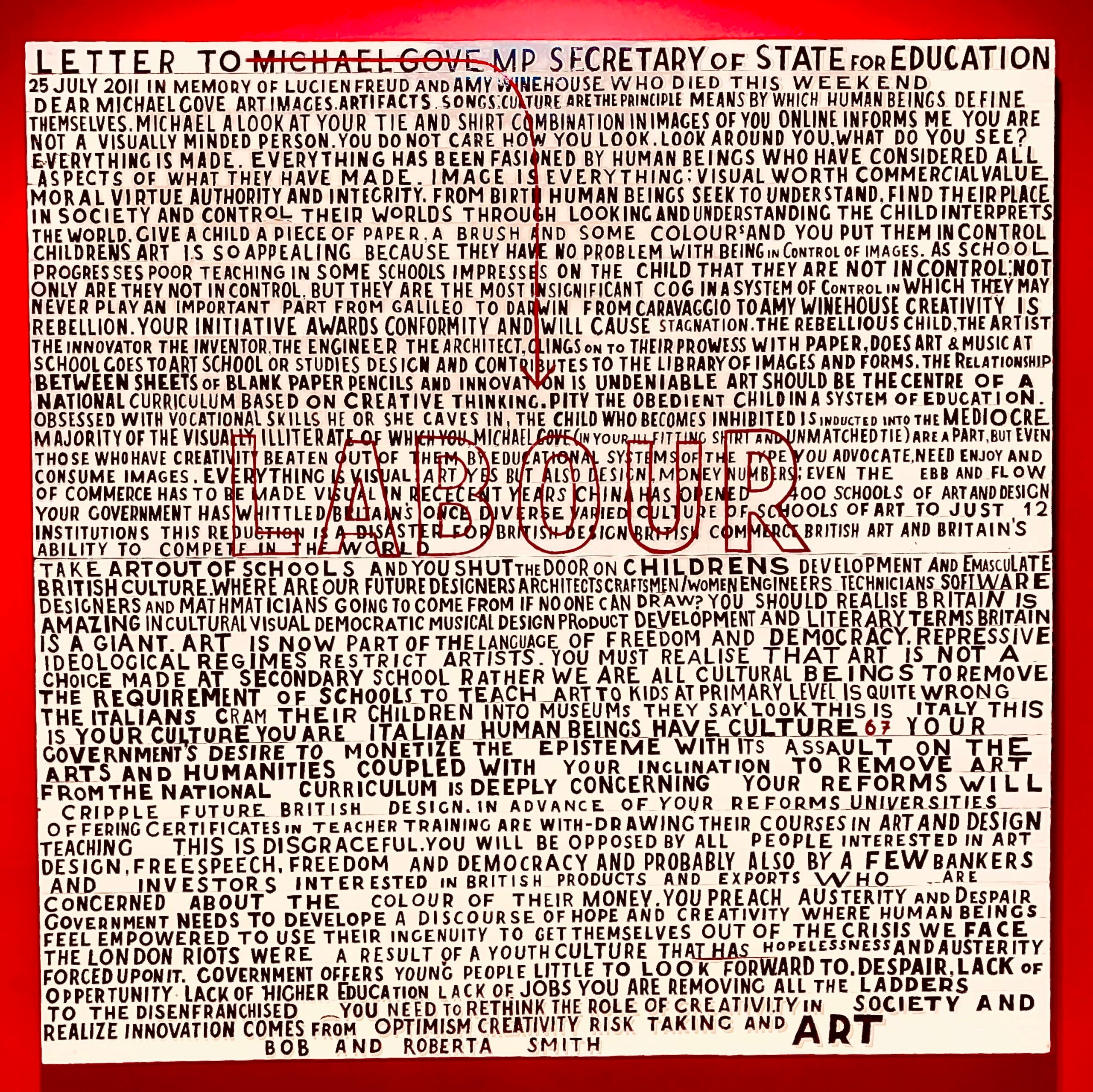
In 2011, the artist Bob and Roberta Smith painted his now infamous painting Letter to Michael Gove, in which he advocated for art education in UK schools.
As the controversial English Baccalaureate (EBacc) came in, he was invited into parliament to speak at the Art, Craft and Design in Education All-Party Parliamentary Group (APPG) to share his thoughts with parliamentarians and speak about his experience as both an artist and an arts education advocate.
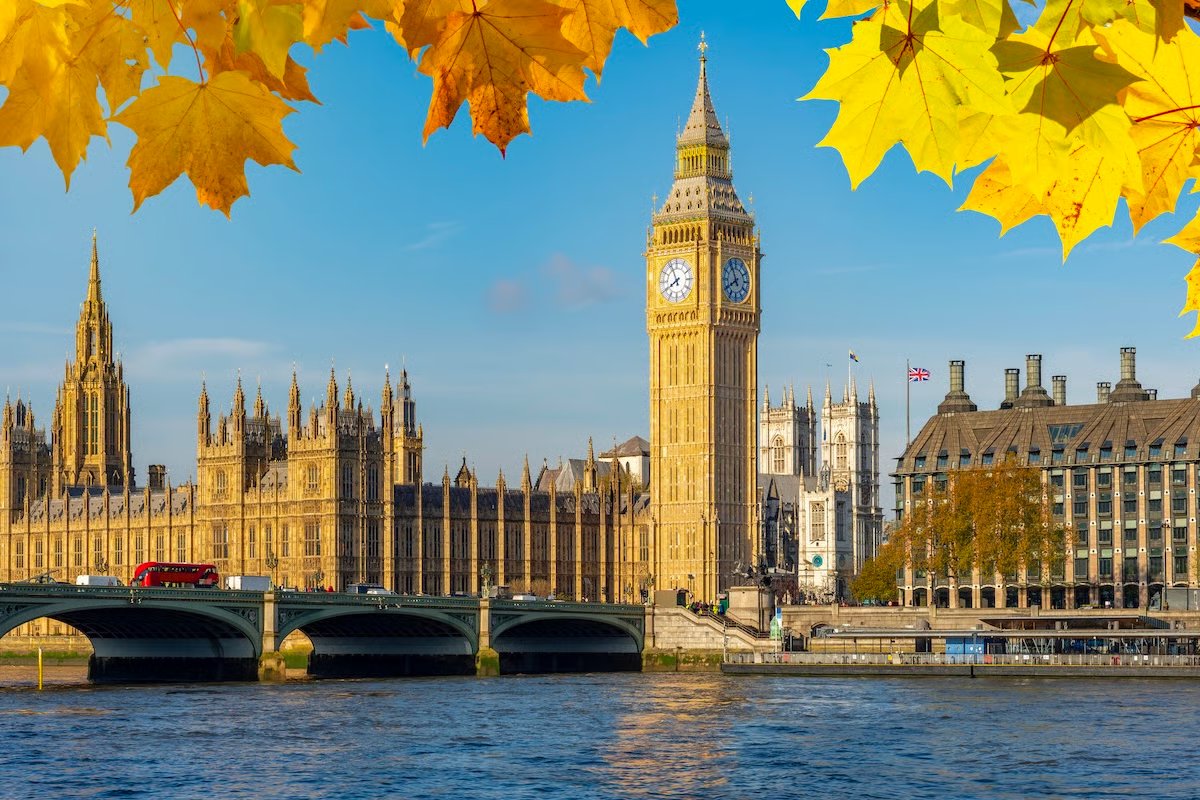
Years on, and with the EBacc now on its way out, the advantages of APPGs in connecting those in power with organisations and individuals outside of parliament are clear. But how do they operate and how significant are they to the arts sector?
What are they?
All-Party Parliamentary Groups are informal cross-party groups that have no official status within parliament, but are run by and for members of the House of Commons and Lords.
Divided into country, area or region and subject groups, APPGs cover a diverse range of subjects, including many for the arts.
They are widely viewed as a valuable opportunity for parliamentarians to engage with individuals and organisations outside parliament who share the same interest, although they are not official parliamentary bodies and do not have the same authority as Select Committees or Committees of either house.
In 2023, Parliament changed the rules about APPGs, due to concerns about how many there were (more than 750 at the time). To qualify as a registered APPG, the group must be open to all members of both houses, have at least 20 members and have exactly four registered officers, including at least one from the party in power and one from the main opposition party.
Any MP can only be an officer of a maximum of six groups, according to the new rules. Alongside this, the group must have a chair from the Commons, though peers can be co-chairs, who oversees the group’s compliance with parliamentary rules and hold a minimum of two formal meetings a year, including one AGM.
A secretariat can be employed to undertake the group’s administration – often an external organisation already involved with the specific issue. This allows organisations such as the National Centre for Creative Health (NCCH) and Design & Artists Copyright Society (DACS) to be a fundamental part of how the groups run.
‘People sit up and take notice’
Bob and Roberta Smith, who painted over Letter to Michael Gove to change it to Letter to Labour this year, has now spoken at the Art, Craft and Design in Education APPG multiple times.
“The APPG has been really important in pulling everybody together, sharing information, and formally presenting what the last government did back to them, in a way that increases solidarity,” Smith said.
Continues below…
Smith was invited to speak by the APPG’s secretariat, arts and creativity consultant and visual art education champion Susan Coles, who helped set the group up with her MP and subsequent chair of the group Sharon Hodgson in 2013.
“We’ve had an amazing record of writing lots of letters to all the different ministers for education and all the different people involved in anything to do with culture and visual art education,” Coles told Arts Professional.
“We’ve had questions asked in the House of Lords and the House of Commons, and you can really see the power of it,” she said.
“People sit up and take notice when something has a title, or a parliamentary stamp, and you get to meet at the centre of political power in the UK.
“That has a real weight when you want to take a position on something that needs addressing.”
APPGs ‘as bridges’
APPGs are entitled to use the term ‘parliamentary’ to describe their activities, and to use the APPG Portcullis badge, meaning that research and suggestions can gain extra recognition. The groups can also book rooms in Parliament.
Coles organises who attends the group meetings, once inviting secondary and primary school children from an art club set up after the Grenfell Tower fire to show their artwork.
“They told us stories that brought tears to our eyes, and for a child to know that they can go up and talk to these adults who make decisions, it’s phenomenal,” Coles said. “APPGs allow the most important voices to be heard – the people on the ground.”
“I think of APPGs as bridges, bringing those in power and those on the ground together. We are all united in campaigning and are dedicated to our jobs.”
Alexandra Coulter, director of the National Centre for Creative Health (NCCH), which provides the secretariat to the Creative Health APPG, described it as “a very useful tool to get inside the workings of parliament”.
The NCCH was established in 2021 in response to one of the recommendations in the Creative Health Review, published in 2023 by the Creative Health APPG’s predecessor, the Arts, Health and Wellbeing APPG.
The review was one of the main achievements of the Arts Health and Wellbeing group, and was described by Coulter as “very influential in terms of policy”, especially since it could carry a parliamentary stamp.
Without that recognition, Coulter said it would be hard for organisations or individuals to attract the attention of those in power.
Through the meetings, the APPG can “get into the brain of those helping with strategic development” alongside people who speak from “their personal experience of illness and creativity” and people in the health sector.
A ‘halfway house’
Dr Simon Opher, MP for Stroud and chair of the Creative Health APPG, told Arts Professional APPGs were particularly important because “they’re all party, meaning all the party-political things are put aside”.
“It is a really good opportunity for people outside parliament to come and speak, and to get them heard by those on the inside,” he said.
Deborah Annetts, director of the Independent Society of Musicians (ISM) which provides the secretariat to the Music Education APPG, also said it was a “valuable route from into government”.
“It is everybody together working on behalf of a particular issue that we all really care about,” she said.
“Culture has been through the wars in all kinds of ways recently, and the organisations involved are not like AI companies with lots of money. They tend to be run on a shoestring.
“So arts APPGs are vital in getting the message over to government that the arts are important and do need support.”
A representative of the secretariats for the Visual Arts and Artists APPG, DACS, echoed these sentiments, saying: “The UK is the second largest visual art market in the world and in 2023, UK visual art exports totalled more than £4.1 billion.
“Despite this, the UK’s visual artists are some of the most poorly paid creators in the UK.
“So, the APPG for Visual Arts & Artists exists to both champion that UK’s extraordinary Visual Arts sector and talent, but it also exists to ensure that the challenges that artists and the sector face are heard, discussed and supported.”
[ad_2]
Source link