
[ad_1]
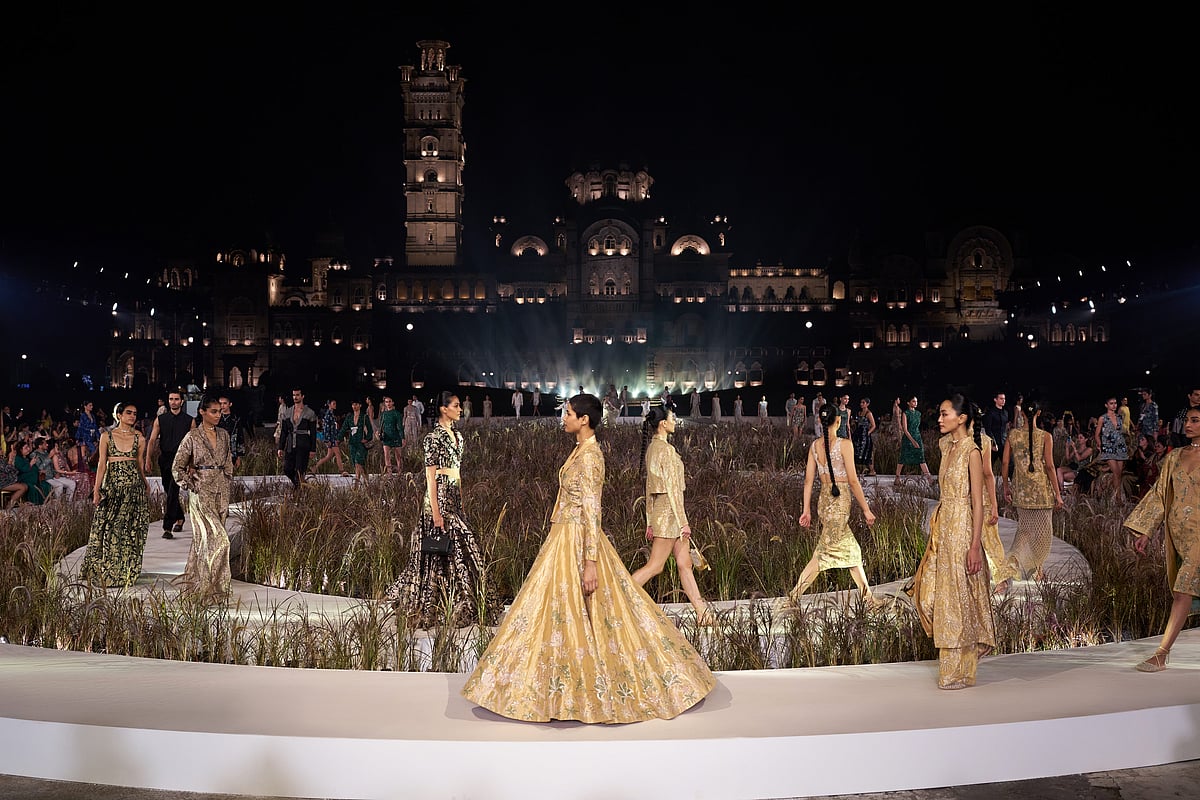
At a time when sustainability risks becoming a buzzword and fashion weeks often resemble spectacle without substance, Anita Dongre continues to play the long game. With her latest show, Rewild 2026: Fashion for Good’ fundraiser, staged at Vadodara’s majestic Lukshmi Vilas Palace and co-hosted by Maharani Radhikaraje Gaekwad, she didn’t just present a collection; she reinforced a worldview set from an ideological destination that holds a long lineage. One where Indian luxury is rooted in craft, care, and community. The second edition of Rewild 2026, showcasing the Spring/Summer 2026 collection, arrived as both provocation and proof that Dongre continues to walk the talk on sustainability, craft and responsible fashion.
This comes at a moment when Dongre’s business itself reflects the scale of her influence: the Anita Dongre Group today spans multiple labels, employs thousands across its supply chain, works with artisan clusters in several Indian states, empowering women, and retails through hundreds of points of sale in India while exporting to several countries. As Indian fashion finds new confidence on the global stage, Dongre has steadily expanded her footprint with international flagships—New York City, Dubai, and Los Angeles—bringing Indian craft into conversations around luxury and conscious consumption.
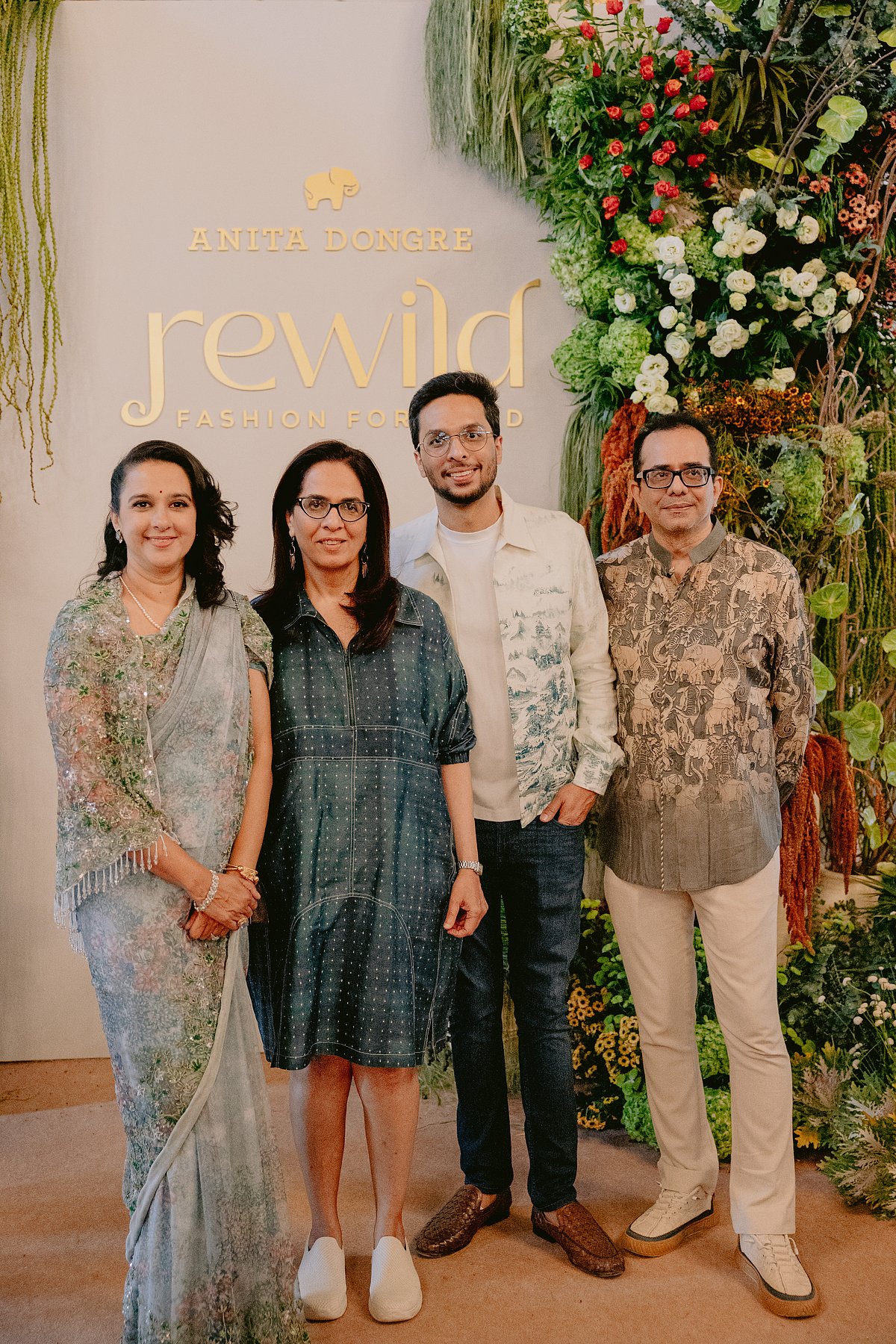
Maharani Radhikaraje Gaekwad, Anita Dongre, Yash Dongre and Mukesh Sawlani at the Fashion for Good Brunch hosted at Lukshmi Villas Palace, Baroda | Pic credit: Anita Dongre
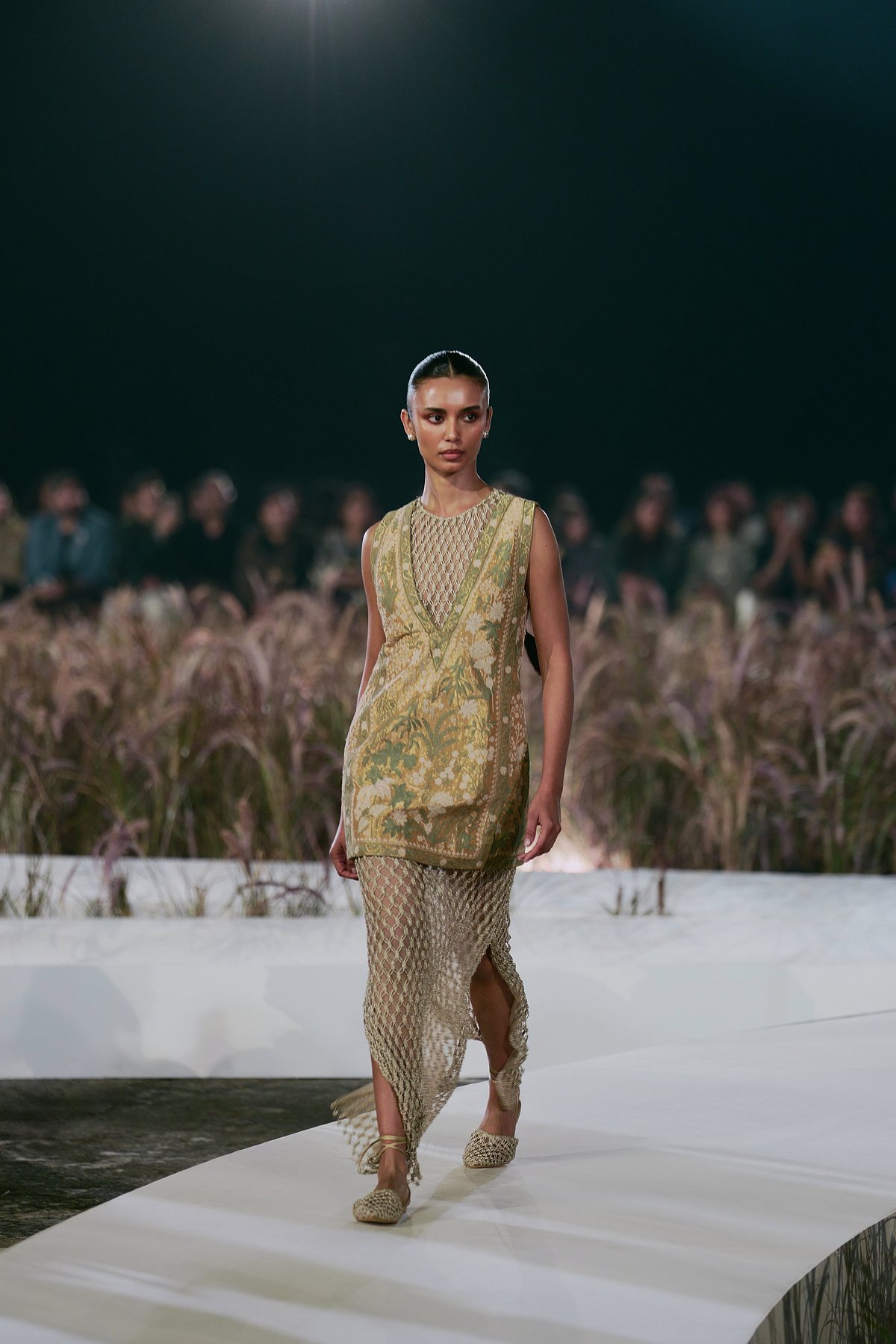
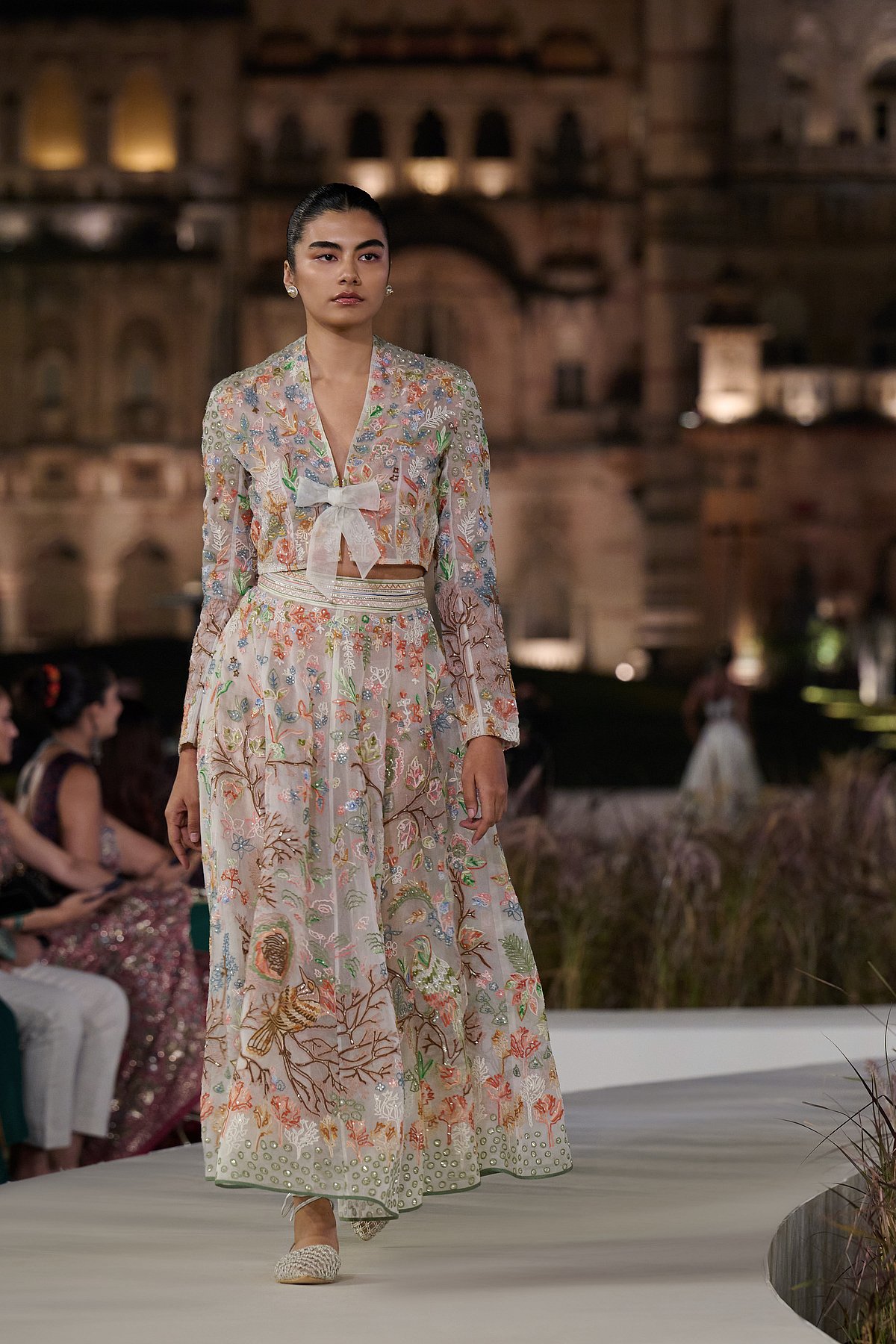
At Rewild 2026, she gathered conservationists, philanthropists and community leaders to discuss wildlife protection and human–animal coexistence, framing Rewild as both a fundraiser and a forum for change. Staged against the majestic palace in the evening, the show unfolded with quiet authority, reinforcing that Indian luxury today must be regenerative and conscious of the ecosystems it draws from. For the first time, the House introduced handwoven macramé, inspired by the 140-year-old banyan tree within the palace grounds. She spoke louder with her fashion; age-old crafts consciously shaped for the present, with silhouettes that moved seamlessly between luxe prêt and eveningwear. Fresh, energised and designed for diverse demographics and occasions, the collection honoured forest-inspired motifs that came alive through embroidery, bows and surface detailing. Banarasi textiles, woven by master artisans, found new expression in contemporary styles, while hand-painted Pichhwai and garments crafted by women artisans from SEWA Gujarat reinforced the human story behind the clothes. An evolving palette of ivories, warm golds, butter yellow, deep emeralds, midnight blues and inky blacks mirrored the spirit of rewilding.
We spoke to the designer about fashion’s role in sustainability and why beauty must come with accountability.
Pic credit: Anita Dongre
How do you position fashion within Rewild and your fashion philosophy?
Fashion, for me, has always been a form of dialogue. Through Rewild, it becomes a way to speak about coexistence, craft and care. My philosophy remains the same: fashion must be beautiful, but it must also be thoughtful.
How did you choose Lukshmi Vilas Palace as the backdrop for Rewild 2026?
The palace holds layers of history, art, and craftsmanship, which align deeply with the spirit of Rewild. Its architecture and legacy naturally slowed the narrative and allowed the collection to unfold with dignity. It created a setting where heritage and contemporary thought could exist together. Moreover, Radhika Raje Gaikwad shares the same values, impacting the lives of communities through her philanthropic endeavours. The resonance, both locational and emotional, mattered equally while making a conscious choice to host Rewild in this grand setting.
Pic credit: Anita Dongre
How did this season of Rewild interpret nature?
This season was about lightness and ease. Returning to nature was interpreted through softer silhouettes, breathable fabrics and a calmer palette. I was in a creative state focused on freshness and exuberance, and so the design grammar feels more fluid and intuitive. The colour palette has sheer ivory, warm butter yellows, and beautiful emerald and midnight navy shades. It reflects a desire for freedom, comfort and connection rather than formality.
Your work often blurs fashion and activism. Do you see Rewild as environmental advocacy?
Rewild is not activism in a loud sense. It is advocacy through intention. Fashion can influence behaviour when it invites reflection rather than instruction. I believe that when people connect emotionally, sustained change follows intuitively.
Sustainable fashion can become symbolic. What tangible steps define the sustainability of Rewild 2026?
Sustainability isn’t a singular cause or something we do in silos. Rewild is grounded in processes of circularity and plurality. At the design level, it starts with empowering communities that use natural materials to tell stories in textile. We are meticulous about heirloom textiles, responsible sourcing, handcraft-led production and long-term artisan partnerships. These are not symbolic gestures, but systems we continue to build on. An ancillary layer is our work with philanthropies aligned to our commitment to wildlife, urban animal life and habitats. This allows us to amplify sustainability beyond fashion with each edition of Rewild.
Has the Anita Dongre woman changed over the years?
Our North Star has always been a thoughtful woman who carries India on her sleeve and knows her mind. She may have evolved with changing times, but her values remain unfettered. Today, she seeks ease, authenticity and purpose. Her resonance with Rewild 2026 is mirrored in silhouettes of comfort, conscious choices and emotional connection over excess. The Anita Dongre woman has always dressed for herself, carrying a quiet confidence wherever she goes.
How do you define Indian luxury today and where does Rewild sit within this definition?
Rewild is a sustained effort that melds my craft with my values. As designers responsible for Brand India, my contemporaries and I hope this becomes a conversation about depth rather than display. What will sustain Indian luxury is care and consciousness. Rewild 2026 sits within this space as a quiet expression of luxury that values longevity, provenance and purpose.
Pic credit: Anita Dongre
How did SEWA artisan communities contribute to Rewild, and why is preserving these ecosystems vital?
When women are empowered and financially independent, they take a whole village along. The women artisans from SEWA play a key role in creating pieces for all our collections, with a special focus on Rewild. Preserving these ecosystems is as important as protecting the environment because craft sustains livelihoods, culture and dignity. These women today proudly say they run their homes and provide for their children. It’s not just about providing work, but meaning and purpose that uplifts entire communities. One cannot exist meaningfully without the other.
How do you see Rewild evolving in the coming years?
Rewild will mirror nature, growing organically as a platform rather than remaining confined to a collection. It will deepen its focus on craft, conservation and community, expanding intuitively and mindfully, the way nature does.
[ad_2]
Source link