[ad_1]
INT:
I’m really excited to talk about the exhibition. It will showcase these 400 designs together for the first time. Can you give us an outline of some key artists that have been involve, and things that you’re really excited about that are up on show? What can visitors expect?
GM:
In the run-up to releasing Issue 100, I knew I wanted to make it like a celebration issue. This one was a really big deal for me because it was the first one that I’ve curated myself. I’ve always sort of curated the curators. I’ve also featured my own artwork next to these absolute heroes of mine in this edition, which was huge for me. So the 100th edition of The Riso Club features Peter Shire, Nathalie Du Pasquier and Barbara Stauffacher Solomon, (her estate granted permission for me to share her artwork). I’ve called it Risotopia because it was like a fictional place. Normally, each edition is always from a city or a region, this one transcended that boundary as the centenary edition.
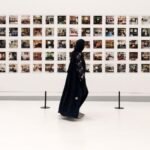
This will be on show, but so will all of the other editions to date. I think that’s the thing that will be so amazing about the show, you’re only ever seeing a tiny wee pack and then suddenly it’s 400 prints plus all on display in one go! It’s a nice way to celebrate something that’s been quite consistent and low-key in our work flow for some time – to give it a moment in the sun.
INT:
How are you planning to display everything all at once? Have there been some challenges with figuring out how to curate the show?
GM:
Well, we’re definitely not framing! That would be out of the budget. Imagine, 400 frames! We are just going to mount everything super simply – it’s going to be a very big grid. I feel like the easiest way to consume and find your way through the archive is just to keep it as simple as possible. We’ll have a calendar and hopefully a big atlas wall too where people can see all the different countries.
A big thing we’re also working on in tandem to the show is developing a digital atlas for the Riso Club on our site, re-documenting all the work so that there is a digital record of it too. We will be uploading all of the stencils for the prints here too — the four layers or four separate ingredients that have made up each one. This will be a way for people to get more of an insight into the Risograph process and file separation that has created them.
INT:
That’s a really nice idea, to make something like that open source! I wanted to ask about the workshops, because they are a big part of the exhibition. You’ve got people like Anthony Burrill running them and Angela Kirkwood, who we love. I’d love to hear more about what you have planned for these!
GM:
All of the artists facilitating workshops have been featured in the collection at some point, it felt right that they were part of things already. The workshops have been set up for people to learn from these artists and get an insight into how they have created some of the postcards you might have collected. Within the line-up Angela is going to be showing her amazing Risograph animation process, Raissa Pardini, her posters and typography and Anthony will transfer some of his knowledge from his letterpress printing and his iconic graphic style into Risograph too. Marina Willer from Pentagram will also be joining us. The graphics that she makes with her stickers and her approach will be so interesting for people to get an insight into.
INT:
They sound so fun. I’m sad I can’t get up to Glasgow to join in!
[ad_2]
Source link