An exploration of ecology through printmaking

MSU’s Center for Visual Arts is working to change the ideas surrounding contemporary printmaking.
Located in the Santa Fe Arts District, the CVA is in the heart of Denver’s creative hub. It is currently showcasing two printmaking exhibitions, “Nature in Flux” and “Futures 528.0”, which will be available to view until March 21.
The “Nature in Flux” exhibition, curated by Austin Geddie, Sadie Hughes, and Lucy Love Riley, features work from MSU Professor Kelly Monico’s printmaking class, along with work from her students in Uruguay.
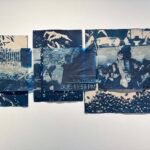
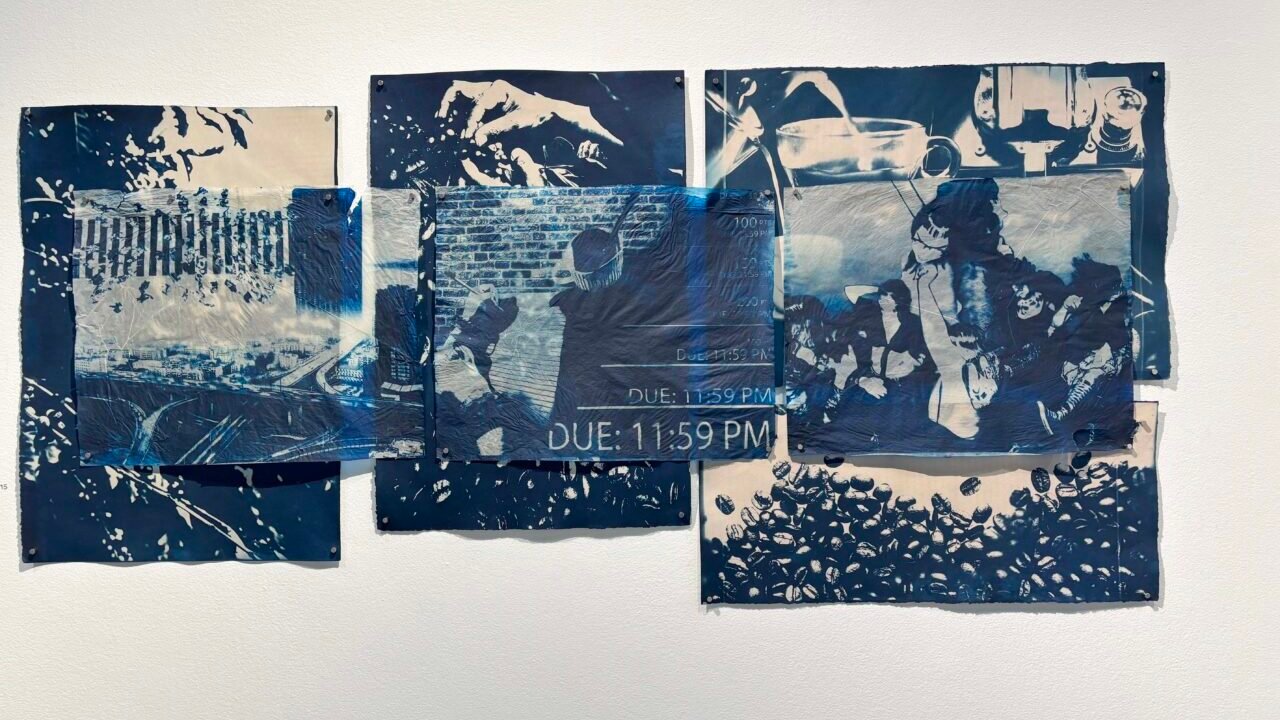
In 2024, Monico taught a series of workshops at Universidad ORT in Montevideo, Uruguay, exploring the concept of ecology through printmaking. The work consisted mainly of cyanotypes, a printmaking process that uses UV light to create cyan-colored prints, and can be seen at the front of the “Nature in Flux” show in the CVA.
To Geddie, the installation represents a combination of different ecosystems and ideas from the perspective of MSU artists.
“I felt it was important to show where this whole process started because Kelly brought in a lot of these teachings to the students at MSU after experiencing her sabbatical,” Geddie said. “We get to see what the students there were experiencing versus what the students here are experiencing in a different ecosystem in Colorado.”
The work in the show contains a variety of subjects, ranging from prairie dogs and carpenter ants, to medicinal herbs. Lauren Ciccone’s artwork “Medicinal Weeds Around You” is a perfect example of contemporary printmaking. Geddie describes Ciccone’s artistic process in detail, explaining her use of medicinal non-native herbs as dyes for her paper. She then uses the cyanotype printmaking process to print the plants onto her paper. Another piece created by Kylle Been called “Twisting Colonies: Carpenter Ants,” presents cyanotype prints in the form of a mobile.
“Printmaking is one of those interesting techniques in the sense that you don’t always know what goes into it and the amount of work that goes into it,” Hughes said. “I think breaking the boundaries of the classic paper and showing it on different materials, mediums, or installation methods involves the public more. A lot of people in the general public don’t know a lot about printmaking, so this shows you can do a lot with it.”

The curation process was not a simple task. The student curators worked with the director of the CVA, Cecily Cullen, to find the pieces that were the strongest conceptually, which pieces would look best in the space, and which pieces worked best together. The Metropolitan reached out to Cullen regarding the curation process of the exhibition.
“We ask, if there are multiple works addressing the same idea, which one does so in a more compelling way?” Cullen wrote in a response. “Also, if works are similar formally or aesthetically, which of them is more successful? Each of the works should stand on its own but add to the theme in a way that complements the rest of the work in the show, visually and conceptually.”
Bringing together work from MSU Denver students and international collaboration, the exhibition reflects a cross-cultural exchange rooted in environmental themes. The curated pieces create a dialogue between ecosystem, art, and community. The “Nature in Flux” Exhibition will be available to view until March 21, so make sure to visit before it leaves.
327