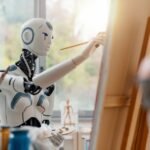
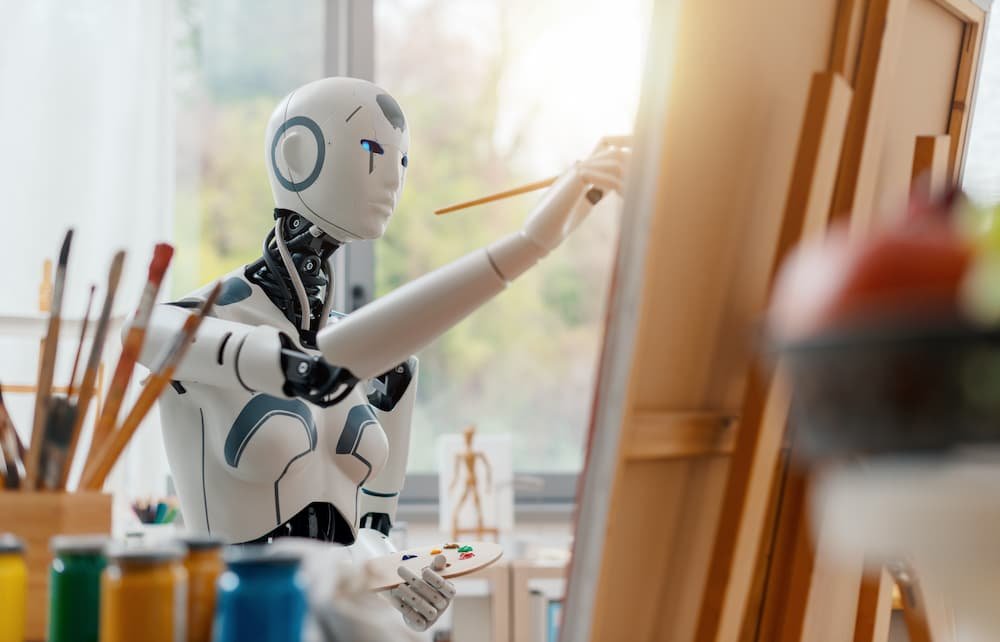
In the 1840s, when photography was invented, critics declared the death of painting. Why would anyone commission a portrait when a camera could capture reality in minutes? Artists panicked. The public predicted the end of an entire craft.
They were completely wrong.
As art historian Aaron Scharf documented, photography didn’t kill painting. It liberated it. Once artists were freed from the burden of realistic documentation, they explored what cameras couldn’t capture: emotion, abstraction, interpretation. Impressionism was born. Then modernism.
We’re living through that moment again. AI is the new photography. And just like 150 years ago, the people predicting the death of entire professions are missing the point.
See also: How Walmart, Spectrum and three other big employers cracked the skills code in 2025
What actually happened when photography arrived
For centuries, painters were the only way to preserve a likeness or document an event. Photography threatened that. It was faster, cheaper and more accurate. Artists lost their monopoly on straightforward documentation.
But they gained something bigger: freedom to explore what only humans could do. To paint not what they saw, but how it felt.
Monet didn’t try to compete with photography’s precision. He painted light and atmosphere. Picasso shattered perspective entirely.
In the end, photography didn’t replace painting. As researcher Aaron Hertzmann put it, “Its influence led to decades of vitality in the world of painting, as artists were both inspired by photographic images and pushed beyond realism.”
AI is our photography moment
Just as photography automated the recreation of reality, AI automates precision work—and increasingly, the complex analytical tasks that once required human expertise.
Where painters once spent hours capturing every detail of a scene by hand, professionals spend hours analyzing data, drafting documents and synthesizing insights that AI can now handle in seconds.
AI can summarize research, generate code and even propose creative directions. But it still can’t decide if something matters, when to trust its own output or how to connect that insight to human experience. The ability to interpret, prioritize and empathize is still distinctly human.
Used well, AI gives us time back to build the relationships and ideas that move our businesses forward.
Don’t compete with the camera
The painters who resisted photography and tried to compete on realism eventually became irrelevant. Daguerreotype portrait studios replaced traditional portrait painters almost overnight. But the artists who explored new territory defined the next century of art.
The same will be true for leaders. Competing with AI on precision, speed or volume is a losing game. The ones who thrive will focus on what AI can’t do.
Research from MIT’s Work of the Future Initiative shows this pattern repeating across technological shifts: Automation doesn’t change entire work categories, it changes their composition. Tasks that require routine precision get automated. Work that requires judgment, creativity and contextual understanding becomes more valuable.
So, instead of spending hours on status reports, budget reconciliations or drafting communication updates, leaders can focus on the questions that matter: What are we trying to achieve? Why does this matter to our customers? What are we missing? How do we bring our teams along?
What this looks like in practice
This shift is already happening.
At Branch, our product management teams use Claude to help generate user stories. They input the problem they’re solving, explain the user persona and desired outcomes, and the AI produces 20 user stories in minutes. The team refines them, adds nuance and passes them to engineering.
Does that make PMs faster? Yes. But the real value isn’t speed. It’s what they do with the time. They spend more hours in customer validation sessions. They dig deeper into strategic problems. They focus on identifying what to build, not documenting how to build it.
The precision work (writing stories) is automated. The human work (understanding customers) gets more attention.
I see this pattern with our customers, too. Marketing teams use our integrated AI to handle the “grunt work” of generating campaign links, surfacing insights from performance data and identifying patterns across their marketing channels. Those time savings shift focus from operational busywork to strategic work that drives growth. Instead of pulling reports and reconciling data, they’re spending time understanding why certain campaigns performed differently and planning tests for the following week.
In each case, AI doesn’t replace the person. It eliminates the work that was keeping them from doing what only they can do.
What this means for how you lead
The art history parallel is compelling, but the harder question is practical: How should you actually lead your teams through this shift?
- Start by making space for experimentation: Give teams permission to try things and report back on what worked. One leader I know started meetings by asking: “What did you try with AI this week? What worked? What failed?”
- Get specific about what AI should and shouldn’t touch: The answer isn’t “automate everything possible.” AI can draft user stories, but it can’t talk to customers. It can synthesize meeting notes, but it can’t read the room or understand what’s not being said. Draw explicit lines, or teams will either avoid AI or misuse it in ways that erode trust.
- Redefine what productivity means: If your team is using AI to finish reports faster but still spends the same hours on reports, nothing has changed. When AI saves time, immediately redeploy it. Block calendar time for strategy work. And watch your volume goals. Asking for 50 pieces of content instead of 20 just because AI makes it faster misses the point entirely.
- Address the fear directly: When photography arrived, portrait painters had real reason to worry. Some did lose their jobs. Pretending that won’t happen with AI is dishonest. But the leaders who invest in helping their teams adapt and develop new skills will be the ones who thrive. Clarity makes people feel safer than avoidance does.