This is WESA Arts, a weekly newsletter by Bill O’Driscoll providing in-depth reporting about the Pittsburgh area art scene. Sign up here to get it every Wednesday afternoon.
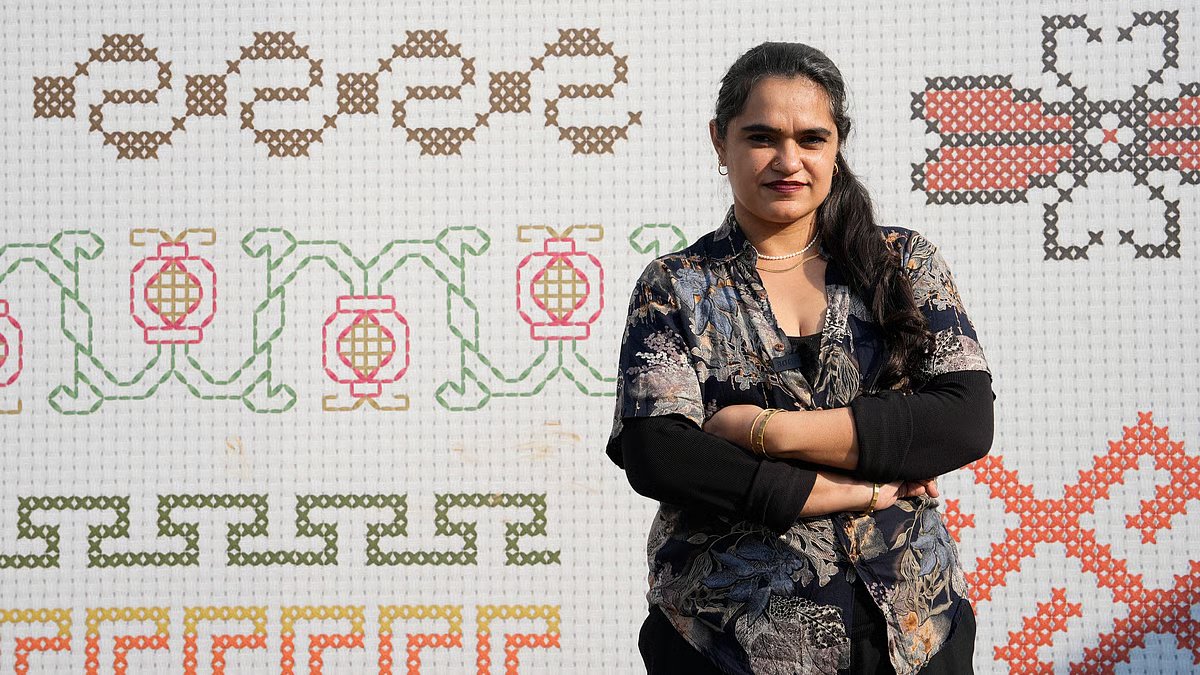
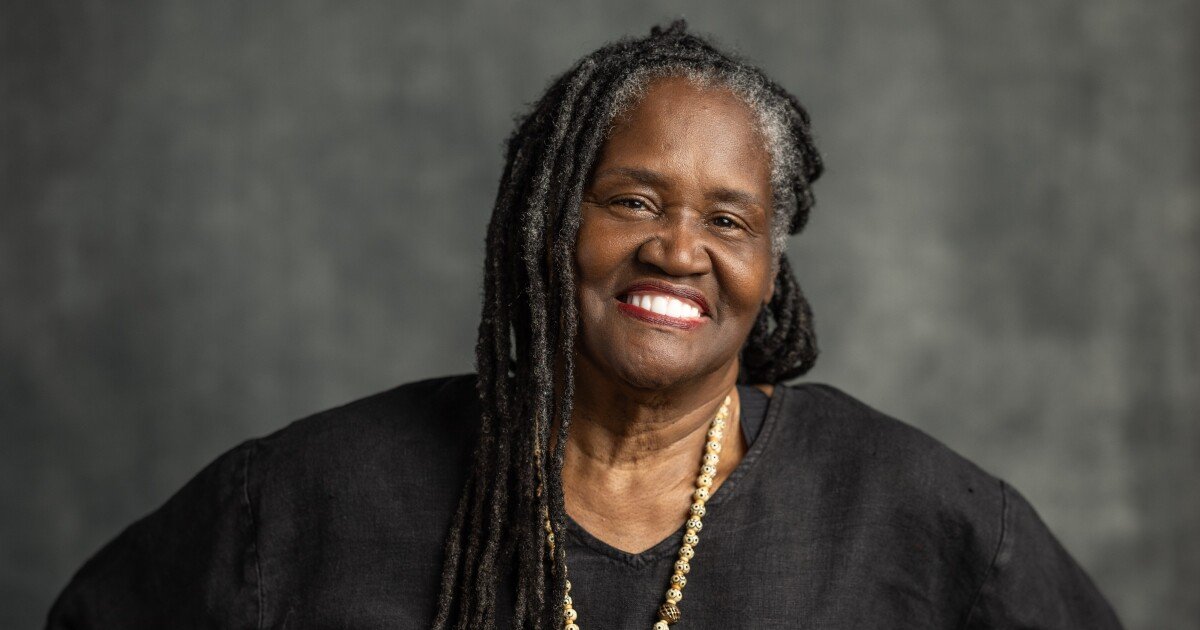
Christine CMC Bethea started out as a writer, but she launched a career in art while hanging out with visual artists.
More recently, she was a visual artist who got into playwriting after hanging out at the August Wilson Archive.
The first fruits of her new craft will be on stage this week when her comedy “Birthday at Tiffany’s” premieres with three performances at the New Hazlett Theater’s CSA Series.
The play is set in the late 1980s, in Homewood, where young Tiffany’s enthused parents and grumpy grandfather await the arrival of guests at her seventh birthday party. Except it starts seeming increasingly unlikely the kids from her mostly white new private school will venture into their Black neighborhood — as Pops can’t help repeatedly saying he warned them.
Bethea’s background is in journalism and advertising, going back to 1980s gigs as a fashion copywriter for Kaufmann’s Department Store. She also produced promotional copy for KDKA-TV and wrote for KQV radio news.
About 35 years ago, she says, she was laid off and doing administrative writing for local artists whose work inspired her. Taking after a grandmother who quilted, she enrolled in a quilting class at the old Pittsburgh Center for the Arts.
Bethea subsequently became a prominent figure in the local art scene, known for her vibrant quilts as well as mixed-media work incorporating found and discarded materials. In 2010, she founded the Geek Art/Green Innovators Festival, an annual event showcasing innovations in art and technology. She’s also a past president of Women of Visions, a group for Black women artists, and a current member of the City of Pittsburgh’s Public Art and Civic Design Commission.
Art, she says, “is how everybody knows me. And the writing part just kept fading back and back and back.”
It was Bethea’s artwork that led her this year to the August Wilson Archive, housed at the University of Pittsburgh’s Hillman Library. As a recipient of the Archive’s Community Artist-Scholar Award, she pored over materials including drafts of the Pulitzer-winning, Pittsburgh-born playwright’s scripts.
“It suddenly struck me, ‘I want to be a writer again,’” she says.
She first wrote “Birthday at Tiffany’s” as a short story. But as a lifelong “huge theater fan,” she turned it into a play, despite having no experience in the field. (She did take one screenwriting class.)
The story was inspired by a real-life Pittsburgh anecdote she was told about a little Black girl’s birthday party. But it was deeply informed by her own family. Bethea was born in Pittsburgh, but her father was a U.S. Air Force electrician and when she was growing up, the family lived all over the world: Japan, South Korea, the Philippines.
She understood being an outsider.
“We were always othered — but othered as Americans!” she says.
She traces the play’s use of humor to address racism to her father’s approach. For instance, instead of telling young Christine that people might not like her because she was Black, he would ask, “Would you believe that people are not gonna like you because you’re a different color?”
And she’d respond, “As adorable as I am, are you kidding me?”
As Bethea puts it, “My entire family is in ‘Birthday at Tiffany’s.’”
Bethea wrote “Birthday” as her Wilson Archive project, and it got a reading in March at City Theatre. It’s getting a full staging because it was accepted as one of three productions this season by the New Hazlett’s long-running CSA performance, which provides emerging artists with space, time, money, mentorship and technical support.
Bethea and her play were matched with experienced local theater artist Dominique Briggs, who’s directing a cast including Richard McBride, Tanika Harris and Mils “M.J.” James.
The fledgling playwright has been heavily involved, from casting to providing feedback at rehearsals. New plays are typically tweaked, revised and rewritten while being readied for staging. And with more than a dozen other cast and crew, the give-and-take on this project has been substantial. It’s been a far cry from Bethea’s solitary practice as an artist.
The adjustment, she says, was “tricky.” You wouldn’t let someone touch a finished artwork. “Get that out of your head if you’re a playwright!” she quips.
“You find out if you let people do their job, and their collaboration, that it’s a beautiful thing,” she says. “People get to put their wonderfulness into what you’ve created. And it just gets better in most cases.”