[ad_1]
- Artnet Auctions Spring Photographs features a curated selection of photographs from both historic and contemporary practitioners.
- Explore artworks by Peter Beard, Adam Fuss, Andy Warhol, Diane Arbus, Horst P. Horst, and more.
- Spring Photographs is now live for bidding through April 16, 2026.
The demand for photography has grown substantially in recent years. And while the total auction market value of photography still lags behind that of painting and sculpture, it has made marked strides.
In the latest edition of Artnet’s Intelligence Report, four works met or broke the $1-million and two the $2-million mark, signaling the medium’s rise within the auction market. “The medium now operates within the broader contemporary-art market,” writes Artnet Auctions Photographs Specialist Carys Lake-Edwards.
Photography-specific fairs like the Photography Show presented by the Association of International Photography Art Dealers (AIPAD), returning to New York’s Park Avenue Armory April 22–26, 2026, have helped propel the medium forward in the market, and have been further bolstered by auctions dedicated to photography. Now live for bidding through April 16, Artnet Auctions’ Spring Photographs sale features blue-chip and historic names like William Eggleston and Henri Cartier-Bresson, as well as another type of photography that is quickly garnering widespread attention: unique photographs.

Peter Beard, I’ll Write Wherever I Can (1960). Courtesy of Artnet Auctions.
What Are Unique Photographs?
“A unique photograph is one of a kind. It can be made without a negative, like a photogram, or a camera-less image, or the surface could be painted on or manipulated so that no two are exactly alike,” said Susanna Wenniger, Artnet’s head of photographs. And while this may seem like a new development, it is actually a practice with a storied history.
Unique photographs have been around since the beginning of the medium—from Louis Daguerre‘s daguerreotype portraits of the 1830s and Anna Atkins‘s botanical cyanotypes of the 1840s, to the camera-less photograms, or “rayographs,” of Man Ray in the 1920s. “Photographs in today’s market are moving closer to the painting market by becoming larger, unique, and more costly,” Wenniger said.
The rise of unique rather than editioned photographs in the market can be attributed in part to collectors seeking works that cannot be reproduced in an age where image-making is pervasive. Notably, these tend to be new collectors. As Wenniger observed, seasoned photography collectors were less focused on scarcity and more focused on building meaningful, personalized collections—whereas today’s buyers want something rare that also has wall power.
Names to Watch
Two names in the Spring Photographs sale reflect this upward trend in unique photographs. American artist and photographer Peter Beard, whose I’ll Write Wherever I Can (1960) and Quantity Surveyor, Diary Page, May 2 (1970) are featured in the sale, blurs the boundaries between photography, painting, and collage—hand-painting, drawing, and at times working in blood around the edges of his images, resulting in one-of-a-kind pieces. According to Artnet’s Price Database, Beard has achieved a healthy average sell-through rate of 75 percent.

Peter Beard, Quantity Surveyor, Diary Page, May 2 (1970). Courtesy of Artnet Auctions.
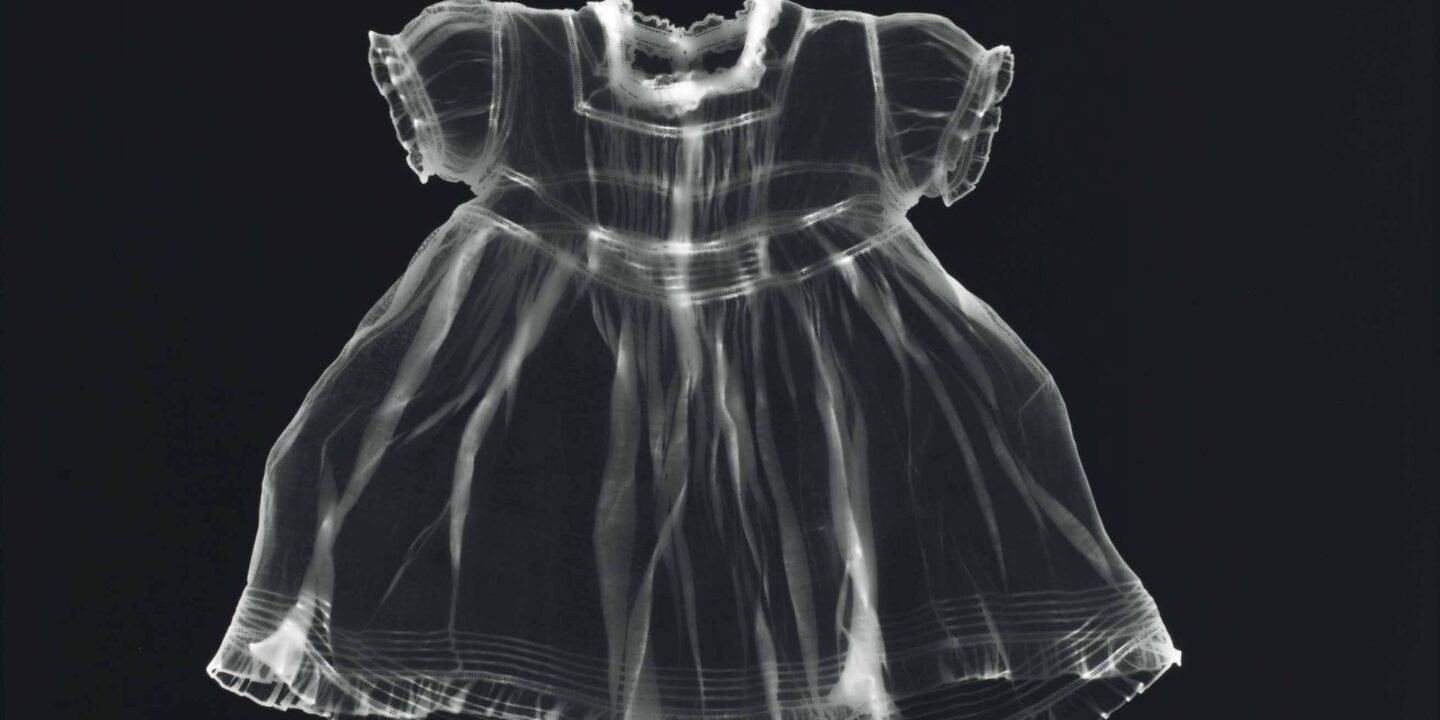
Adam Fuss is best known for his photograms. His 2001 Untitled in the sale exemplifies what Lake-Edwards describes as “a camera-less technique where objects are placed directly onto light-sensitive paper and exposed to light. By stripping photography down to its most essential elements—light, shadow, and surface—Fuss creates unique, ethereal images that often resemble paintings or ghostly apparitions.” His work draws on 19th-century pioneers like William Henry Fox Talbot and 20th-century modernists such as Man Ray, “but he brings a contemporary psychological intensity to the medium,” Lake-Edwards writes. “This process allows him to capture ‘what has never been in a camera,’ focusing on the immediate physical contact between the subject and the photographic surface.”
The sale also includes two unique gelatin silver prints by Andy Warhol—Unidentified Man (ca. 1964) and Untitled (Jackson Browne) (ca. 1966)—each stamped by the Andy Warhol Foundation and Estate, underscoring their authenticity as singular objects from the artist’s photographic practice.
Contemporary artists like Wolfgang Tillmans, who frequently makes large-scale works marked 1/1 using new technology, represent where the market is heading. But the shift runs deeper than individual names. The growing appetite for unique photographs reflects a broader realignment—one in which photography is no longer evaluated on its own terms, against the logic of the edition, but against the standards of the painting and sculpture market: scale, singularity, and what Wenniger called “wall power.”
That repositioning is also bringing in a new type of collector. Where seasoned photography buyers built collections around personal vision and historical depth, today’s entrants are driven by scarcity.
“The photography market is moving closer and closer to the rest of the contemporary art market,” Wenniger said. For collectors, that convergence may be the point.
Spring Photographs is now live for bidding through April 16, 2026.
[ad_2]
Source link