
[ad_1]

The legacy of Azim Azimzade, regarded as the founder of
Azerbaijani caricature art, continues to hold a special place in
the country’s cultural history. Generations of artists have
followed the path he created in satirical graphics and visual
storytelling.
Today marks the 146th anniversary of the birth of the People’s
Artist of Azerbaijan, AzerNEWS reports.
Azim Azimzade first gained recognition through his contributions
to the renowned satirical magazine Molla Nasreddin. Beginning in
1906, his caricatures and graphic works appeared in several
well-known publications, including “Baraban”, “Zanbur”, “Tuti”, and
“Kelniyyat”. His work played a key role in shaping the development
of satirical graphic art in Azerbaijan.
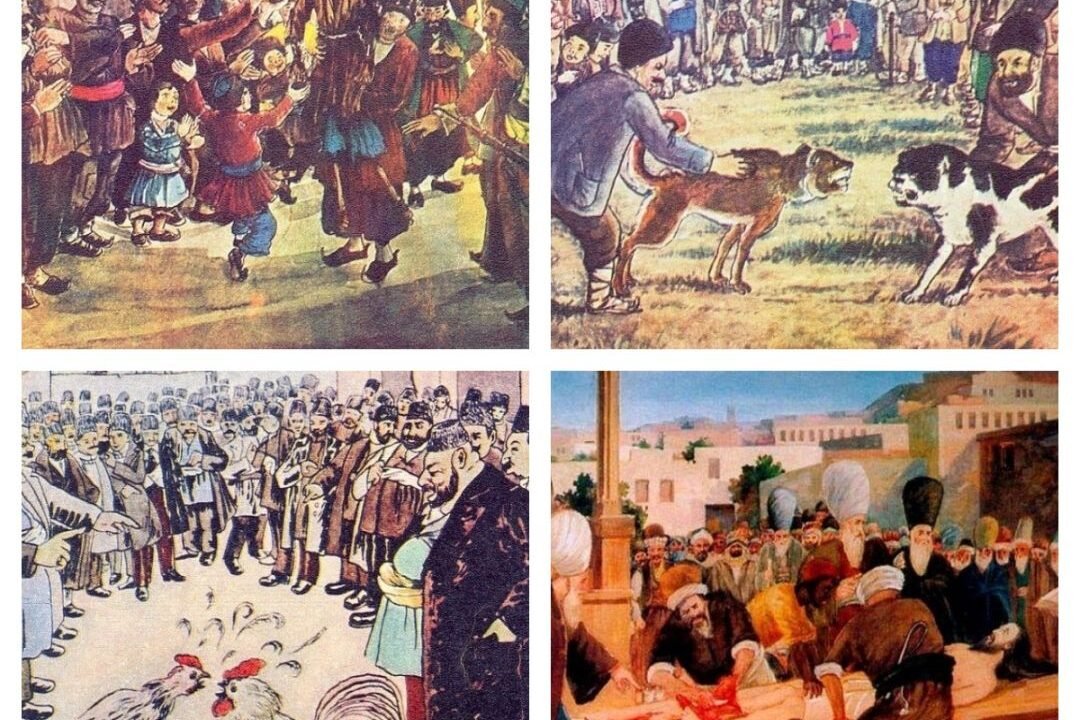
Many of his paintings focused on social issues, public customs,
and everyday life. Through satire, humor, and irony, he highlighted
injustice and criticized outdated traditions. Works such as “Dog
Fighting”, “A Husband Beating His Wife”, “Wedding in a Rich Man’s
House”, “Fight Over Water”, and “Old Baku Residents” reflected the
realities of different social groups and addressed themes such as
inequality and women’s rights.
In 1914, the artist also made a major contribution to
Azerbaijani book illustration by creating drawings for Hophopname,
written by celebrated poet Mirza Alakbar Sabir. Beyond graphic art,
he was actively involved in theater, preparing costume sketches and
stage decorations that helped advance theatrical design in
Azerbaijan.
His art works have been exhibited in museums across the world.
His first personal exhibition took place in Baku in 1940 and
featured more than 1,200 artworks. From 1920 until 1943, he worked
as a teacher at the Azerbaijan Art School and later served as the
institution’s director between 1932 and 1937.
Azim Azimzade passed away in Baku on May 15, 1943. Today, his
name lives on through the Azerbaijan State Art School, a street in
Baku, and the house museum established in his former residence.
Founded in 1920 as the first specialized art school in the
country, it was later named after Azim Azimzade in recognition of
his major role in the development of Azerbaijani graphic art. The
school has long been a key training center for painters, sculptors,
graphic artists, and designers.
The institution is known for its strong focus on academic
drawing, composition, and applied arts. Over the decades, it has
trained many prominent Azerbaijani artists who later contributed to
national museums, theaters, book illustration, and contemporary
visual arts. Its teaching tradition is closely linked to classical
art education while also preserving national artistic identity.
A street in Baku named after Azim Azimzade also reflects his
lasting recognition in the country. Located in the capital, it is
part of a wider practice in Azerbaijan of naming streets after
influential cultural and historical figures. This form of
commemoration helps maintain public awareness of artists who shaped
national identity and cultural heritage.
The naming of the street highlights the respect given to
Azimzade as the founder of Azerbaijani satirical graphics. His
works, which often addressed social inequality and everyday life,
remain widely studied, and his influence is still visible in modern
Azerbaijani illustration and caricature traditions.
The Azim Azimzade House-Museum, located in Baku, was established
in his former residence to preserve his personal and artistic
legacy. The museum officially opened in 1965 and contains his
original drawings, sketches, personal belongings, and documents
that reflect his creative process and working environment.
The museum also serves as a cultural research space, allowing
visitors and scholars to study his contribution to Azerbaijani art
history.
Exhibitions inside the house show his satirical works, stage
designs, and illustrations, giving a comprehensive view of his
artistic range and the development of Azerbaijani visual culture in
the early 20th century.
[ad_2]
Source link