[ad_1]
“Art is probably one of the only things left, the only true things left which exist for its own sake and nothing else.”
Tracey Emin/Instagram
What does it mean to create? In an age defined by fast fashion, endless scrolling, and algorithm-driven trends, a surprising cultural shift is taking place. Young people are turning away from mass production and back toward handmade creativity.
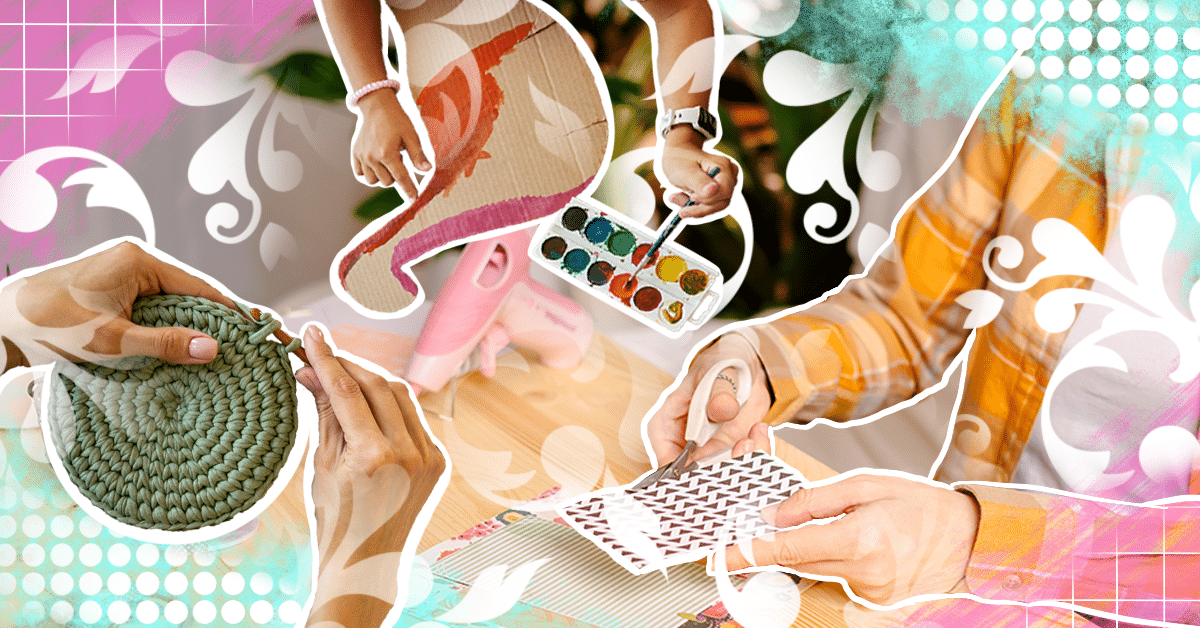
With more of Gen Z finding creative hobbies and outlets, craftcore is an aesthetic and cultural movement that favors non-digital art forms, from crochet and ceramics to embroidery and scrapbooking.
Across social media platforms, thrift stores, and college dorm rooms, crocheted sweaters, hand-stitched patches, and DIY clothing projects are quietly making a comeback. This movement—often called craftcore—has gained momentum among Gen Z creators who are reimagining traditional crafts as a form of personal expression and cultural resistance.
The resurgence didn’t happen overnight. Many people found themselves isolated, overwhelmed by screens, and searching for slower, more tactile ways to spend their time. Crafts like knitting, embroidery, and sewing began to reappear in digital spaces like TikTok and Instagram. What started as a coping mechanism quickly evolved into a larger creative movement that values sustainability, individuality, and the beauty of handmade objects.
Today, craftcore represents more than just an aesthetic trend. For many young creators, making something by hand is a quiet rebellion against disposable culture and industrialized production. By embracing handmade techniques, people are reclaiming the value of time, skill, and authenticity in a world that often prioritizes speed and convenience.
So what exactly is craftcore? And why has this nostalgic practice become such a powerful form of expression?
Defining craftcore
Craftcore, as named by the TikTok community, is Gen Z’s equivalent to the “simple living” movement. It places a greater emphasis on creativity and achieving emotional stability through tangible means.
Arts and crafts. When we think of these, we think of knitting, crocheting, ceramics, embroidery, scrapbooking, journaling, the list goes on and on and on…But! Could it be possible that these could stand for something that borders on rebellion at the Hunger Games level? Hard to imagine, but not impossible.

The arts and crafts are as soothing as they are expressive in a time overtaken by constant online noise and the rise of AI. Making something by hand has become a way to breathe again. In its simplest form, craftcore isn’t just about aesthetics, but is about finding meaning in the mess and beauty in the slow. Thus, it has become a modern rebellion against the evolving power of capitalism and burnout.
The roots of the movement

Arts and crafts have been around forever. If we turn back the pages of history, we’d find that in the early 19th century—when the Industrial Revolution first started taking off in the West—there was a decline in design to make things easier to manufacture on a larger scale. According to “The Collector Magazine,” this resulted in what is generally referred to as the “Arts and Crafts movement.” Early on, those who advocated for the matter described the rise of industrialism as “the death of taste”.
This deterioration of originality, of beauty and functionality, was cause for outrage. Throughout the century, groups were created and evolved with the passing of time to defend three major ideals, two of which are still relevant today:
- Objects Should be Useful and Beautiful
- Critique Machines and Revive Medieval Craftsmanship
It’s because of these ideals that artists managed to resist and fight back against industrial mass production in favor of beauty and craftsmanship. Creating things of this dual nature allowed individuality to persist through decoration, unlike the mass-appeal uniformity of industrial design. As a result, this seemingly simple preference was more than a choice to include personality and character in everyday objects. It became a way to critique of the machines that represented capitalist agendas.
Gen Z and digital burnout
A little over a century later, industrialism and capitalism form the foundation of the world. Skyscrapers, electric billboards with bright advertisements, social media, and above all…screens. Screens here, there, everywhere: all of them flashing with all types of media, brands, influencers, ads, how-tos, buy-nows, etc., etc., etc.
For many, it stuns and overwhelms the senses, creating feelings that need an outlet. Burnout rates are the highest they’ve been since the Great Depression, particularly among Gen Z. With financial instability encouraging hustle culture, and digital media being used as a means of distraction or escape, this is where the philosophy of the Arts and Crafts movement re-emerges as today’s pushback against digital overload.
To create something is to be intentional; it’s a blend of expressiveness and thought. It takes time and consideration, which is exactly the opposite of what modern media is: fast-paced, digital, and often performative.
Aesthetic or activism?
However, craftcore does walk the line between a “cute vibe” online and a subtle act of rebellion against a system that devalues slowness, care, and physical work that is done for pleasure rather than strictly for money. We have many visuals that have been consistently showing up through TikTok, Instagram, and Pinterest that aestheticize craftcore (soft, light, cozy music; “cottage vibes”, as seen in the video above).
Though behind the aesthetic lies the intention: slowness, patience, and a refusal to equate worth with productivity. Crafting is not only a means of healing but, consequently, a reclaiming of joy and care as a form of resistance to a capitalist world that profits from conformity and its resulting burnout.
It’s also worth mentioning that crafting has feminist roots. Instagram creators such as @crochetingmoonfairy and @toadtype are perfect examples of the empowerment and creative space that crafting can offer women, allowing for crafting’s soft aesthetic to challenge masculine-coded notions of what “real art” or “serious work” looks like (as expressed in the video below).
Modern craftcore is also widely inclusive of queer, POC, and neurodivergent individuals, with creators such as @thatblackchic, @angelicaelissa, and @craftyqueercreator.
All in all, whether it’s activism or aesthetic, craftcore reminds us that sometimes the most radical thing you can do is slow down. In doing so, we leave behind the performative exhaustion of a culture that mistakes ‘busy’ for ‘important’ along with the guilt of being unproductive, allowing us to reclaim our time from a world that views rest as a ‘bug’ rather than a ‘feature’.
Community and connection
Because of the inclusivity inherent in crafting, it also has a highly social and emotional side. Crafting can foster a sense of belonging in both digital and physical spaces.
Types
Online connections can range from engaging with TikTok tutorials/aesthetic videos to starting or shopping at Etsy shops or joining Discord crafting communities. These things are making non-digital art feel surprisingly digital, yet more accessible and within reach.
Videos such as the one below give viewers a reprieve from the superficiality or doomscrolling they might experience when going from video to video. The vulnerability that creators express within this community allows for depth, self-reflection, and, at times, purpose.
Offline connection can be found in local art markets, zine fairs, libraries, and college maker spaces, and so on.These are resurging as real-world safe spaces, especially for people who feel alienated online. In-person experiences can foster slower socializing, giving participants an opportunity to build deeper connections that are entirely unrelated to the hustle and bustle of everyday life.
Impact
Craftcore’s communal diversity challenges the stereotype of it as a ‘grandma hobby’. For many Gen Z creators, picking up a needle or a scrapbook is a way to materialize an identity that the digital world often flattens. Thus, the process of crafting is more than just ‘making stuff,’ and is instead about reclaiming agency and identity.
Especially in a society that often feels exclusionary and overwhelming, creating a physical object from scratch offers a rare sense of total control. By centering POC, queer, and neurodiverse voices, craftcore transforms a traditional pastime into a radical act of self-preservation, reminding us of the profound power in the slow and steady, and in the individual.

Conclusions
This is why the Tracey Emin quote from earlier feels so relevant: “Art is probably one of the only things left, the only true things left which exist for its own sake and nothing else.”
That sentiment captures what makes craftcore quietly radical: every stitch, brushstroke, and handmade imperfection pushes back against a culture obsessed with speed and automation. The movement reminds us that creation doesn’t have to be efficient to be meaningful; sometimes it’s the slowness itself that gives it power.
Crafting becomes a way to hold joy, care, and presence in everyday life. In that sense, craftcore sits alongside other Gen Z subcultures featured in Trill’s “Cores 101: Breaking Down Gen Z’s Favorite Fashion Niches”—a reminder that even our softest aesthetics can carry resistance.
For readers drawn to the tactile and the thoughtful, “The Rise of Knitting and Crochet: Do We Undervalue Feminine Crafts?” continues the conversation with a feminine focus. For readers interested in craftcore’s therapeutic appeal, Trill’s “5 Craft Projects to Keep You Warm This Winter” article offers fun, relaxing activities and projects for the chilly days.
In the end, craftcore isn’t about escaping reality, but about remaking it, one artistic intention at a time.
[ad_2]
Source link