
[ad_1]
By Jenny Dogliani
In the splendour of Byzantine Venice, gold was the light of power and transcendence, a glorious surface that time has cracked, laying bare its fragility. Over the centuries, its power has ultimately consumed the heroes it sought to celebrate. That same gold, spread and worked by Georg Baselitz, transforms monumentality and ornamentation into solitude.
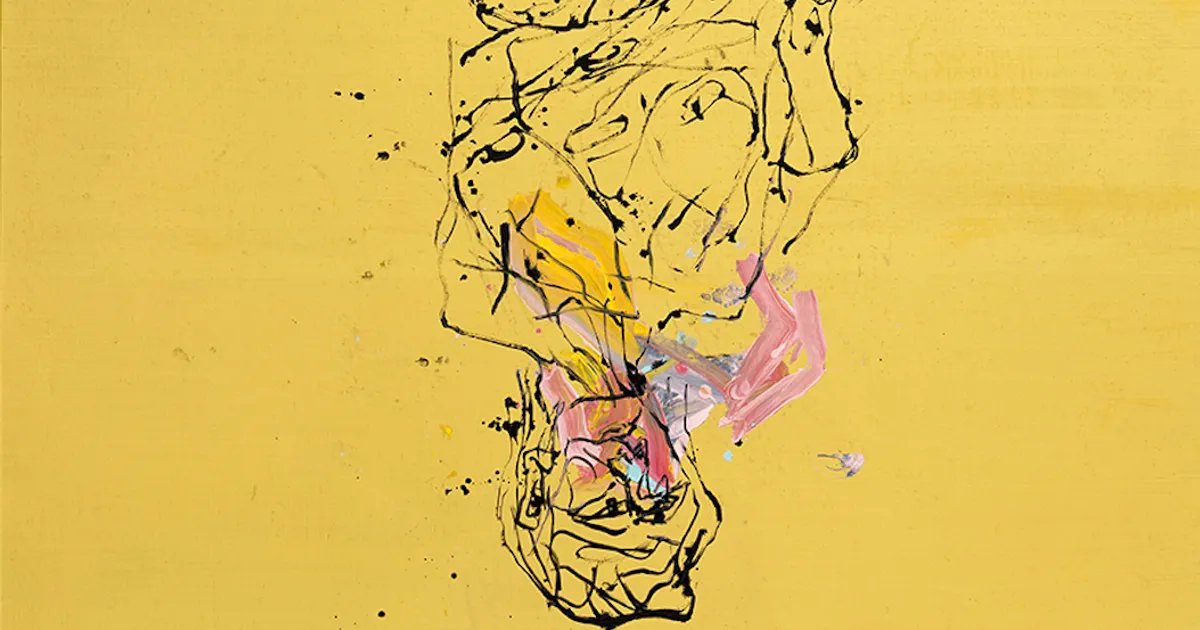
At the Fondazione Giorgio Cini, from 6 May to 27 September, the monographic exhibition ‘Eroi d’Oro’ brings together a new series of monumental paintings, the recent outcome of a painting practice spanning over six decades. Curated by Luca Massimo Barbero and organised in partnership with the Thaddaeus Ropac gallery, the exhibition presents very recent works in which painting once again radically questions its own material and symbolic status. The starting point is a pictorial practice founded on a continuous redefinition of the image, constructed through cycles, returns and ruptures, from the early Heroes to the upside-down figures. As early as the 1960s, in a Germany still scarred by the trauma of Nazism and the war, these ‘heroes’ appeared as isolated, deformed, wounded figures, devoid of rhetoric, setting in motion a trajectory that in the 1990s shifted to the surface, to the gilded backgrounds, treated as decorative planes devoid of depth. The canvases on display, all large-scale (some over four metres), condense tensions already present in Baselitz’s work: the relationship between figure and surface, physical presence and the dissolution of space, gesture and image.
The luminous, reflective backgrounds eliminate any illusion of depth, returning the painting to a state of absolute frontality: ‘gold absorbs space and shadows’, explains the artist. Against this compact surface are set nude figures outlined in clean lines; they are large, yet almost weightless.
[ad_2]
Source link