[ad_1]
Published on
May 16, 2026

Image generated with Ai
Madhya Pradesh, long celebrated as the tribal heart of India, is scripting a transformative narrative in preserving, promoting, and economically empowering its indigenous communities. Central to this movement is Aadirang, a pioneering e-commerce and digital empowerment platform launched in March 2021 by Vanya Prakashan, the publishing division of the Madhya Pradesh Tribal Affairs Department. By offering Gond and Baiga artists from districts like Dindori, Mandla, Shahdol, and neighbouring forested regions direct access to collectors both in India and abroad, Aadirang eliminates exploitative middlemen, allowing artisans to retain full value for their work. Initially conceived as a support initiative during the pandemic, the platform has grown into a nationally recognised model for cultural commerce and tribal empowerment.
Madhya Pradesh is home to an extraordinary tribal legacy. With 43 officially recognised Scheduled Tribes comprising roughly 21.1 percent of the state’s population—over 1.53 crore people—it serves as a living repository of centuries-old art, craft, and cultural traditions. Among these communities, the Gond and Baiga tribes hold special significance. The Gonds, the second-largest tribal group in Madhya Pradesh, primarily inhabit districts such as Dindori, Mandla, Chhindwara, and Balaghat, contributing richly to local art and craft practices. The Baigas, identified as a Particularly Vulnerable Tribal Group (PVTG), are mainly concentrated in Mandla, Dindori, Shahdol, and Anuppur. With more than 4.14 lakh Baigas, the state stands as the largest custodian of this ancient community, safeguarding not only their cultural practices but also their centuries-old artistic heritage.
The narrative of Gond art is deeply intertwined with Patangarh village in Dindori, where painting is embedded in daily life. Nearly every household in the village nurtures skilled artists, making art both a livelihood and a cultural expression. Gond art gained national and international recognition in the 1980s when Pardhan Gond maestro Jangarh Singh Shyam was discovered by J. Swaminathan, former director of Bharat Bhavan. Exhibitions in Delhi, Tokyo, and New York introduced the world to Gond painting, creating sustained economic opportunities and enabling hundreds of artists in Patangarh and thousands across eastern Madhya Pradesh to pursue painting as a professional practice.
A landmark moment for the community came in April 2023, when Gond painting received the Geographical Indication (GI) tag, jointly conferred on Vanya Prakashan and the Tejaswini Mekalsuta Mahasangh. This recognition validates the authenticity of the art form, provides legal safeguards against imitation, and significantly enhances the market value of each piece. Paintings that once sold for nominal amounts now command thousands of rupees, attracting collectors and patrons from India and abroad. Today, Gond artists are not only preserving their ancestral techniques but also thriving economically through increased visibility and recognition.
Advertisement
Advertisement
The Baiga community is experiencing a parallel resurgence. Historically among central India’s most economically marginalised groups, Baiga artists are now achieving national and international recognition. Their art draws inspiration from their spiritual bond with forests, traditional tattooing practices, ritualistic ceremonies, and festivals like Birhanniya, capturing a unique cultural narrative. The Baiga visual language, grounded in earthy tones and symbolic storytelling, has found an appreciative audience among collectors of folk and indigenous art across the globe, including galleries in the United States. Crucially, this resurgence ensures that financial benefits reach the artists directly, fostering sustainable livelihoods and community empowerment.
Aadirang sits at the centre of this transformation. Managed entirely by the Madhya Pradesh Tribal Affairs Department through Vanya Prakashan, the platform represents all 43 tribal communities of the state. Its model combines a digital marketplace for tribal art and handicrafts, certified online training programmes in Gond and Bhil Pithora painting in collaboration with Jagran Lakecity University, Bhopal, and a growing community radio network headquartered in Bhopal, with additional digital stations being rolled out across tribal districts.
Advertisement
Advertisement
Artists are identified through meticulous district-level outreach and surveys. They are then integrated into the system with full banking and logistical support, while master artisans from within their own communities mentor them. This ensures that traditional knowledge remains community-led, self-sustaining, and passed down authentically. Further, international cultural exchange programmes allow Madhya Pradesh’s indigenous artists to act as global ambassadors, showcasing their traditions to audiences worldwide and enhancing both cultural diplomacy and economic opportunities.
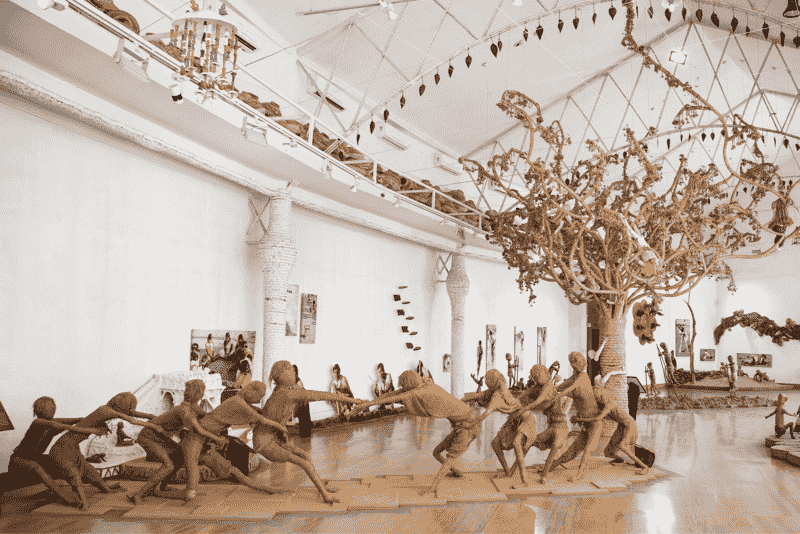
The Madhya Pradesh Tourism Board recognises tribal art not merely as heritage but as a vibrant economic and creative asset, integral to the identity of the “Heart of Incredible India.” Institutions such as the Tribal Museum in Bhopal, inaugurated in 2013, provide immersive experiences that attract global scholars, researchers, and art enthusiasts. Similarly, the Indira Gandhi Rashtriya Manav Sangrahalaya (IGRMS) continues to elevate national visibility for Gond and other tribal arts through exhibitions, workshops, and outreach programmes, thereby sustaining both interest and institutional support for these traditions.
Advertisement
Advertisement
Together, Aadirang and these cultural institutions form a holistic ecosystem that spans preservation, skill development, exhibition, storytelling, and commerce. This comprehensive model positions Madhya Pradesh at the forefront of India’s tribal art renaissance, demonstrating how cultural heritage can be leveraged for both economic empowerment and global recognition.
The results are transformative. Madhya Pradesh’s tribal artists no longer wait for discovery—they are reaching audiences globally on their own terms, guided by their own voices and supported by a state committed to protecting and celebrating its rich indigenous legacy. The revival of Gond and Baiga art underlines a broader vision: that culture, commerce, and community empowerment can converge to create sustainable, globally recognised indigenous economies.
Advertisement
Advertisement
This content is protected under the Copyright Act, 1957 (Government of India) and applicable international copyright laws. Unauthorized scraping, AI extraction, reproduction, or republication is strictly prohibited. Read our Copyright Policy.

[ad_2]
Source link