
[ad_1]
When 26-year-old Jacob Marks was a teenager growing up in Manchester, he didn’t know what craft was, and he certainly didn’t know it could be a way of making a living. One day, his technology teacher demonstrated how to use a jigsaw, and Marks was struck by the idea that you could make things with your hands. He went to B&Q that week, bought a £30 jigsaw, set up a workshop in the cellar of his family home, and made a doorstop as a present for his mum.
Marks slowly accumulated more tools and started to share what he was doing on YouTube. His following grew to more than 20,000 followers, and he started receiving sponsorships from tool brands, becoming a kind of craft influencer. Without knowing it, he was reimagining one of the most ancient crafts – woodworking – for a new generation. Making, he discovered, was both a means of expression and a kind of salvation.
Ten years later, Marks is still sharing his making process as part of Studio Plait, a “progressive and collaborative” collective of young craftspeople that runs regular workshops, including Marks’s upcoming weekend chair-making course. His work has been exhibited at the Design Museum, and he has been selected for the 2026 Toast New Makers programme, allowing him to put some of his experimental ideas using pine resin into production.
This is craft, but not as you might know it.Marks is part of a young, diverse generation of makers who use traditional craft processes to interact with the modern world. They use it to build community, to find innovative ways of working with renewable materials, to create purposeful work and products. Craft was once synonymous with ancient workmen burrowed away in dusty workshops. Those days are gone. Contemporary craft is bright, progressive, alive. Old ways of making have been reconsidered and updated; they are used now to create objects that look forward while nodding to the past, and that bring joy and excitement to their owners. Each of these designers is younger than 30. Welcome to their new world of craft.
Jacob Marks, London
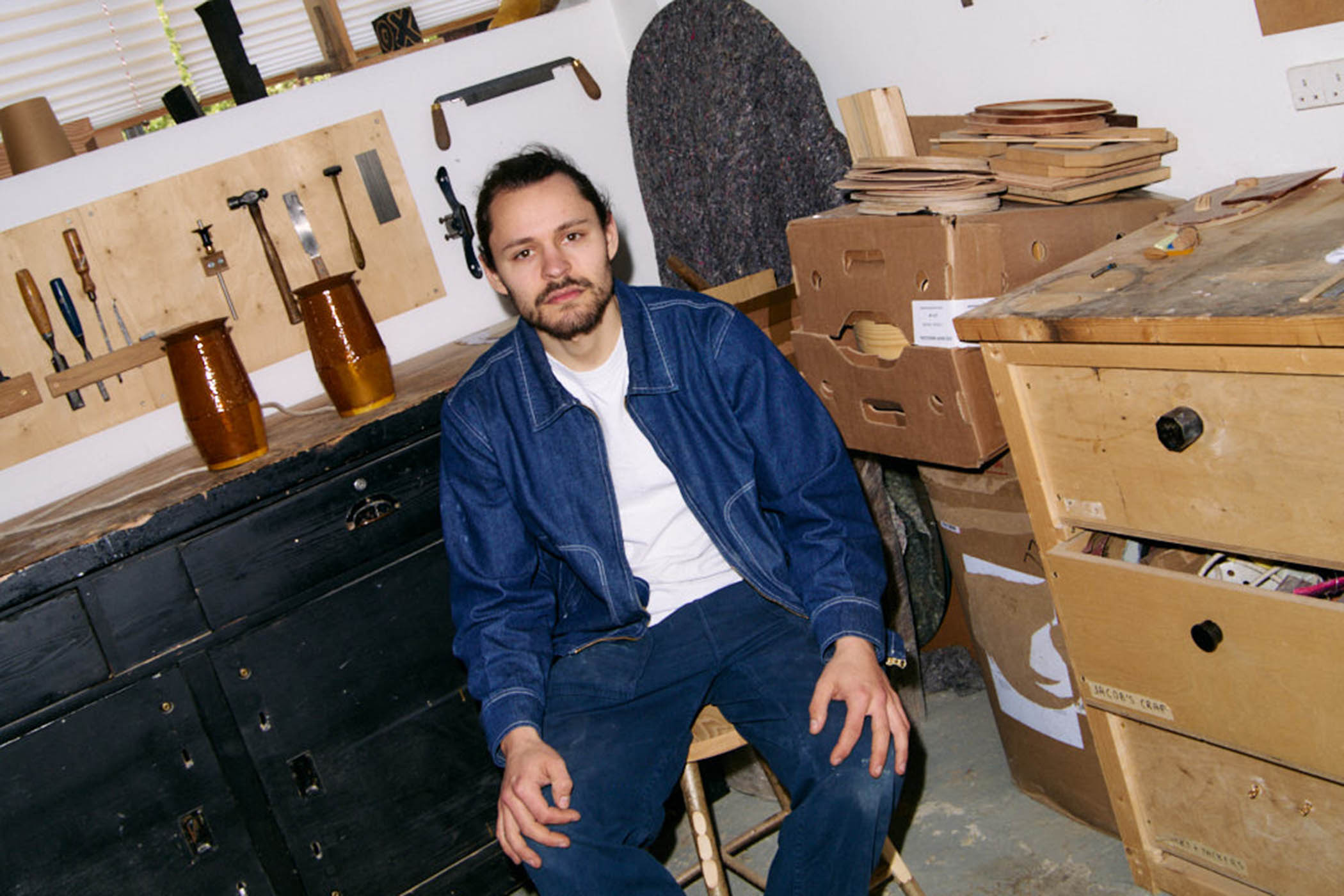
Jacob Marks discovered the many uses of pine resin while he was a furniture design student at Kingston University. Resin, which is produced by trees to heal wounds, protecting them from disease, has been used by humans for centuries, from coating spears to making ships watertight. “I was like, what can I do with this material? What are its physical properties, its constraints. I’m just always experimenting, trying to work out what I can use it for next…”
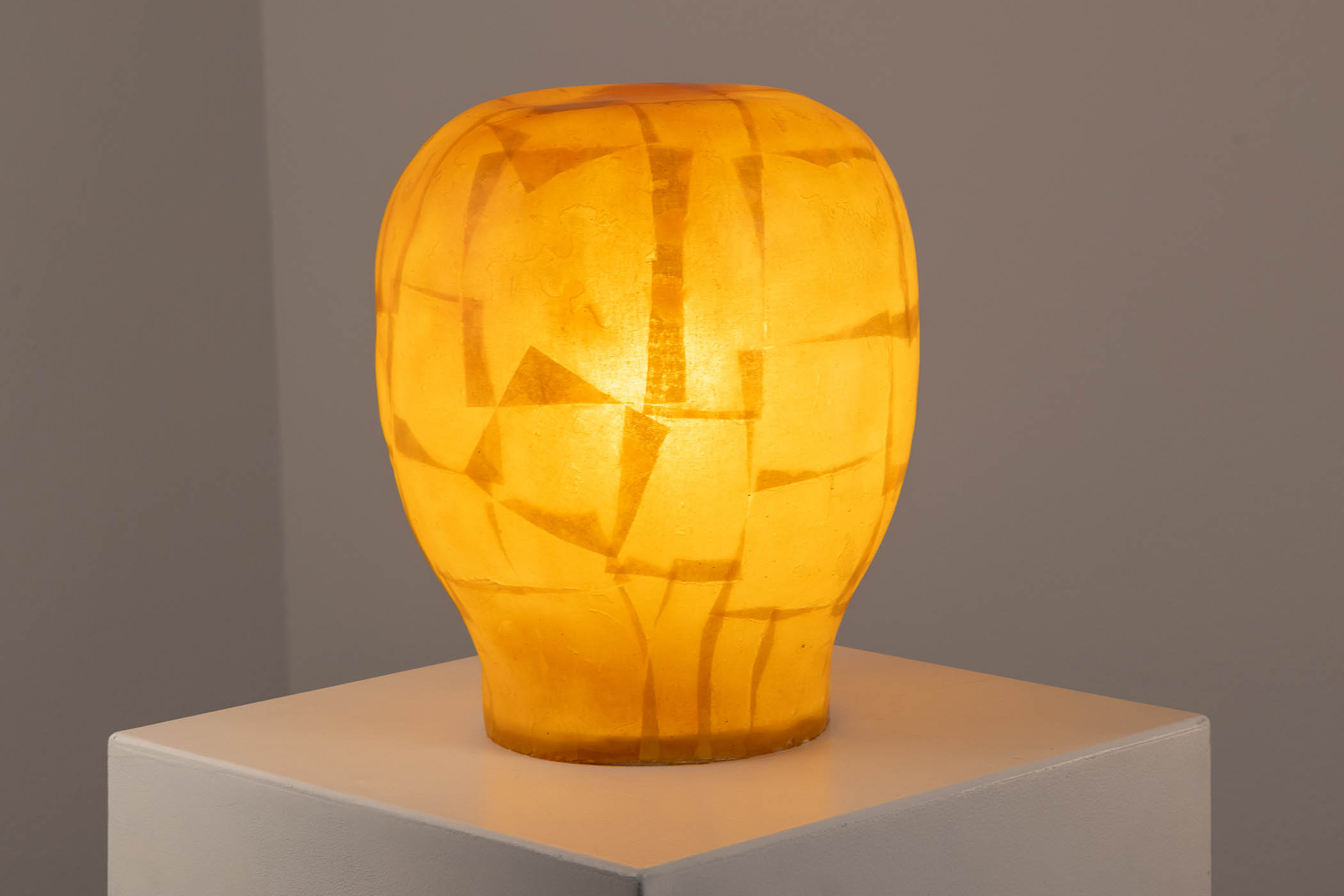
Marks, who is 26, heats resin harvested from pine trees in Portugal and pours it into moulds to produce vessels and door handles, which have a lovely golden quality, a little like amber. He also makes a luminescent lamp by dipping sheets of paper into the resin and collaging them together. Marks grew up in Manchester, and works in a shared studio space in Platt’s Eyot, an island on the Thames. His interest in making things was triggered by a DT lesson at school. Now he asks, “How can we take ancient techniques and processes, with all that wisdom attached, and make them relevant today?” His Wattle collection, which comprises three pieces – a bed, a mirror and a stool – shows the possibilities of coppiced hazel. “I always return to the theme of reinvention.”
Mitakshara Chaudhary, Kashmir
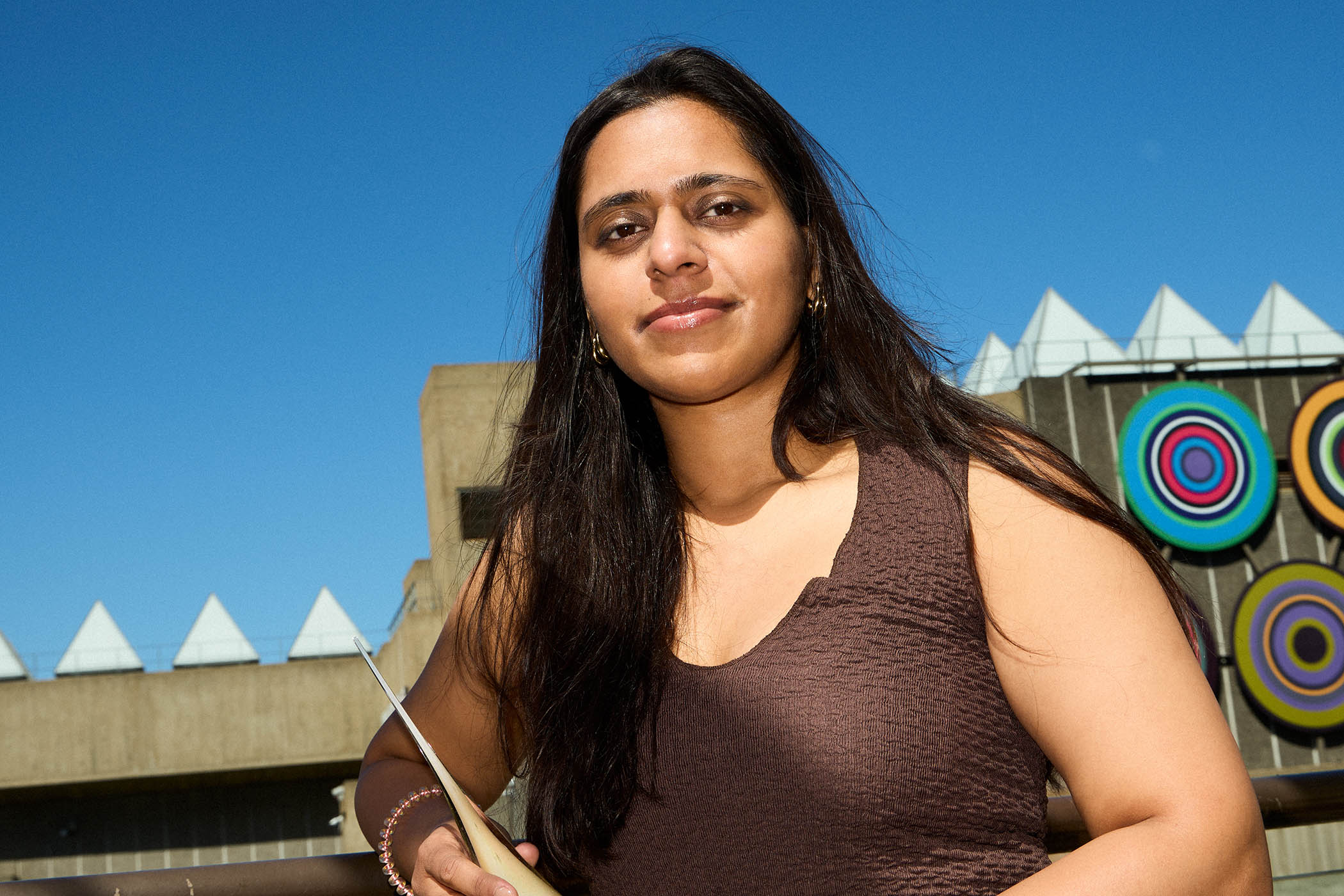
Mitakshara Chaudhary mixes glass and ceramics to make sculptural and functional objects. Originally from Jammu in Kashmir, India, she studied architecture in Delhi before moving to London for a Masters in ceramics and glass at the Royal College of Art. “I turned against architecture,” she says. “I didn’t want to make houses. I was inclined towards materials, and I wanted to work with my hands, not software.”
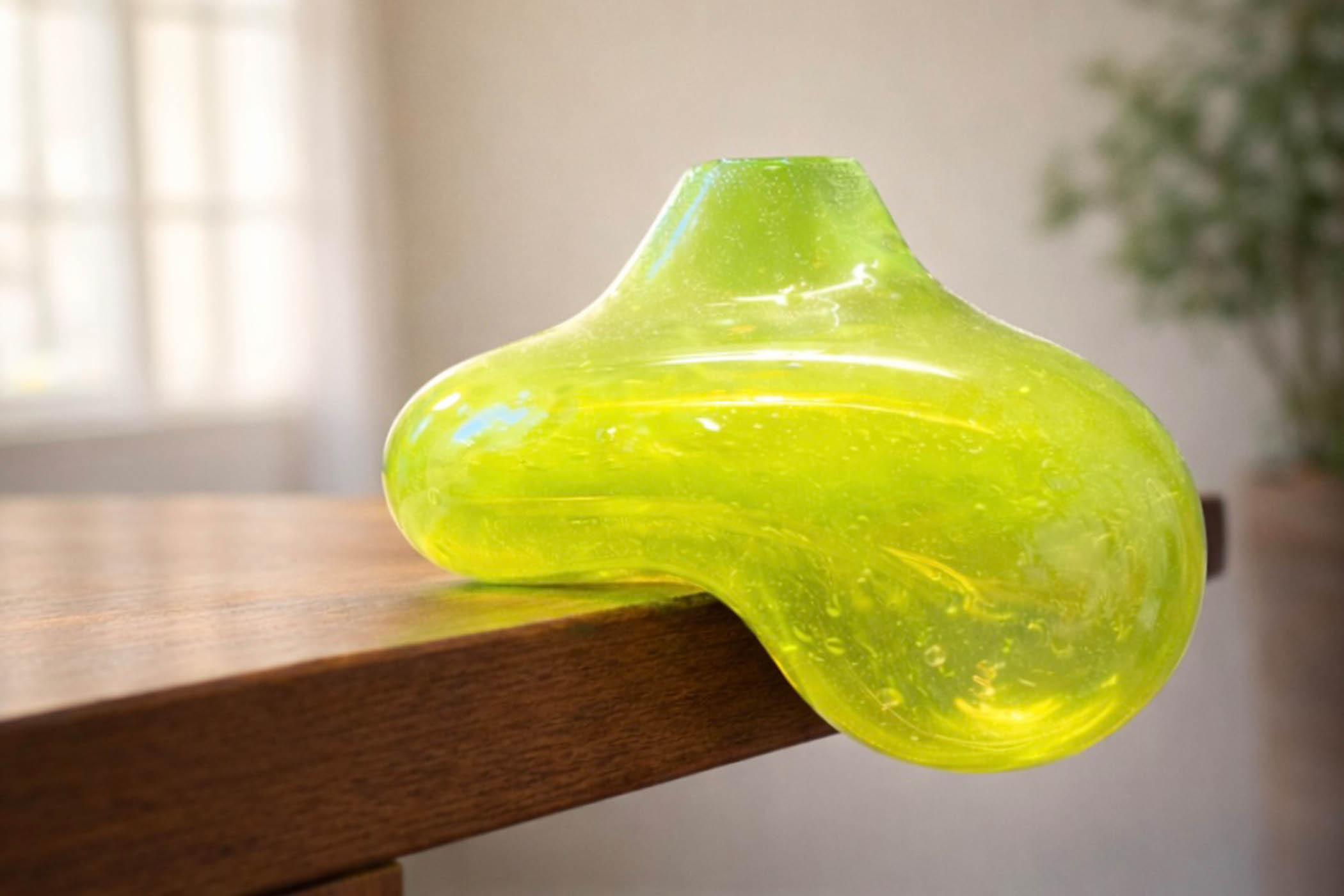
Chaudhary, 27, works mostly from her studio in Jammu, where she digs her own terracotta clay from local river banks. She returns to London for fairs (she’s taking part in the Future Icons Selects which opens on 14 May as part of London Craft Week), and to create large-scale glass pieces at the space she rents from her mentor, the glass artist Jon Lewis, who has a studio in Essex. Chaudhary’s recent work – four sculptural vases – pushes glass-making to the limits of “How much I can blow the glass?” For every successful piece there are often two or three that don’t work. Despite the wealth of heritage crafts in India, Chaudhary says it was necessary to come to London to find an environment where craft is appreciated. She’s seen an increase in interest in craft among people of her generation, and some government support for craft residencies for ceramics and textiles, but there are very few people making glass. Chaudhary is trying to keep the tradition alive.
Andre Williams, London
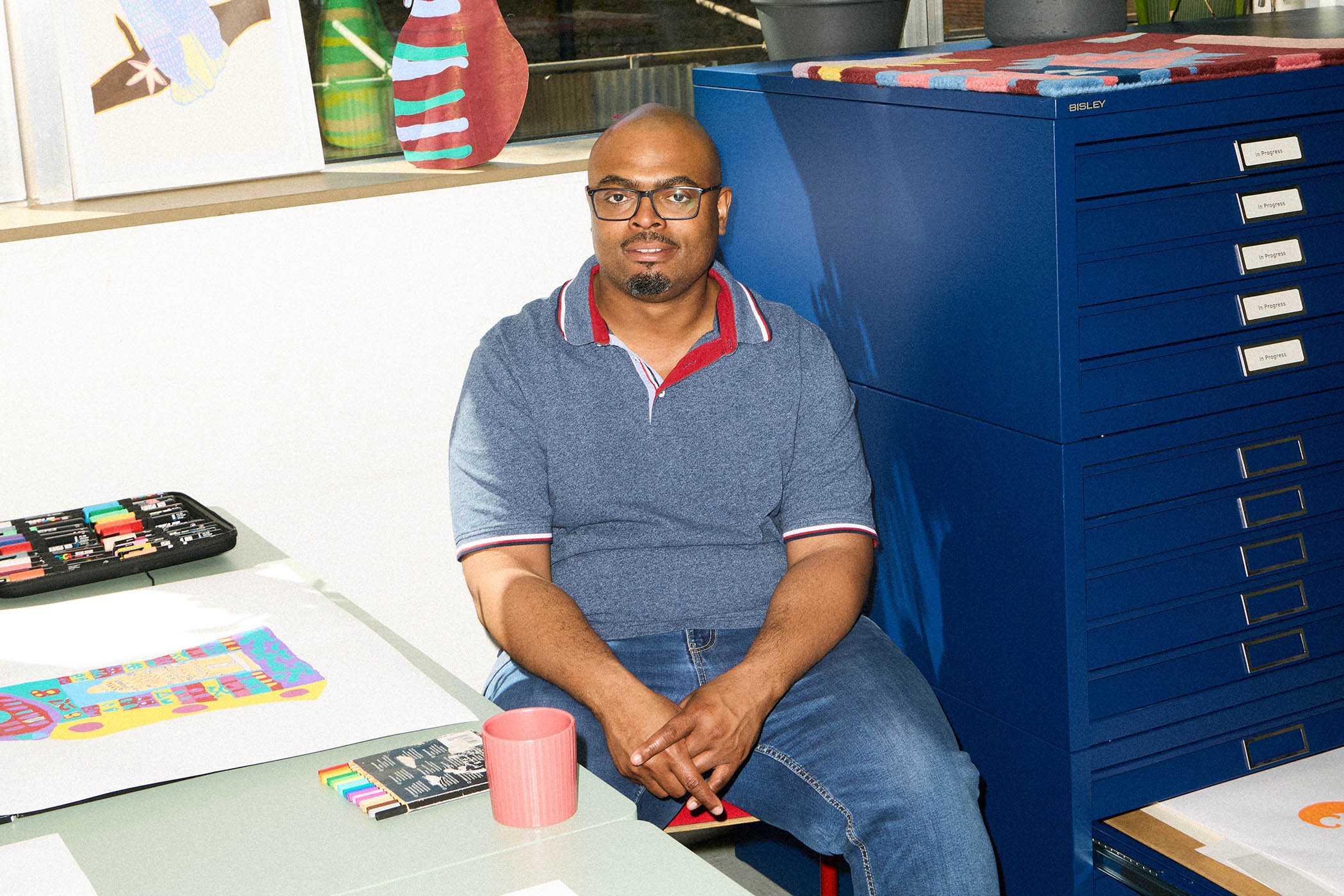
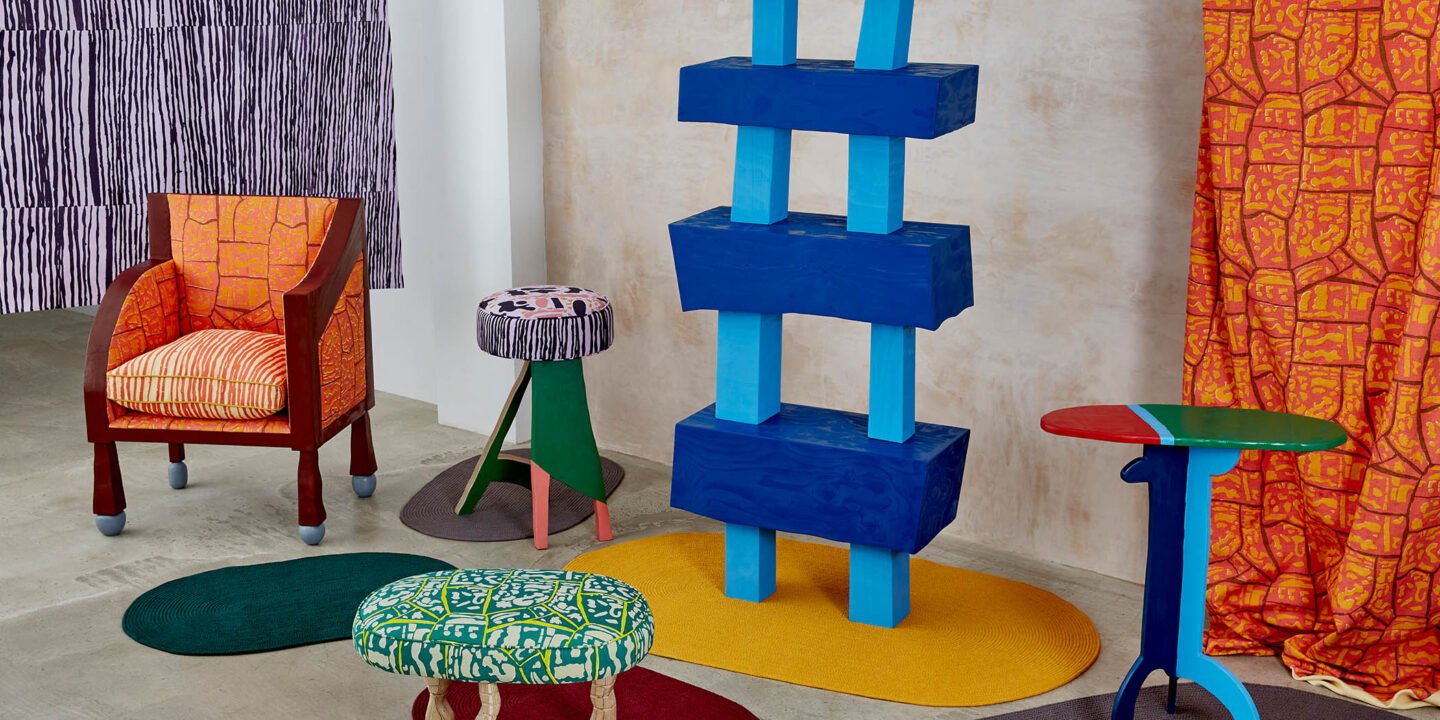
“I like making things to sit on” says Andre Williams, a London-based multi-disciplinary artist. Williams’s practice begins with drawings inspired by everything from African architecture to streetwear and bright 1980s computer graphics, which he then translates into colourful full-room sets filled with many different kinds of furniture. The eclectic sets are often slightly wonky. “I want people to have that powerful feeling of being amazed,” he says.
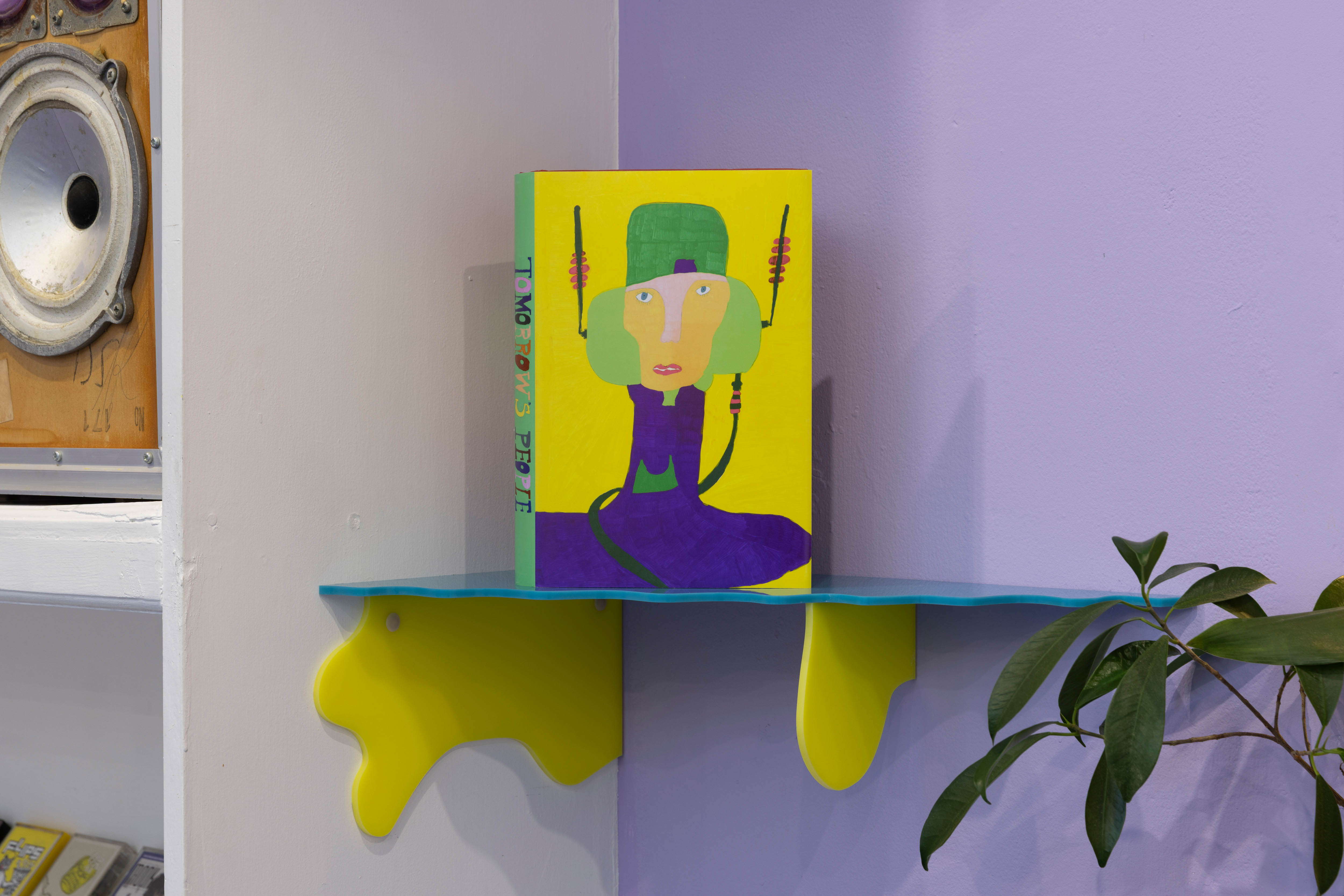
Williams has been making furniture since 2020. His drawings are translated directly into vector drawings for chairs, shelving systems, stools and tables using repurposed materials by furniture makers at the Erith Exchange, a community-led furniture workshop. The results are slightly topsy-turvy, and sometimes not conventionally functional. Chairs are upholstered in Williams’s screen-printed linen textiles, and surfaces are hand-painted and waxed so they become highly decorative sculptural pieces.
“Colours are important in a chair,” he says. “Orange is a happy, joyful colour – you can sink into an orange chair and relax, put your feet up. Or sit at the bar on the purple, green and pink Frog Stool.” Williams wants people who see his work to smile and have their own new ideas.
Newsletters
Choose the newsletters you want to receive
For information about how The Observer protects your data, read our Privacy Policy
[ad_2]
Source link