[ad_1]
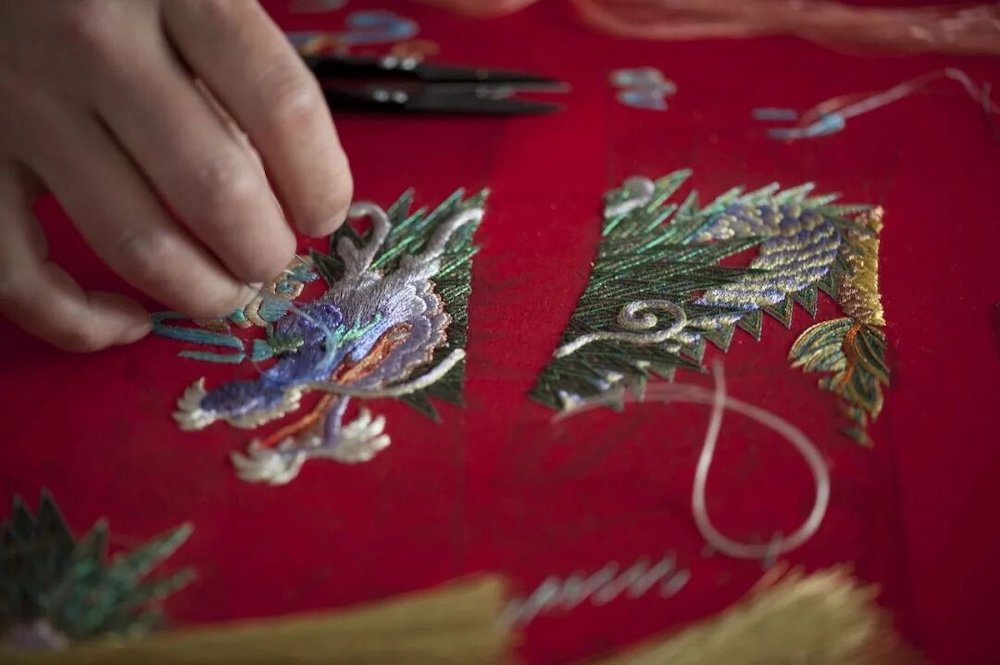
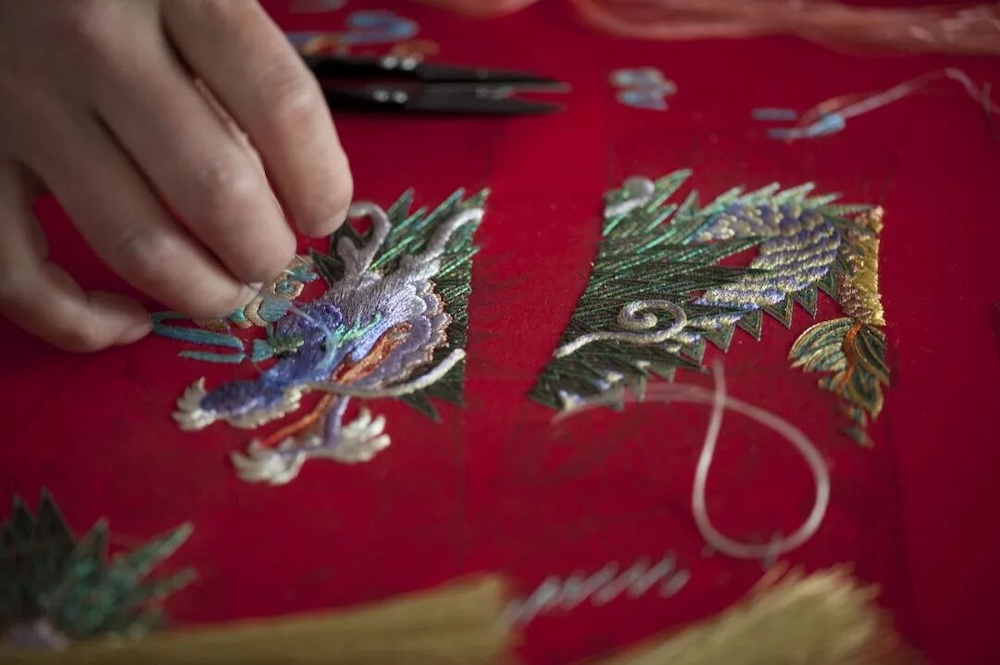
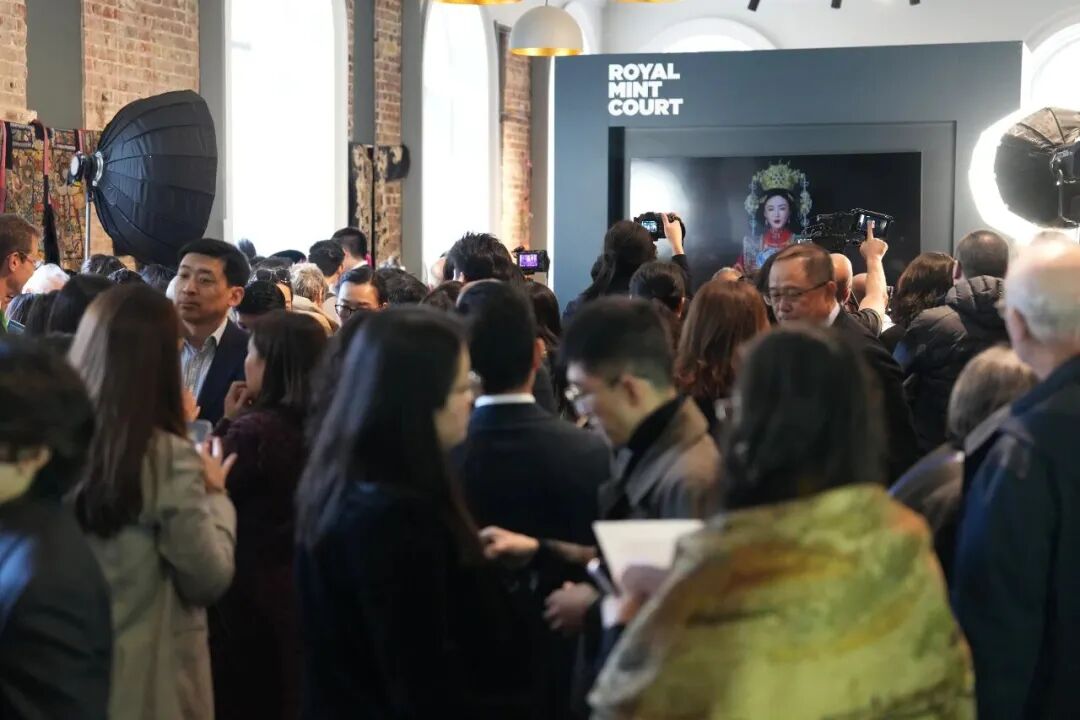
At Royal Mint Court in London, the China Pavilion of London Craft Week opened on 12th May 2026 with THOSE WHO MAKE CHINA BEAUTIFUL, organised and curated by the Art and Design Press. Bringing together wedding garments, ethnic textiles, symbolic motifs and contemporary craft practices, the exhibition looks beyond ideas of heritage as something fixed, asking how traditional craft can continue to exist as a living and evolving language today.
“I think there is a very simple reason why the China Pavilion is always one of the very best in London Craft Week. There are thousands of years of culture and expertise to draw on, and it is a very diverse country. There is always something new to focus on and bring to the British public”
– Guy Salter, Founder and Chairman of London Craft Week
Within the international art system, “tradition” often occupies an ambiguous position. On the one hand, it is regarded as an important symbol of cultural identity; on the other, it constantly risks becoming commodified, aestheticised and reduced to visual cliché. Many presentations of Eastern craft ultimately remain at the level of the “beautiful,” the “ancient,” or the “exotic,” without truly entering contemporary reality. Yet the works presented in this year’s China Pavilion continuously update and reinterpret tradition through contemporary art and fashion design, challenging conventional perceptions of traditional craft itself.
The exhibition unfolds through three curatorial threads: reconstructed historical wedding attire, the textile systems of Southwest Chinese ethnic minorities, and auspicious motifs that run throughout the exhibition space. Together, they form a broader discussion about the emotional structures embedded within Chinese culture – how family, marriage, female labour, bodily experience and intergenerational memory are preserved through needlework, fabric and handcraft.
Entering the exhibition, the first thing that establishes a sense of historical depth is Chen Shiyu’s reconstructed wedding garments from the Han, Tang, Song and Ming dynasties. What makes these works significant is that they move beyond mere historical “restoration.” They remind viewers that traditional Chinese clothing is not only a matter of exquisite craftsmanship and aesthetics, but also a visual structure of order shaped by millennia of accumulated cultural memory.
The Han dynasty shenyi, with its cross-collar and connected upper and lower structure, emphasises bodily containment within ritual systems; the Tang dynasty’s brocade round-collar robes and large-sleeved garments reveal the influence of Central Asian motifs and the cosmopolitan openness of the period; Song dynasty wedding attire returns to a restrained literati elegance, while Ming dynasty fengguan xiapei transforms marriage into a highly ritualised visual system of power. These changes are not simply stylistic. They reflect deeper transformations in social structure and concepts of the body throughout Chinese history. What appears to be clothing is, in fact, the externalisation of an era’s ethical relationships.
Particularly in the Ming wedding garments, python-dragon motifs, woven gold embroidery, and the structure of the dizhi guan create a sense of ceremonial weight almost comparable to state ritual itself. By contrast, the restrained linearity and understated elegance of Song garments return the body to a quieter and more introspective spiritual order. This discussion surrounding “the body within time” becomes further contemporised in Guo Pei’s works. Pieces such as Silver Jacket Lantern Skirt, Cherry Blossoms and Flying Phoenixes, and Phoenix Gathering Auspicious Clouds Skirt reactivate the temporality embedded within traditional craftsmanship itself. The Silver Jacket Lantern Skirt employs the highly labour-intensive Chao embroidery technique of raised three-dimensional couching, requiring artisans to repeatedly wrap metallic and silk threads to create relief-like surfaces. The undulating textures across the embroidered surface appear less decorative than sedimented traces of accumulated time.
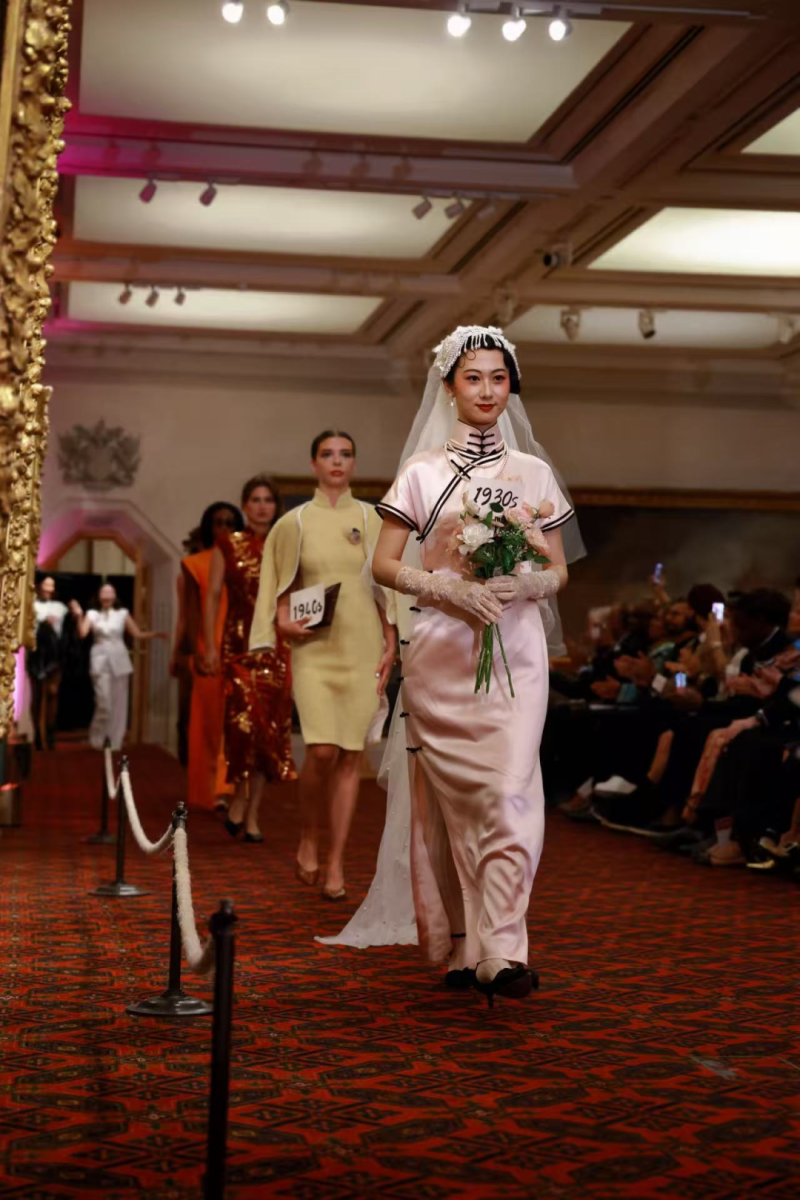
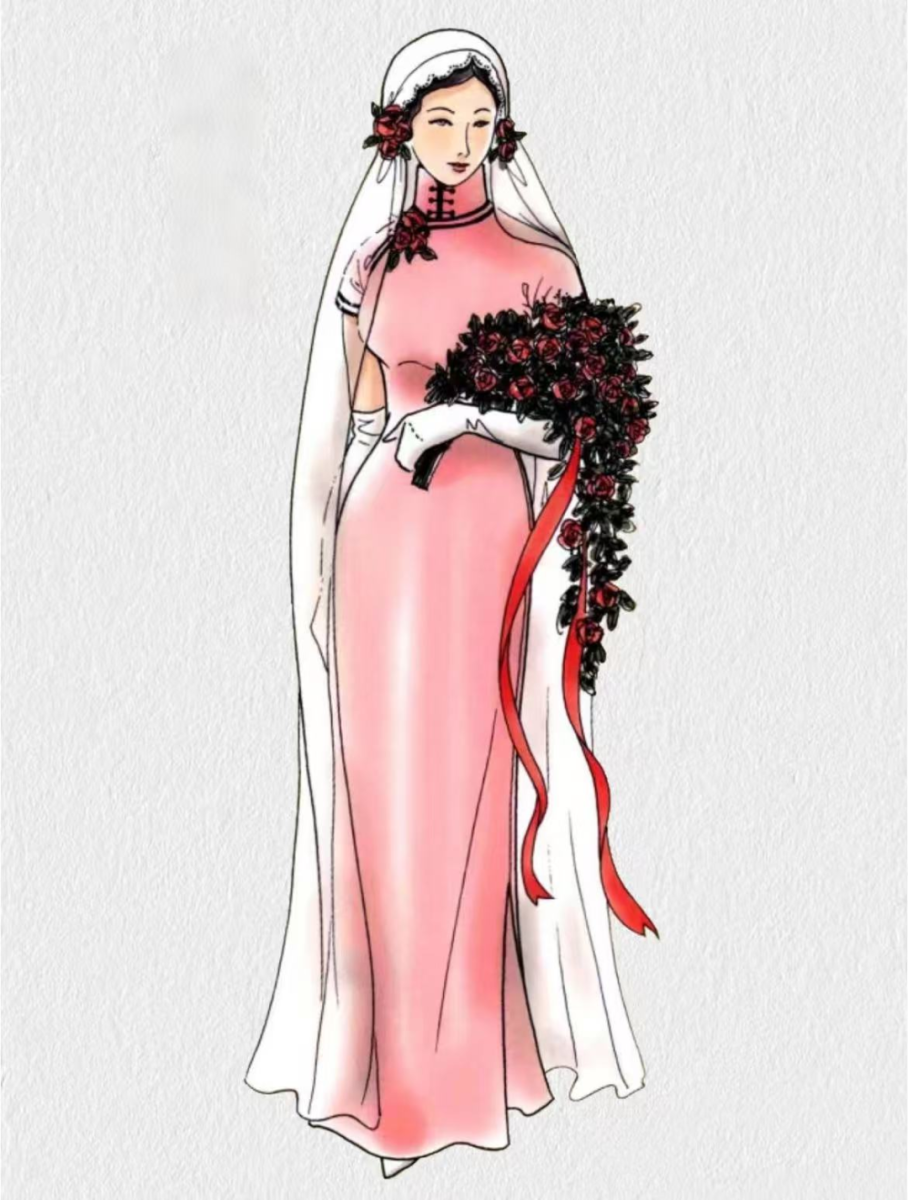
Compared with the ritualistic qualities of historical wedding garments, Yan Wen’s She Married Herself situates the exhibition in a distinctly modern context. Based on 1930s Republican-era wedding cheongsams (qipao), the work revisits the emergence of female subjectivity within modern Chinese society. While retaining traditional flat-cut tailoring, pankou fastenings and edging techniques, the qipao was also among the first Chinese garments to emphasise the female body itself. Unlike earlier wedding attire that concealed bodily form within ritual structures, the Republican-era qipao signalled women’s increasing right to self-presentation.
This reconsideration of the female body becomes more subtle in Zou You’s Admonitions on Paper. Compared with the exhibition’s rich embroidery and textile structures, Zou’s works are almost silent. Linen, cotton, silk and hemp create textures resembling paper, rubbings and worn historical surfaces — like old letters weathered by time. These garments seem less “designed” than excavated from memory itself, approaching the traditional Chinese aesthetic logic of liubai — emptiness and restraint.
If the wedding garments discuss “the body within ritual,” the Southwest ethnic minority section explores “lived experience within material.” Yang Fengrui’s Dong cloth series is among the exhibition’s most materially investigative works. Repeatedly dyed, steamed and beaten with indigo, rice wine, oxhide glue and egg white, Dong cloth develops an almost leather-like rigidity and sheen. Originally an everyday material in Southwest China, it acquires a strikingly contemporary structural quality within modern design.
Particularly notable is the Lacquer Through Time series, inspired by the red-and-black colour systems of Liangzhu lacquerware. Ancient ritual colours are translated into contemporary fashion language, where traditional craft is realised through highly contemporary methods.
Dragon Robe further combines Miao embroidery with Dong cloth. The relationship between silk and cotton, softness and rigidity, embroidery and textile structure reflects a distinctly Eastern material philosophy: different elements do not oppose one another, but mutually generate meaning.
Hu Yuehua’s large-scale installations, Container of Memory and They shift the exhibition from clothing into spatial experience. Particularly striking is Container of Memory, in which the sewing pouch traditionally used by Dong women is enlarged into an architectural structure composed of nearly 3,000 folded fabric modules, creating a complex order between textile, sculpture and architecture.
They further emphasises the continuity of collective female labour. Its layered embroidered structures resemble a bodily language slowly passed between generations.
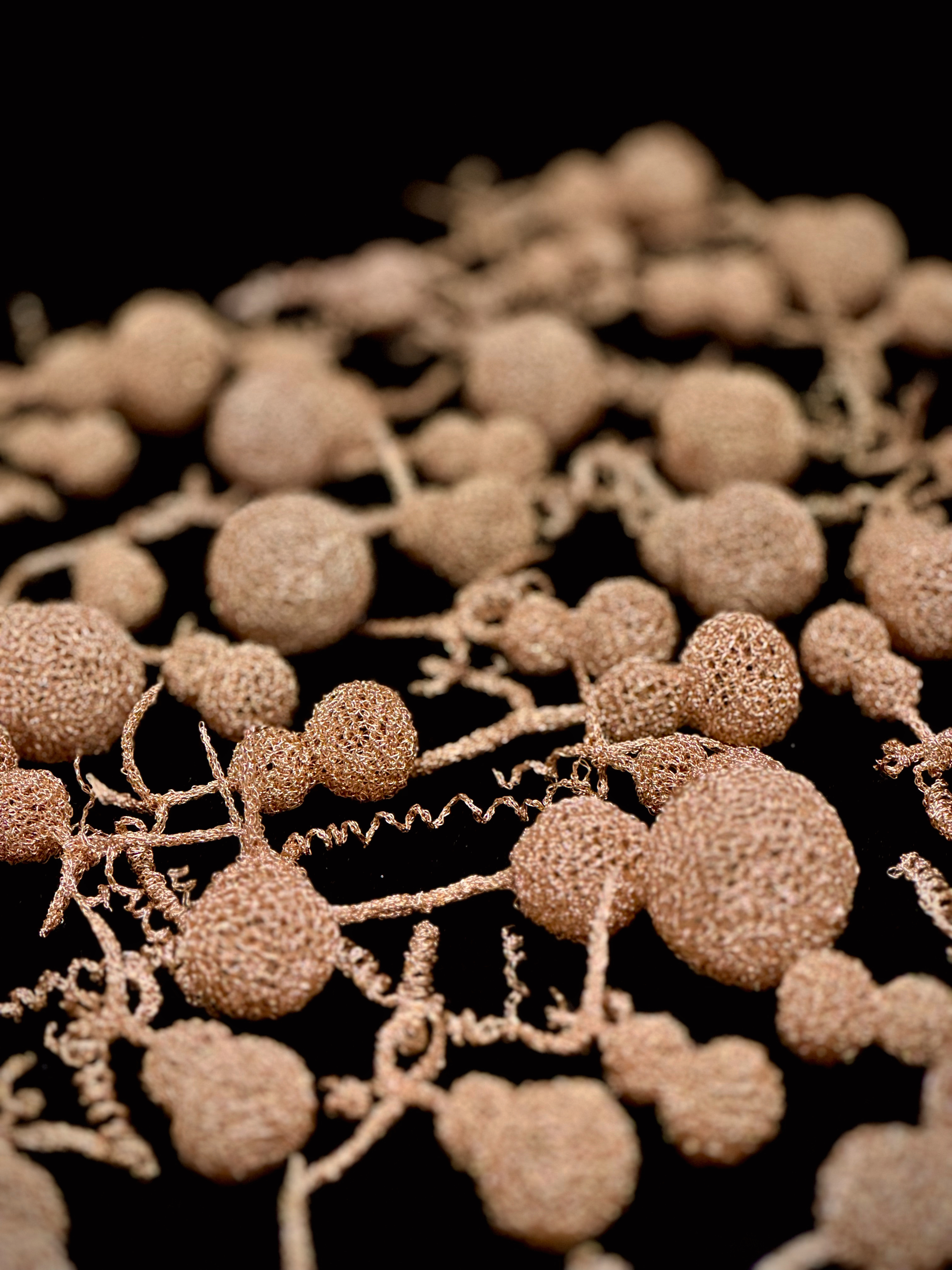
Beyond these works, the exhibition also presents some younger generation of artists. Artist Guan Guan transforms the traditional Chinese gourd into an object situated somewhere between jewellery, talisman and container of memory through delicate gold-thread structures. In Chinese culture, the gourd carries complex symbolism – associated with blessings, protection and vitality through its homophonic relationship with the word fortune. Yet Guan Guan avoids presenting this imagery through straightforward folkloric aesthetics. Instead, intricate metallic wrapping and fibre structures reinterpret the object into a distinctly contemporary visual language.
Within the China Pavilion, works such as these are especially important. They break open the definition of “tradition” itself, developing a language system more closely aligned with contemporary art, and entering broader discussions surrounding the body, materiality, memory and identity. Ultimately, the exhibition’s central concern is not simply traditional craft, but what might be called a “living tradition.” The exhibition repeatedly suggests that true tradition does not belong exclusively to museums or the past. Rather, it continues to shape contemporary life and remains embedded within present reality.
For this reason, the China Pavilion ultimately presents not a static image of “Chinese style,” but a cultural vitality that continues to evolve. Behind these garments, fabrics, embroideries and motifs lies a deeper question: how do people continue to understand time, family, intimacy and companionship through handcraft? Within every stitch and thread, what is preserved is never merely craft itself, but an entire Eastern understanding of how life is lived.
“The exhibition would tell the world about the deep and poetic emotional, aesthetic and cultural pursuits of Chinese people through the works of female craftsmen and designers. ”
Li Hongfei, Deputy President and Deputy Editor-in-Chief of Art & Design Press
London Craft Week 2026, 11th -17th May 2026 @Londoncraftweek
Categories
Tags
[ad_2]
Source link