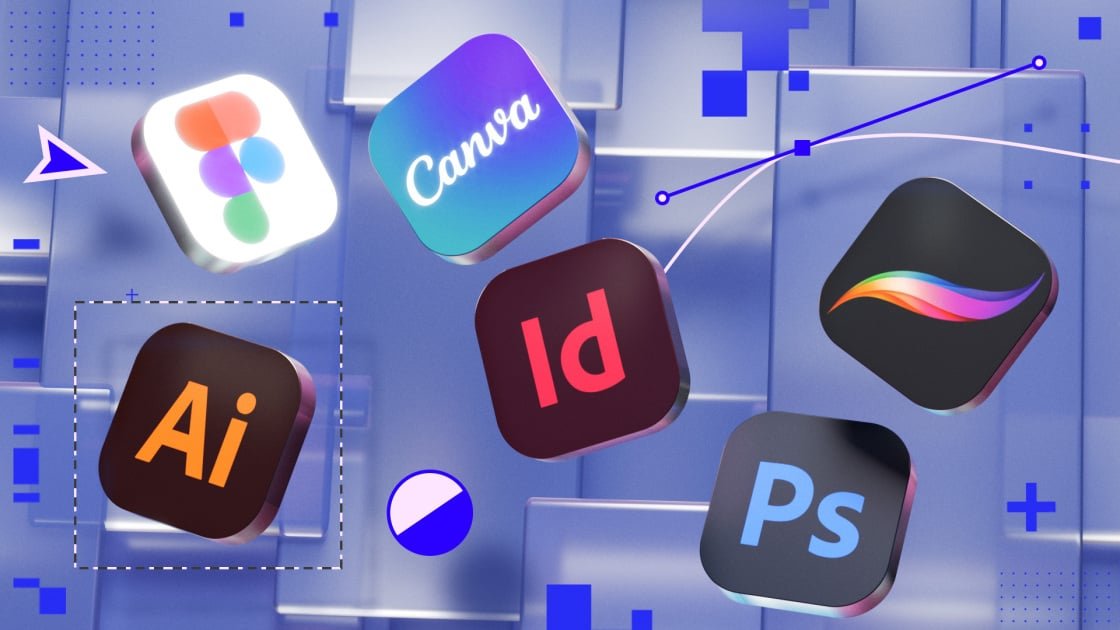
Graphic design software has forever changed the way designers and fine artists work, with AI further accelerating developments. PCMag has been evaluating graphic design software for more than a decade, so you can trust that we know what’s best for every artistic need. We’ve tested programs that have been around since the beginning (such as CorelDraw, Illustrator, and Photoshop), as well as newer arrivals that help you create marketing content for social media platforms (such as Adobe Express, Canva, and Figma). Our top image editing pick is Adobe Photoshop, but our selections also span the collaboration, interface design, page layout, typography, and vector editing categories. Make sure to click through to our detailed reviews of each entry, followed by our guide on how to pick the best software for your work.
Deeper Dive: Our Top Tested Picks
EDITORS’ NOTE
February 9, 2026: With this update, we have removed Serif Affinity Designer 2. We have vetted our remaining picks for currency and availability and are currently evaluating the redesigned Affinity for inclusion.
- Vast set of photo correction and manipulation tools
- Cutting-edge generative AI features
- Slick user interface with a lot of guidance
- Mobile and web design capabilities
- Rich drawing and typography options
- Excellent raw camera file support
- Cloud Documents, collaboration features, and Synced Libraries
- No perpetual license option
- Runs many processes in the background
If you work with raster images and need compositing layers, Photoshop is hard to beat. Adobe’s software is the industry standard, so any clients or vendors you deal with likely want files from it. Other apps support its formats but don’t guarantee full compatibility and lack Photoshop’s slick interface and cutting-edge image manipulation tools. It’s also the top choice for detailed photo correcting, editing, and enhancing.
Professional graphics designers: Designers usually work in Illustrator and InDesign, but they often need to edit photos as well. That’s where Photoshop comes in, with its state-of-the-art precision tools for working with layers of raster and vector images alike.
Professional photographers: Retouchers, in particular, as well as those who need to make composite images, rely on Photoshop. The app lets you make detailed pixel-level edits and apply advanced features and effects, such as automatic noise reduction.
Serious amateur photographers and students: This group of users can greatly benefit from learning to use Photoshop, and the program includes multifarious help and tutorial resources.
Video editors: If you need to create intro, outro, and overlay graphics for your video productions, you won’t find a better tool than Photoshop.
Pricing Model
Subscription
Learn More
- Free
- Lifelike brush, pen, and pencil physics
- Available for iPad, iPhone, and Windows
- Highly editable raster, vector, and live brushes
- Simple and effective animation, now with presets
- Excellent support
- Can’t access Illustrator brushes
- No Android or ChromeOS version
Adobe’s painting, sketching, and watercolor app makes creating art feel incredibly natural. It also includes effective animation tools and excellent help resources. The app is now entirely free, meaning you get all the once-premium brushes and shapes at no cost. Adobe provides 5GB of cloud storage for your creations. You must have an iPad, iPhone, or Windows device (such as the Microsoft Surface) to use Adobe Fresco. You also need a stylus, such as the Apple Pencil or Surface Slim Pen. If you meet those requirements, simply download the app and start creating.
Digital or traditional artists: Fresco saves artists all the mess of dealing with paint and other supplies, while replicating the feel of working with physical materials.
Illustrators: The app lets you create images with vector and raster content that’s suitable for marketing or promotional applications.
Students and hobbyists: Since Fresco is completely free, it should appeal if you are just getting started in the visual arts and don’t have a lot of money to spare.
Learn More
- Unparalleled typography tools and features
- Advanced features for vector brush making
- Superb tracing
- Powerful Puppet Warp feature
- Complete integration with Creative Cloud ecosystem and Adobe Capture
- No perpetual license option
- Inconsistent key commands and processes between Illustrator and InDesign
- Illustrator on the web not supported on Safari
Illustrator is the premier vector editing and drawing application. Yes, you can edit vector graphics and pull off some effects a bit easier in some other apps (namely CorelDraw). But most graphics designers are still better off learning and creating with the industry standard Illustrator. With it, you also get companion tablet apps for creating digital drawings and impressive type support. The app now has AI capabilities, such as the ability to create or expand vector images based on your text prompts.
After Effects users: Illustrator provides vector characters, shapes, and paths for use in Adobe’s motion graphics application.
Professional graphics designers: If you want to produce attractive icons and logos, Illustrator is the best tool for the job. It’s also appropriate for creating jobs you intend to send to printers, such as packaging and posters.
Hobbyists: Do you want to create visual art but don’t have drawing skills? The Bézier curves, shapes, and vector paths allow you to create geometric line art and cartoons.
Technical Illustrators and typographers: Anyone who needs to produce diagrams, infographics, or patterns can find all the tools they need in Illustrator. Likewise, no other competitor allows as much detailed control over fonts. Creating custom letters is well within its capabilities.
Pricing Model
Subscription
Learn More
- Superbly balanced contextual interface
- Easy and smart automatic global page adjustment
- Interactive export for PDFs and HTML5
- Can output to ebook formats
- Requires a subscription
- No tablet or web version
InDesign is another Adobe product that’s the default choice among pros; it’s the preeminent publication layout software. It pushed QuarkXpress out of that spot years ago. As with its Creative Cloud stablemates, Adobe continues to enhance InDesign with tools for the ever-changing publishing landscape, as well as add creativity and ease-of-use features. You also get unmatched typography tools with Adobe Fonts, along with stock media from Adobe Stock.
Layout design professionals: If you’re putting out a magazine, newsletter, or newspaper that requires multipage layouts, InDesign is the go-to software. The same goes for producers of digital publications, e-books, and PDFs.
Marketers: Brochures, pamphlets, and programs are good examples of marketing materials Illustrator can produce.
Pricing Model
Subscription
Learn More
Best for Professional Branded Content
Canva
- Friendly, intuitive interface with helpful pop-ups
- Multitude of robust yet uncomplicated AI tools
- Reasonable pricing
- Doesn’t require a design background
- Excellent free version
- Somewhat constraining for professional designers
- Potentially overwhelming number of features
- Limited typography options
Appealing modern design templates for presentations, printing capabilities, and social media tie-ins are the highlights of Canva. The desktop, mobile, and web apps are free, though you can access a wealth of extra templates and stock content for an annual fee. Canva now lets you use AI to generate images and even videos based on text prompts. The Canva Teams subscription adds strong collaboration features, too.
Marketers without design training: Canva’s template-based process lets non-designers create attractive graphics. It’s highly intuitive.
Professional designers: Even pros with time constraints might appreciate Canva’s handholding and stock content. Just keep in mind that you might run into some restrictions if you are used to having granular control over every last element of your design.
Social media producers: If you need to churn out lots of posts for Facebook, Instagram, and X, you should appreciate Canva’s templates and stock content. It minimizes the time it takes to go from an idea to a polished post.
Pricing Model
Subscription
Best for Prototype Designers
Figma
- Real-time collaboration
- Works with vector files
- Robust third-party integration options
- Good font tools
- Allows code handoff to developers
- Limited offline capabilities
- No CMYK color support for print-destined designs
Figma is the preeminent platform for collaborative interface prototyping, whether you’re trying to design anything from a desktop app to a website. The core Figma Design component provides a superb set of tools, including deep font options, extensive design kits, and useful templates. If you work on a team of designers, you will benefit from branded design systems, convenient coworking features, and robust version control. You can even hand off important aspects of your design to your developer team to vet before they start coding. The whole experience is extremely intuitive, and Figma provides lots of help resources and tutorials to help you out.
Collaborative interface creators: If you frequently need to collaborate with others for your design prototyping work, Figma is by far the best platform we’ve tested. Just keep in mind that you need a consistent internet connection to take advantage of all its features.
Prototype designers: Figma serves app and website interface designers quite well. It’s a complete solution that’s accessible no matter your level of experience.
Pricing Model
Subscription
Best for Subscription-Free Drawing, Painting, and Sketching
Procreate
- Affordable
- No subscription needed
- Bursting with features
- Minuscule learning curve to get started
- Adjustment FX and Finishing Filters
- Only works on iPads (and iPhones)
- No tear-off windows
- No cloud storage
Procreate is a premium, low-cost iPad app for artists of every kind, from professionals to hobbyists. With abundant customization features and an intuitive user experience, it helps anyone create 2D and 3D paintings, animations, drawings, hand lettering, and more.
Hobbyists and students: Given its low price, Procreate is a good fit for amateurs and learners. You won’t feel restricted by its capabilities, either.
Professional artists: Whether you’re an iPad owner who illustrates, paints, or sketches for clients or your own company, Procreate lets you express your visual creativity.
Pricing Model
One-Time Purchase
Learn More
- Fluid templates and many stock assets
- High-quality AI image and text generation
- Powerful and useful image and video editing features
- Handy ChatGPT and TikTok integrations
- Can convert files
- Some generative AI tools are hit-or-miss
- Charts and graphs don’t support live data
Adobe Express competes directly with Canva. It’s a template-based graphic design tool for nonprofessionals who need to create marketing materials or social media posts. It integrates Adobe’s vast depth of imaging smarts and lets you create something attractive without much fuss. You might be able to get by with the free version, but the paid tier gets you more stock content and the ability to store, manage, and share multiple brands’ assets (such as logos, color palettes, and typefaces). It works with both images and videos and lets you output your creations in formats suitable for all the popular social networks or as a PDF. AI features for generating font styles, images, and videos are available.
Non-artist marketers: Express is a good option if you need to quickly create compelling materials for marketing or social network posts without in-depth knowledge of Adobe’s design applications.
Social media posters: The app handles images and videos equally well. AI features help you generate additional content and edit the work you want to share on social platforms.
Visual art hobbyists: If you don’t want to pay for a Creative Cloud subscription, the free version of Express is an affordable on-ramp to visual creativity.
Pricing Model
Subscription
Learn More
- Professional-level features, some of which are unique
- Fun, easy, instant-gratification effects
- Cloud-based collaboration and asset management (subscription only)
- Easier to learn than Illustrator for a pro-level tool
- Fewer new razzle-dazzle rollouts than the competition
- Still requires a workaround to access onboard fonts managed by Extensis Connect Fonts
Like Adobe Illustrator, CorelDraw is for drawing and editing vector illustrations. However, it offers some capabilities that would require add-ins in the Adobe app, is easier to use, and costs less. An optional subscription unlocks asset management and collaboration features.
Beginning designers: If you are looking for an intuitive, relatively affordable entry into the world of vector graphics design, CorelDraw is a good choice.
Vector artists who want more effects: The program serves professionals who want to integrate special effects into their designs. These are easy to implement and highly customizable.
Subscription haters: Unlike Adobe products, whose ongoing subscription prices continually rise, CorelDraw still gives you the option to pay for a perpetual license.
Pricing Model
One-Time Purchase, Subscription
Learn More

Get Our Best Stories!
All the Latest Tech, Tested by Our Experts

Thanks for signing up!
Your subscription has been confirmed. Keep an eye on your inbox!
The Best Graphic Design Software for 2026
Compare Specs
Buying Guide: The Best Graphic Design Software for 2026
What Type of Graphic Design Software Do You Need?
Wherever you look, you see graphics of all kinds. The range of job titles for people who create them is similarly expansive: app designer, illustrator, interaction designer, photo retoucher, type designer, visual designer, web designer, and on and on. Even non-designers can get in on the act with template-based products like Adobe Express and Canva.
Some splendid tools are at your disposal, each with particular strengths. However, as developers expand individual program features, their original boundaries have become harder to distinguish. A good case in point for this is Affinity, which, after its acquisition by Canva, combines photo editing, illustration, and layout tools.

Adobe Illustrator (Credit: Adobe/Shelby Tupper)
Another major example is Adobe Photoshop, the go-to photo editing tool, because it also creates awesome photo-realistic text effects. In 1989, no one could have guessed Photoshop would become the favorite front-end web design tool (with nods to Sketch and its ilk). Though CorelDraw’s forte is in the production and service bureau industry, it also lets graphic artists produce astounding photorealistic vector art and illustration using blends, gradients, and transparencies, though Illustrator is now the best-known name in vector art.
The eight-piece CorelDraw Suite is similar to Adobe’s Creative Cloud suite. Although our review is specific to the CorelDraw graphic design app, it’s satisfying to have access to a suite of integrated tools with seamless asset interoperability and compatibility. It’s a similar story for Affinity. While Adobe’s suite remains the industry standard, exporting Affinity or CorelDraw files to Illustrator (or Photoshop) formats is a snap. It’s just as simple to open an Illustrator file in those apps.
Each designer has different abilities, goals, and psyches, and you’re sure to discover the tools and processes within these three suites that meet your needs. Ultimately, you should choose the tools that make you feel most proficient and stick with those that deliver timely, purposeful upgrades. It’s important that your graphic design software supports your technical growth and challenges you to develop the skills you need to stay relevant amid today’s visual design and interface sea changes.
What’s the Best Free Graphic Design Software?
Working graphic design professionals have to pay for their software, but some options let you dabble in the field without laying out any cash. Free levels of both Adobe Express and Canva can suffice if you need to produce quick-and-easy graphics projects, for example. The free and open-source Inkscape can get you started with vector graphics, though it makes you forgo some major creature comforts. Adobe Fresco, an exceptional drawing and painting app, is also completely free. Affinity is now free, too, but we have yet to test the latest version.
Recommended by Our Editors
A handful of free or freemium apps can replace Photoshop, such as the open-source but clunky GIMP, the impressive web-based Photopea, and a select few mobile photo editing apps.
What Software Should 3D Artists Use?
While we didn’t include them in the list above, 3D modeling and animation software are another type of graphic software you might need, depending on your creative focus. We recommend Autodesk Maya for all-around 3D modeling and Houdini if you need to learn special effects. For a free, full-featured option, try Blender.