The first-ever exhibition on Europe’s most important early female painter, Catharina van Hemessen, will open later this year in Antwerp and come to London in 2027. It starts at the Snijders&Rockox House (15 October-31 January 2027), a museum of 16th- and 17th- century Flemish art in the city where she worked, and then goes in a more focused form to the National Gallery (4 March-30 May 2027).
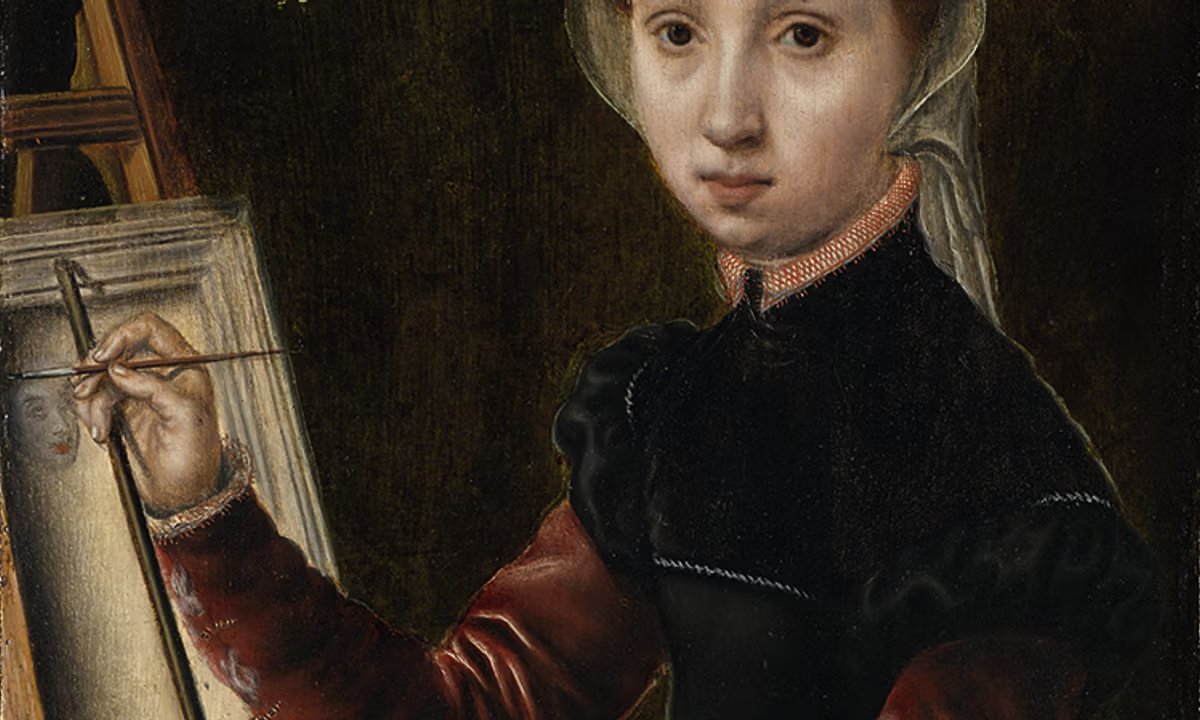
Catharina was the daughter of Jan Sanders van Hemessen, an Antwerp Mannerist painter who was influenced by Italian Renaissance art. Her greatest painting, at the Kunstmuseum Basel, is a relatively little-known 1548 work, which represents the earliest known self-portrait by a female artist. Even more significantly, it is the earliest surviving oil painting which depicts an artist (of any gender) at work—with their easel, brushes, palette and mahlstick.
Finally, she is the earliest known female artist to sign her panel paintings, which she usually did prominently. The Latin inscription in the background of her self-portrait reads: “I Catharina van Hemessen have painted myself/1548/Her age 20.”
To add to the achievement, Self-portrait at the Easel was painted at a very young age. Ariane Mensger, an Old Master curator at the Kunstmuseum Basel with a special interest in female artists, describes the work as “an important art-historical document, both in terms of the self-image of female painters and the practice of painting itself”.
Antwerp’s Snijders&Rockox House, situated less than five minutes’ walk from the artist’s family home, will reassemble most of Van Hemessen’s surviving works for the first time in nearly 500 years. Its presentation will also include works by her father.
Archival research
The Snijders&Rockox House is now undertaking extensive archival research on the family. Catharina’s brothers may also have been artists, including Hans, Gilles and the illegitimate Peter; other family members were musicians.
The National Gallery’s small-scale “Room 1” exhibition, Catharina van Hemessen, will focus more narrowly on her own work.
Although Van Hemessen’s Self-portrait at the Easel will be coming to London, where the exhibition is being curated by Christine Seidel, it may not be going to Antwerp. The Basel curators apparently feel it is too important a work to leave the museum for a longer period.
In the self-portrait, the young artist looks out directly at us, having just begun to draw the outlines of a female head on the panel on her easel. The small head suggests that she was setting out to paint a full-length figure. It is most likely that the Basel painting includes two self-portraits: the large one in the main part of the composition and the very small one on her easel.
Van Hemessen does not depict herself painting in working clothes, but wears expensive (and quite impractical) velvet. Her arms are large in proportion to her head and chest, perhaps to emphasise her hands, the instrument of her creativity.
The Basel self-portrait is the prime version of the Van Hemessen composition, but two others are known. The Iziko South African National Gallery in Cape Town has what may well be another autograph painting and the State Hermitage Museum in St Petersburg owns a possible early copy. Their existence suggests that the original was well regarded at an early period.
Céline Talon, a Brussels-based conservator who has studied Van Hemessen, hopes that when circumstances allow, the three versions will eventually be brought together: “It would be wonderful to subject them to a technical analysis and briefly display them together—giving Van Hemessen’s self-portrait the attention she deserves.”
Pendant works
In 1548, the year of the self-portrait, Van Hemessen also painted Young Woman at the Virginal, in the collection of the Wallraf-Richartz-Museum, Cologne, with the sitter described as 22 years old. This is believed to represent Catharina’s elder sister, Christina. As the two pictures are the same size, they were probably pendants.
Van Hemessen’s idea of showing an artist at work broke fresh ground. Sofonisba Anguissola—another female painter—created a similar composition eight years later, in 1556. (It is now at the Castle Museum in Łańcut, south-eastern Poland.) This shows Anguissola in the act of painting, but with a religious work on her easel, not another portrait (or self-portrait).
Anguissola was working in Rome, so it is unclear how Van Hemessen’s concept had travelled there or whether both artists were influenced by another artist whose self-portrait at work has not survived. It is even possible that they might have come up with the idea independently.
Increasing interest
In recent years there has been increasing interest in female Old Masters who have unjustifiably not had the attention they deserve. This is reflected in museum acquisitions, the art market, research and exhibitions. Museums are now actively setting out to acquire works by women artists. In September 2025 Stockholm’s Nationalmuseum unveiled it recently bought Anguissola’s Portrait of a Canon Regular (1554-56).
The other major 16th-century female artist, also Italian, was Lavinia Fontana. In 2025 no fewer than three museums acquired works by her: the Musée des beaux-arts de Montréal (The Presentation of the Virgin Mary in the Temple, around 1575-80); the National Museum of Western Art, Tokyo (Portrait of Antonietta Gonzales, around 1595); and the Fine Arts Museums of San Francisco (Portrait of Bianca degli Utili Maselli and her Children, around 1604-05).
As is evident from recent art sales, works by talented (and often ignored) women artists of the past are finally selling well.
There is now also considerable art-historical research on early women artists. For instance, the debate continues over whether an anonymous Antwerp artist known as the Brunswick Monogrammist could be Mayken Verhulst, the mother-in-law of Pieter Brueghel the Elder. This is argued in a current exhibition at the Museum of Modern Art in Warsaw, The Woman Question 1550-2025 (until 3 May).
Current exhibitions focusing on female painters from the Low Countries include Women Artists from Antwerp to Amsterdam, 1600-1750 at Washington, DC’s National Museum of Women in the Arts (until 11 January). This will then go on to the Museum of Fine Arts Ghent (7 March-31 May). The 17th-century Brussels artist Michaelina Wautier is the subject of a monographic show at Vienna’s Kunsthistorisches Museum (until 22 February), which will travel to London’s Royal Academy of Arts (27 March-21 June).
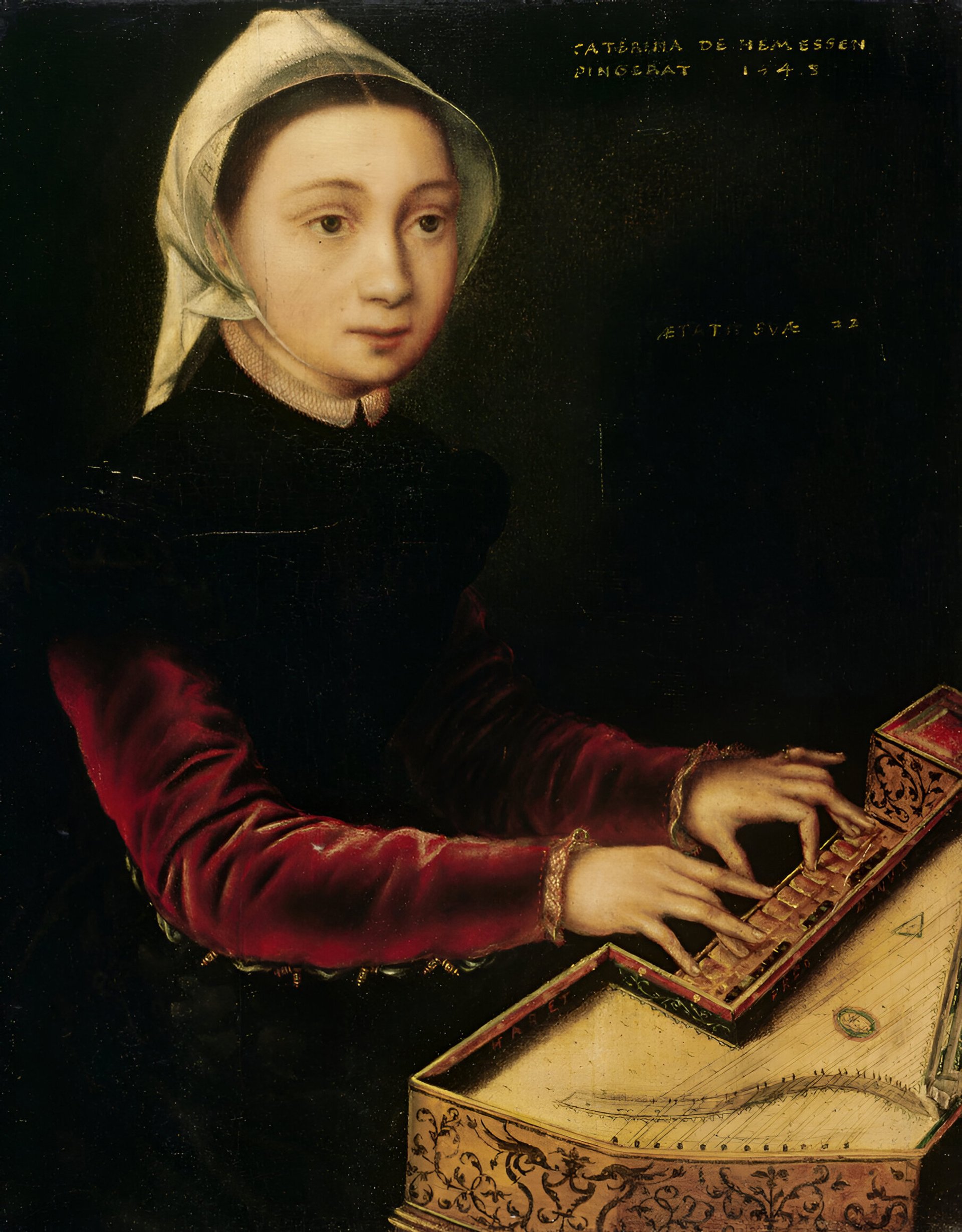
In Young Woman at the Virginal (1548), the sitter is believed to represent Catharina van Hemessen’s elder sister, Christina Photo: RBA Köln; courtesy of Wallraf–Richartz Museum
From Antwerp to Madrid’s royal court
Catharina van Hemessen was born in 1527 or 1528, the daughter of the Antwerp painter Jan Sanders van Hemessen. Women artists were then rare and those who became professionals were nearly always trained by a close male relative. No self-portraits by her father are known, but considering her youthful age, he presumably guided and encouraged her.
In 1554 Catharina married Christian de Moriem, an organist at Antwerp Cathedral. In around 1556-58 the couple lived in Madrid, in the circle of the court of Mary of Hungary. None of her Madrid paintings are known and the latest dated work is from 1554. She died in around 1565-68, in her late 30s, possibly in childbirth.
Van Hemessen achieved recognition in her time. Lodovico Guicciardini’s 1567 Description of the Low Countries records her as one of the “celebrated women in the arts”. A year later the Italian art historian Giorgio Vasari followed, describing her as an “excellent miniaturist” who had earned “a good salary” at the royal court in Madrid.
Over her entire career, the Antwerp curator Maarten Bassens believes that she completed around 16 surviving portraits and five or six religious subjects. Other works have been subject to attributional debates.
The only two monographs on Van Hemessen are by the Belgian author Karolien de Clippel and the German writer Marguerite Droz-Emmert (both 2004), but no book has been published on her in English.