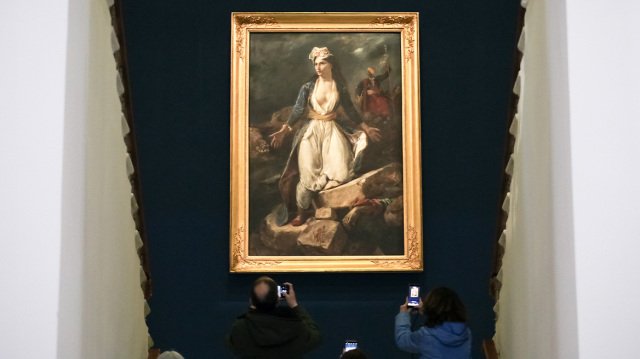
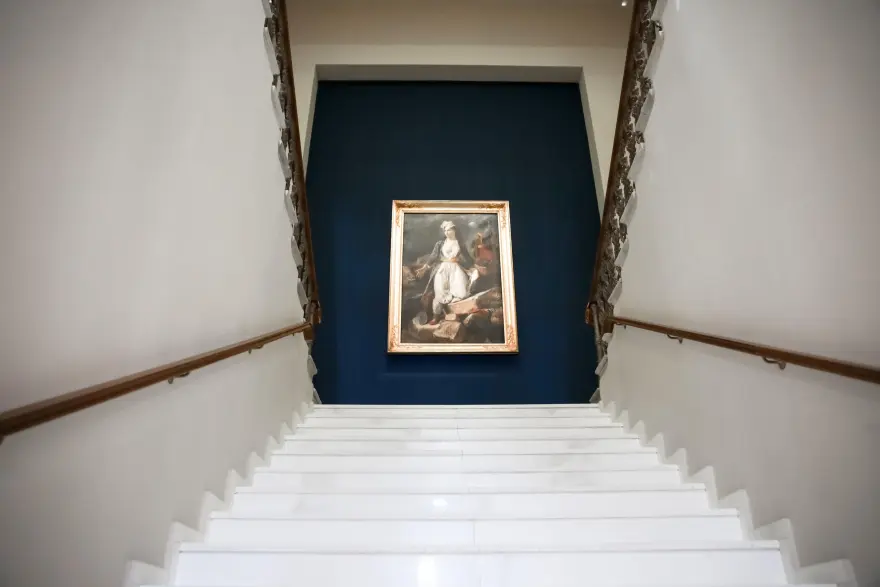
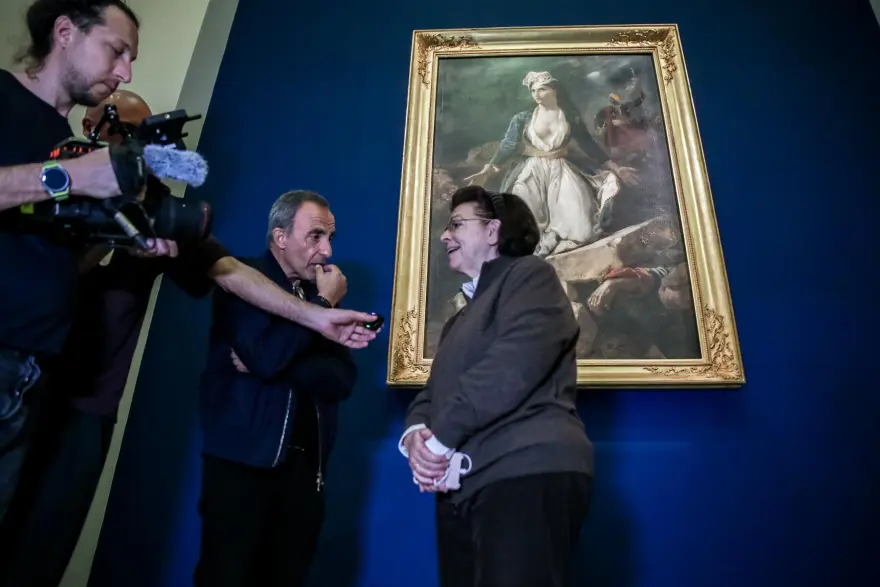
In the heart of the Sacred City of Messolonghi, time seems to stand still before the iconic figure of “Greece” by Eugène Delacroix. On the occasion of the 200th anniversary of the heroic Exodus, the famous painting Greece on the Ruins of Missolonghi traveled from the Museum of Fine Arts of Bordeaux to be exhibited, for the first time, in the place that inspired its creation.
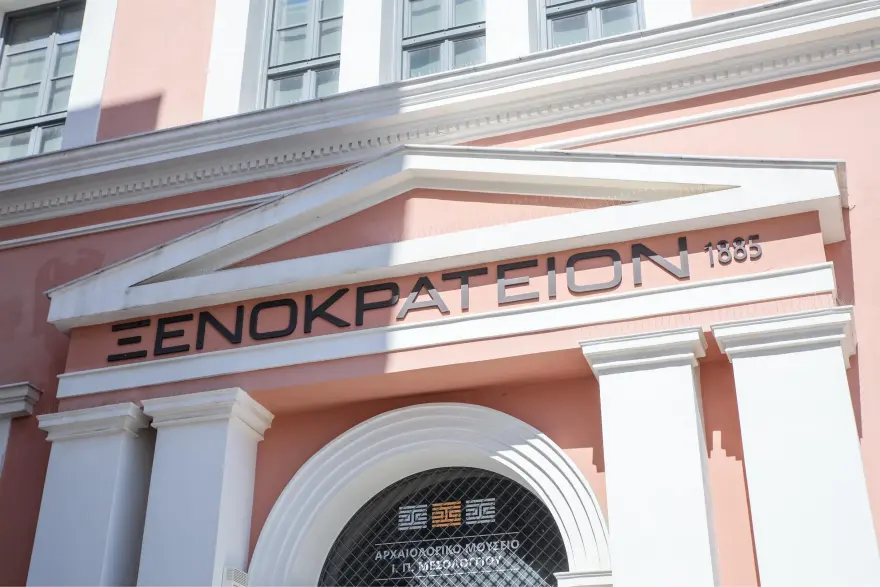
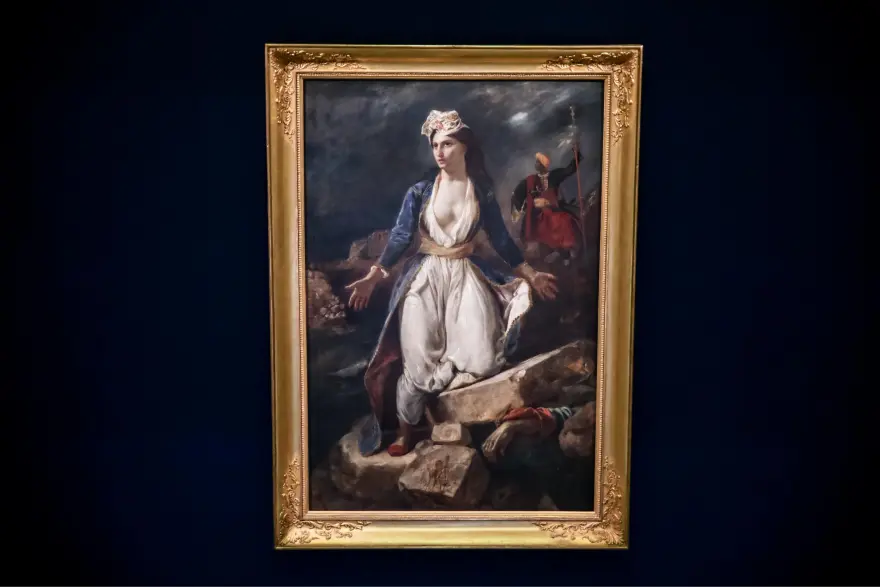
The presentation of the work at the Xenokratio Archaeological Museum caused deep emotion. The oil painting, measuring 2.13 × 1.42 m, depicts a wounded yet dignified woman kneeling among the ruins, serving as a timeless symbol of the Greek struggle for freedom.
“The arrival of the painting by Eugène Delacroix carries particular historical and emotional weight,” said Minister of Culture Lina Mendoni during today’s press conference marking the reception of the iconic artwork.
Describing the painting’s allegory, Mendoni said: “She is wounded, yet she stands. She is humble, yet dignified. The bloodied hand emerging from the ruins reminds us of the cost of the people’s sacrifice.” She added that the dramatic and metaphysical tone of the work makes it one of the most powerful messages of European Romantic art, noting that “even today, the philhellenic movement always holds in its consciousness the sacrifice at Messolonghi.”
“Today is a very important day for Messolonghi and for our country as well, because the arrival of a significant work of art always carries special importance for the cultural life of the nation. However, the arrival of a work of art that is connected to such a significant anniversary—an important milestone of modern Greek history—automatically gives the work itself a different emotional and historical weight,” the minister added.
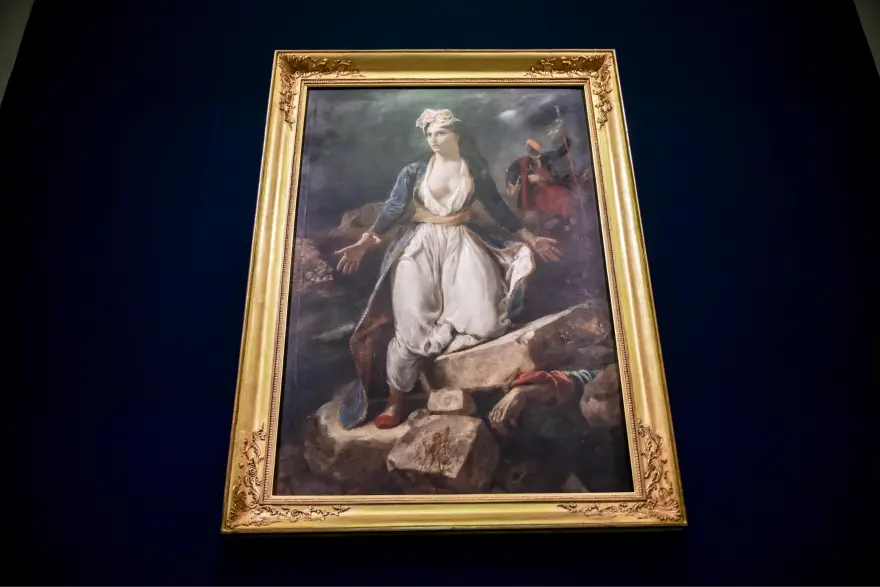
The painting was loaned by the Museum of Fine Arts of Bordeaux and will be hosted at the city’s museum from today, March 14, until November 2026.
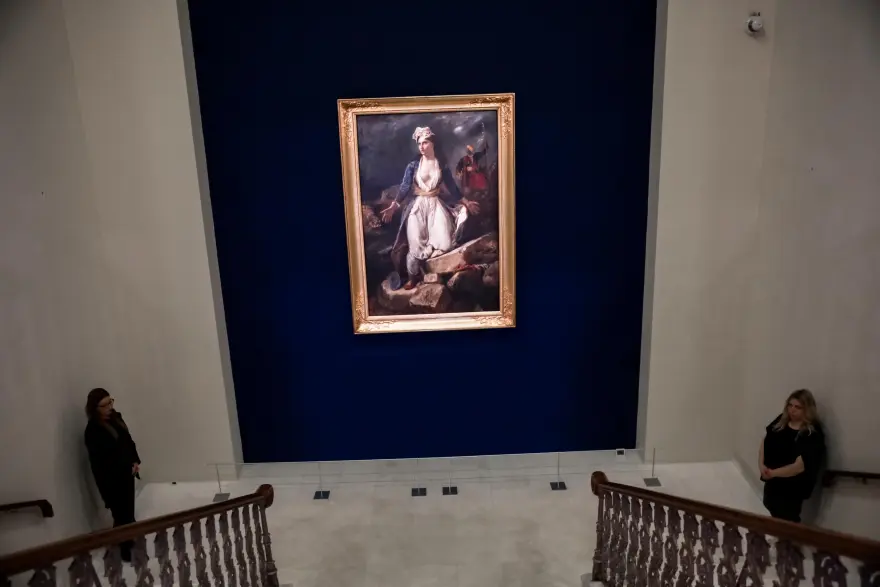
The French painter, one of the most well-known philhellene artists, created the work in 1826, just a few months after the Third Siege of Missolonghi and the dramatic Exodus of Messolonghi, which shocked Europe. The official opening of the thematic exhibition surrounding the work has been scheduled for April 3. It offers a rare opportunity for the public to see up close a piece that is not merely a monument of art but, as the minister said, a “timeless symbol of resistance, hope, and rebirth.”
For his part, the mayor of the Sacred City of Messolonghi, Spyridon Diamantopoulos, expressed his warm thanks to the Ministry of Culture and the Bordeaux museum, emphasizing that for the people of Messolonghi, Delacroix’s “Greece” is not only art but the living personification of their history. He invited all Greeks and friends of history to visit the city and see up close the work that moved the world two centuries ago.
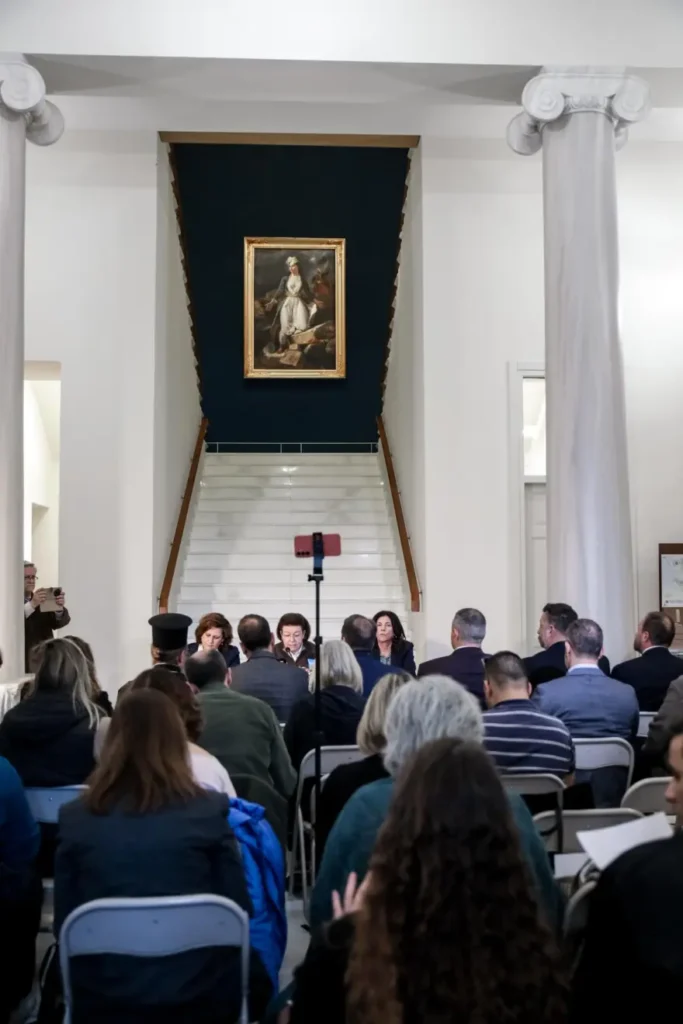
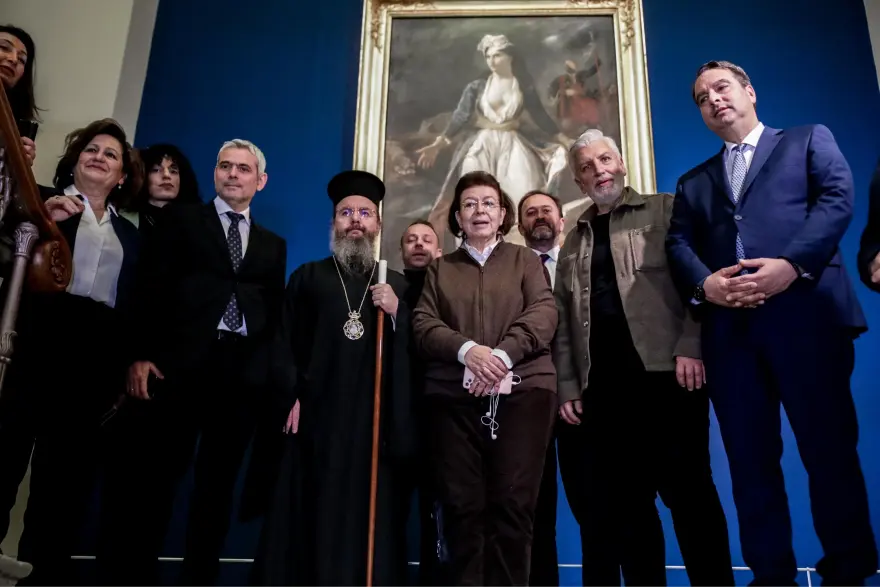
Also present at the event were the Regional Governor of Western Greece Nektarios Farmakis, the Deputy Regional Governor of Aetolia-Acarnania Thanasis Mavrommatis, the ND MP for Aetolia-Acarnania Thanasis Papathanasis, the Metropolitan of Aetolia and Acarnania Damaskinos of Aetolia and Acarnania, journalist Nikos Aliagas, and other representatives of local authorities and institutions.
Ask me anything
Explore related questions