
[ad_1]
Inside the bustling, paint-splattered studios of Kobo Trust along Nairobi’s Riara Road, a quiet revolution is taking shape. The Seven Artists Collective has launched “Matrix and Multiples,” a highly anticipated exhibition that deliberately shuns the mainstream dominance of contemporary painting in favor of reviving the intricate, historically significant discipline of printmaking.
The exhibition serves as both a masterclass in technique and a defiant statement regarding the economic autonomy of East African artists. By embracing a medium historically rooted in mass communication and democratic access to art, the collective is challenging the exclusionary economics of commercial galleries while redefining Kenya’s visual culture.
A Revival of Matrix and Multiples
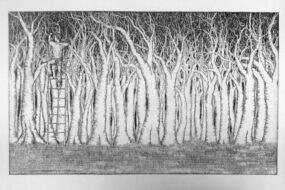
Printmaking, which involves creating an original matrix—such as a carved linoleum block, an etched metal plate, or a silk screen—to produce multiple impressions, demands meticulous precision. In “Matrix and Multiples,” the artists push the boundaries of these traditional techniques, utilizing sgraffito, drypoint etching, and woodcuts to explore complex themes of cultural memory, urban ecology, and socio-political identity.
For decades, printmaking in Kenya was largely relegated to academic institutions or overshadowed by the explosive, lucrative market for large-scale canvas paintings. However, the exhibition at Kobo Trust proves that the medium possesses an unmatched capacity for striking graphic narrative. The ability to produce multiple originals allows the artists to disseminate their visual messages far beyond the confines of elite private collections, reaching a broader, more diverse audience.
The Seven Artists Collective
The driving force behind this renaissance is the Seven Artists Collective, a formidable coalition of some of Nairobi’s most innovative practitioners. The group features established names such as Onyis Martin, Kaloki Nyamai, Peter Elungat, and David Thuku, alongside current chairman Okamar Onesmus. Originally affiliated with Kobo Safaris, the group evolved from simply sharing a physical studio space into a highly intentional collaborative organism.
Unlike traditional, hierarchy-heavy art institutions, the collective operates on a strictly egalitarian model. Administrative and promotional duties are shared dynamically based on individual strengths. The chairmanship rotates, functioning less as an executive position and more as a facilitative role to ensure the group’s core values are upheld. This democratic approach to leadership directly mirrors the democratic nature of the printmaking medium they are currently championing.
The Business of Art in a Post-Pandemic Economy
The formation and resilience of the collective are deeply rooted in economic survival. The systemic challenges facing Kenyan artists were brutally magnified during the COVID-19 pandemic.
The structural difficulties of the local art market include:
- A high dependency on commercial galleries that frequently charge commission rates upwards of 40 to 50 percent on total sales.
- A lack of institutional safety nets, with galleries routinely dropping artists during periods of slow sales or economic downturns.
- The heavy burden placed on creators to fund their own production and marketing costs without guaranteed returns.
- The absence of sustained government investment in arts infrastructure and public arts education.
In response to these systemic failures, the Seven Artists Collective functions as an alternative infrastructure. By pooling their financial resources, technical skills, and professional networks, the members shield themselves from the predatory aspects of the commercial art market. Exhibitions like “Matrix and Multiples” are entirely self-directed, ensuring that the artists retain complete curatorial and financial autonomy.
Printmaking as a Democratic Medium
The decision to focus specifically on printmaking carries profound socio-economic weight. Because prints exist as multiples rather than singular, highly priced canvases, they present an accessible entry point for emerging local collectors. This affordability is crucial in cultivating a domestic art market that is not solely reliant on wealthy expatriates or foreign tourists.
Through intricate etchings and bold linocuts, the artists are actively dismantling the perception that valuable fine art must be singular and prohibitively expensive. The collaborative energy required to operate heavy printing presses and share limited studio equipment further reinforces the collective’s ethos of communal growth over isolated genius.
As visitors walk through the exhibition space at Kobo Trust, they are witnessing more than technical mastery. Each print hanging on the wall is an enduring impression of a shifting society, struck by artists who have finally claimed control of their own narrative.
[ad_2]
Source link