[ad_1]
The Getty Foundation has awarded an additional $1.9m to its Black Visual Arts Archives initiative. The programme helps institutions process, digitise, preserve and activate archival collections related to Black artists, arts organisations and visual arts history in the US. The funding supports access to artist papers, exhibition records, photography, educational materials, home movies, quilt archives and institutional records, along with exhibitions, public programming and digital platforms.
The initiative is national in scope and focuses on improving public access to Black visual arts archives across libraries, museums and universities. Grantees include Afro Charities, the Auburn Avenue Research Library on African American Culture and History in Atlanta, Berkeley Art Museum and Pacific Film Archive, Charles H. Wright Museum of African American History in Detroit, Morgan State University in Baltimore, the South Side Community Art Center in Chicago, the University of Chicago’s South Side Home Movie Project (SSHMP) and the University of Maryland.
“One of the beautiful things about working with this initiative is that my eyes have been opened to the diversity of archival resources that are out there,” says Miguel de Baca, the Getty Foundation’s senior program officer of academic programmes, who directed the launch of the initiative in 2022. This latest round of grants brings the Getty’s total funding for the programme to $4.5m across 20 awards and marks the initiative’s third cohort. De Baca adds that empowering these archival projects not only provides access but helps connect institutions, archivists and scholars to one another.
“Deep in the ethos of this project has always been to give greater visibility to personal archives, rather than isolating materials,” says Jacqueline Stewart, the founder of SSHMP, which has been operating for 21 years with a focus on digitising personal archives and community histories. With support from the Getty, SSHMP is conducting a deep thematic dive into Black cultural history on Chicago’s South Side, with a particular emphasis on artistic practices. Most notably, its staff recently discovered footage of the original Wall of Respect mural in the background of footage taken in April 1968, when riots erupted after the assassination of Martin Luther King Jr.
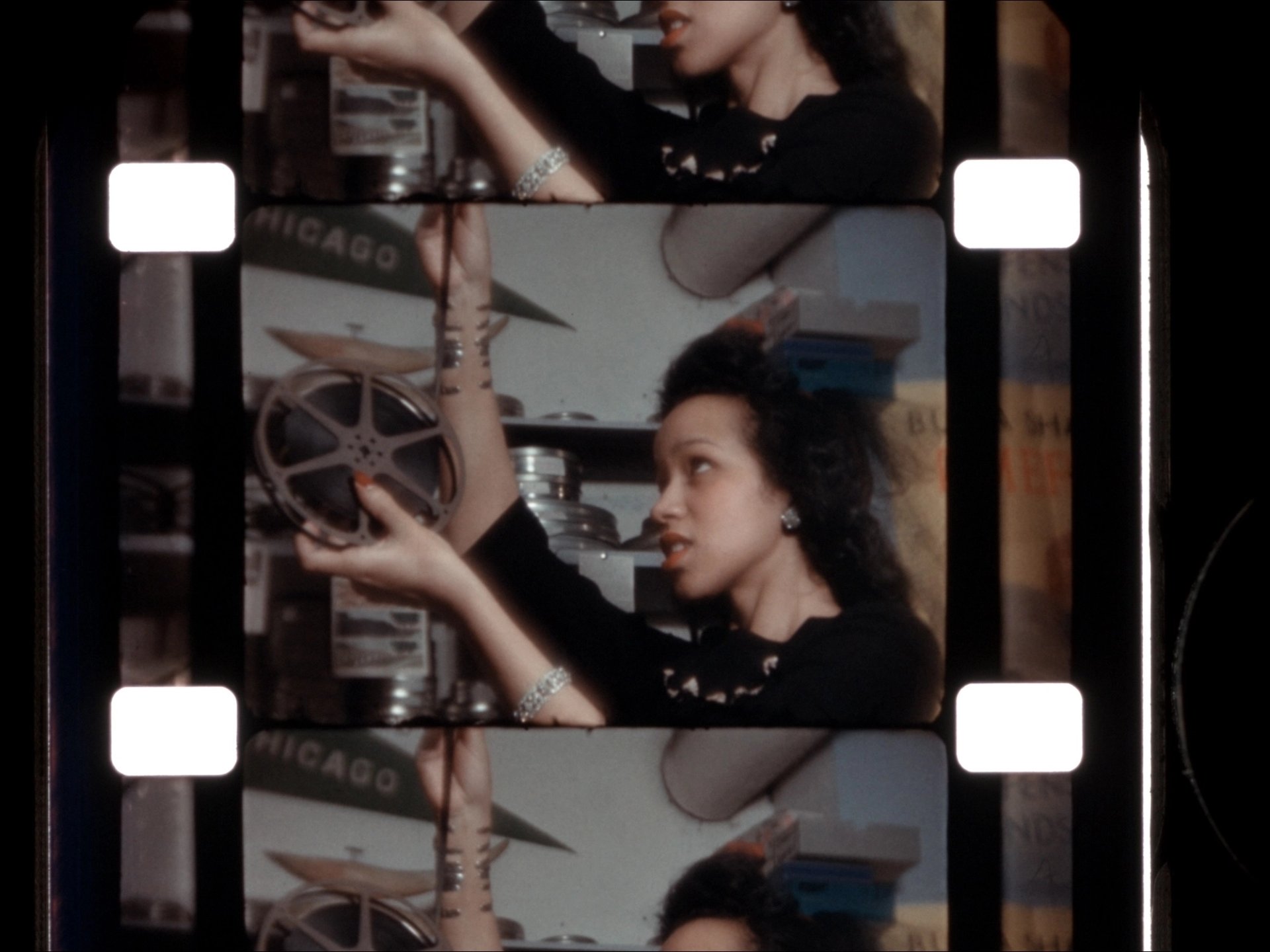
A yet unidentified woman inspects film in Ramon Williams’s studio (around 1946), from the South Side Home Movie Project’s Ramon Williams Collection
Courtesy the South Side Home Movie Project, University of Chicago
In an era when Black history is being systematically erased from the walls of institutions and government websites, the work of preserving and making Black archives accessible to the public is both important and profound.
“This is what the Black press emerges out of—the desire to tell its own story and to cover its own people, since the dominant press wasn’t doing that,” says Savannah Wood, the director of Afro Charities. The nonprofit was founded in 1963 to manage the Afro newspaper in Baltimore. Funding will go to creating public access for the 133 years of historic newspaper archives documenting Black lives and news, including 3 million photographs.
The Afro archives give a unique up-close and personal view into Black life that is not found in mainstream newspapers. “Part of the work that we’re doing is to surface those stories through these archives, so that we have a fuller art-historical picture of who these people were,” says Wood, adding to the canon of not only Black journalism but journalism at large.
“That is a critical aspect of pushing back against what we see happening in terms of public funding and federal funding,” Stewart says. “To help each other think together institutionally about how to sustain our work and how to be mission-driven, because we know that the landscape of funding is always shifting.”
By connecting projects like SSHMP and Afro Charities to a broader network of institutions, the initiative helps create opportunities for stronger community building and the exchange of shared knowledge and best practices.
[ad_2]
Source link