
[ad_1]
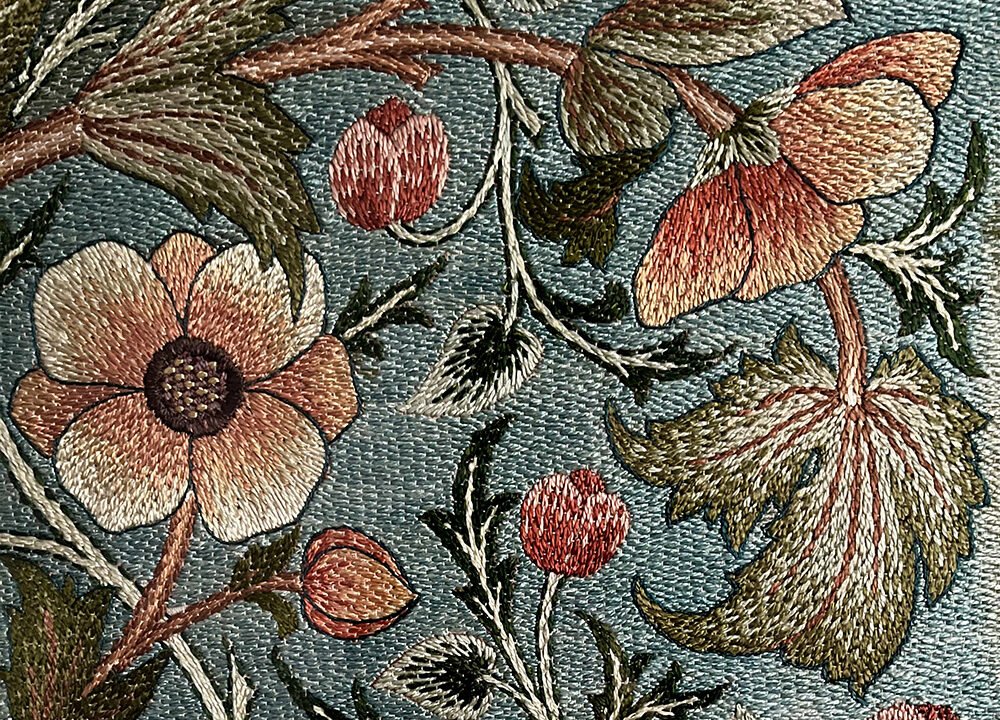
Several of May’s designs in the Ashmolean collection were stitched in the Morris & Co. house style (darning with a stem stitch outline), using natural dyed silks on Manchester cloth (a soft loosely woven cotton material), or twill silk, manufactured on handlooms in the firm’s Merton Abbey works, with the background left plain.
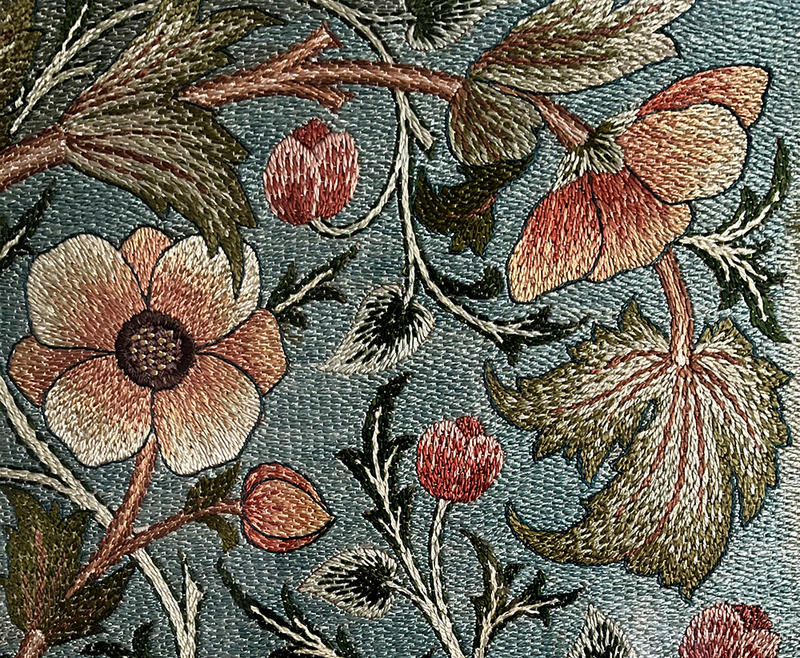
Anemone screen panel, designed by John Henry Dearle, c.1885–90, stitched by May Morris, polychrome silks on Manchester cloth © Private collection
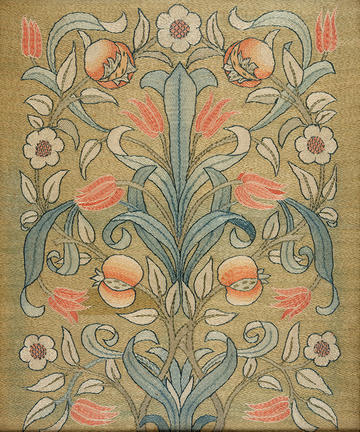
Tulip and pomegranate fire screen or cushion cover, May Morris, 1890s, polychrome silks on Manchester cloth © Private collection
Special commissions and works for family and friends were executed in natural dyed silks and wools and Japanese gold thread on a variety of materials, from handwoven linens and silk damask to woollen cloth.
For the most part, art embroiderers like May used the simplest and most common stitches, believing that ‘Excellence of workmanship does not lie in many curious and difficult varieties of stitch but in the expressive use of a few ordinary ones.’
The principal stitches found in art embroidery are long and short, satin, stem, split, darning, couching, laid work and French knot. May used all these stitches for her designs as well as chain, fly, herringbone, buttonhole, running, back, seeding and speckling stitch.
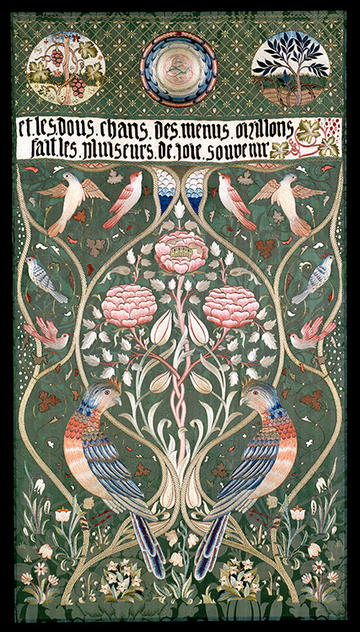
Autumn and winter panel, May Morris, c.1894, polychrome silks on Morris & Co. Oak silk damask © Private collection. Photo courtesy V&A, London
[ad_2]
Source link