
[ad_1]
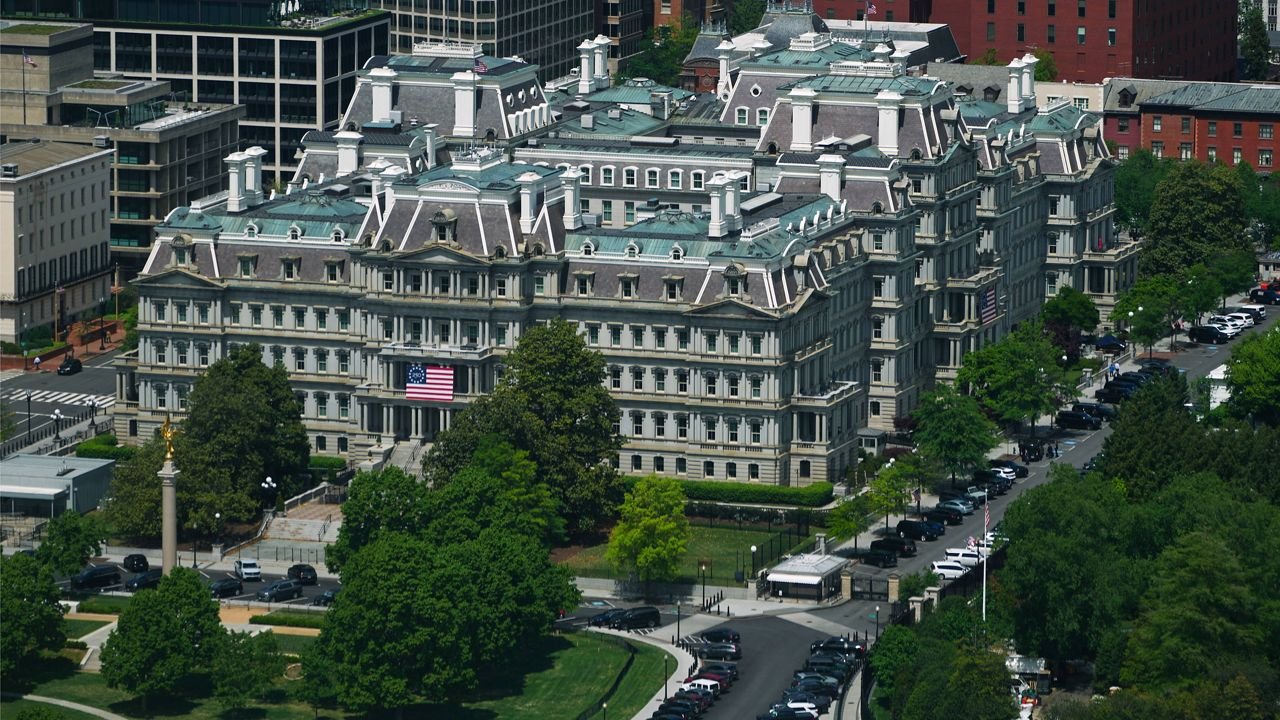
The National Capital Planning Commission met Thursday to review the Trump administration’s proposal to paint the exterior of the Eisenhower Executive Office Building white and requested additional details about the 19th-century building makeover project from the White House.
Members of the 12-member commission voted to approve recommendations in a report prepared by the agency’s staff about the proposals to paint all or most of the building.
The document requested information about the type of paint that would be used, examples of where the paint has been applied to exterior granite facades, a summary of other upgrades considered and an assessment of the “potential visual or physical impacts of the project” on the building itself, as well as the surrounding Lafayette Square National Historic Landmark District.
In the report, staff for the commission supported clearing and preserving the exterior masonry, and also asked if lighting could be evaluated “as a relatively quick and cost-effective option to help beautify the building.”
When asked for comment, White House spokesperson Davis Ingle wrote, “Stay tuned for the next NCPC meeting!”
The commission also requested that the White House’s Office of Administration, which is spearheading the plan, prepare a “mock-up of the proposed granite material painted” to bring to the commission’s preliminary review of the project. A timeline for that evaluation, as well as that of a final review, has not been announced.
Michael Weil, an urban planner with the commission, presented the findings at the start of Thursday’s session while giving a detailed history of the Eisenhower Executive Office Building, which is a National Historic Landmark and is listed on the National Register of Historic Places.
The cost breakdowns of the proposals –– one to leave the exposed exterior of the gray granite basement and subbasement unpainted and a second option preferred by the Trump administration to fully paint the building white –– have not been released.
But a representative from the Office of Administration said Thursday the preliminary cost estimate for the painting was $7.5 million, although that figure didn’t include additional cleaning and masonry preservation measures such as repointing and stone restoration. He added that officials were expecting the building would need to be repainted again in 25 years.
Members of the U.S. Commission of Fine Arts, a separate agency that reviewed the painting proposals last month, preferred the option to paint the entire facade, which they said would “enhance its appearance and unify the White House complex, from 17th Street to the proposed new ballroom at East Executive Avenue,” according to the agency’s secretary.
Those commissioners also advised that historic preservation and building conservation experts who have raised concerns participate in further evaluation of the plan.
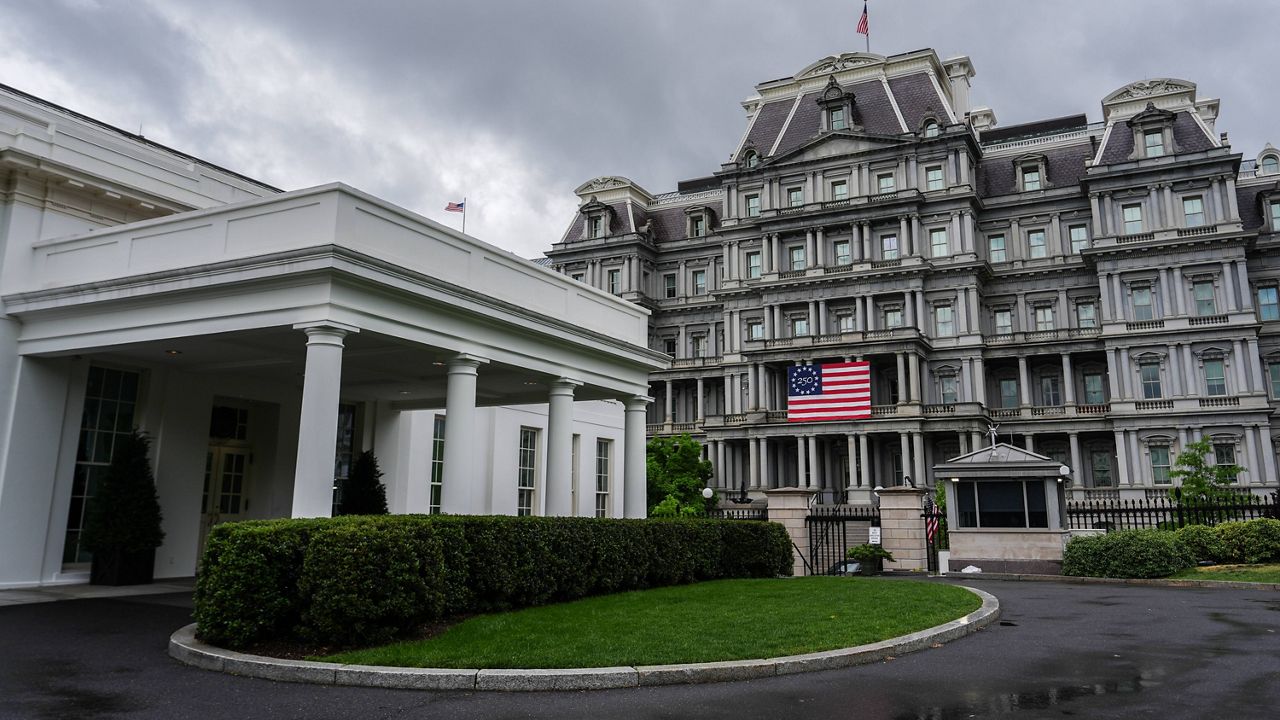
An America 250 flag is seen on the Eisenhower Executive Office Building, past the West Wing of the White House, Sunday, April 19, 2026, in Washington. (AP Photo/Julia Demaree Nikhinson)
On Thursday, Weil noted there was “a lot of public interest in this project,” saying that 2,000 comments were sent in from the public. The written responses appeared heavily skewed in opposition to the proposal, and several people also spoke during Thursday’s meeting against the painting plan.
Greg Werkheiser, a lawyer representing the DC Preservation League in its lawsuit over the proposal, said the group was “challenging the administration’s failure to follow federal law in advancing the president’s personal preference to paint this building bright white.”
“We are here, if I can speak plainly, because painting is a terrible idea, and no one with influence has yet had the courage to tell the president no,” Werkheiser said.
Werkheiser presented several arguments to the commission as to why the 19th-century historic landmark should not be painted, including the need for what he contended would be continuous maintenance.
“This building will be the East Coast version of the Golden Gate Bridge,” he said. “You’re going to start painting on one side, and by the time you get to the other side, you’ve got to start again.”
Several architects also argued that paint would trap moisture in the building’s facade and would change the visual landscape of the area.
“Painting the EEOB white will overpower, not enhance, the White House,” architect David Parker said during his testimony.
The proposal to paint the Eisenhower office building is among a series of changes the president has said would improve the nation’s capital.
Others include the 90,000-square-foot ballroom being constructed at the site of the now-demolished East Wing of the White House, a 250-foot ceremonial arch within a traffic circle connecting Washington with northern Virginia, painting the reflection pool at the Lincoln Memorial blue and a two-year renovation of the Kennedy Center. He has also made changes to the Oval Oval and Rose Garden.
[ad_2]
Source link