
[ad_1]
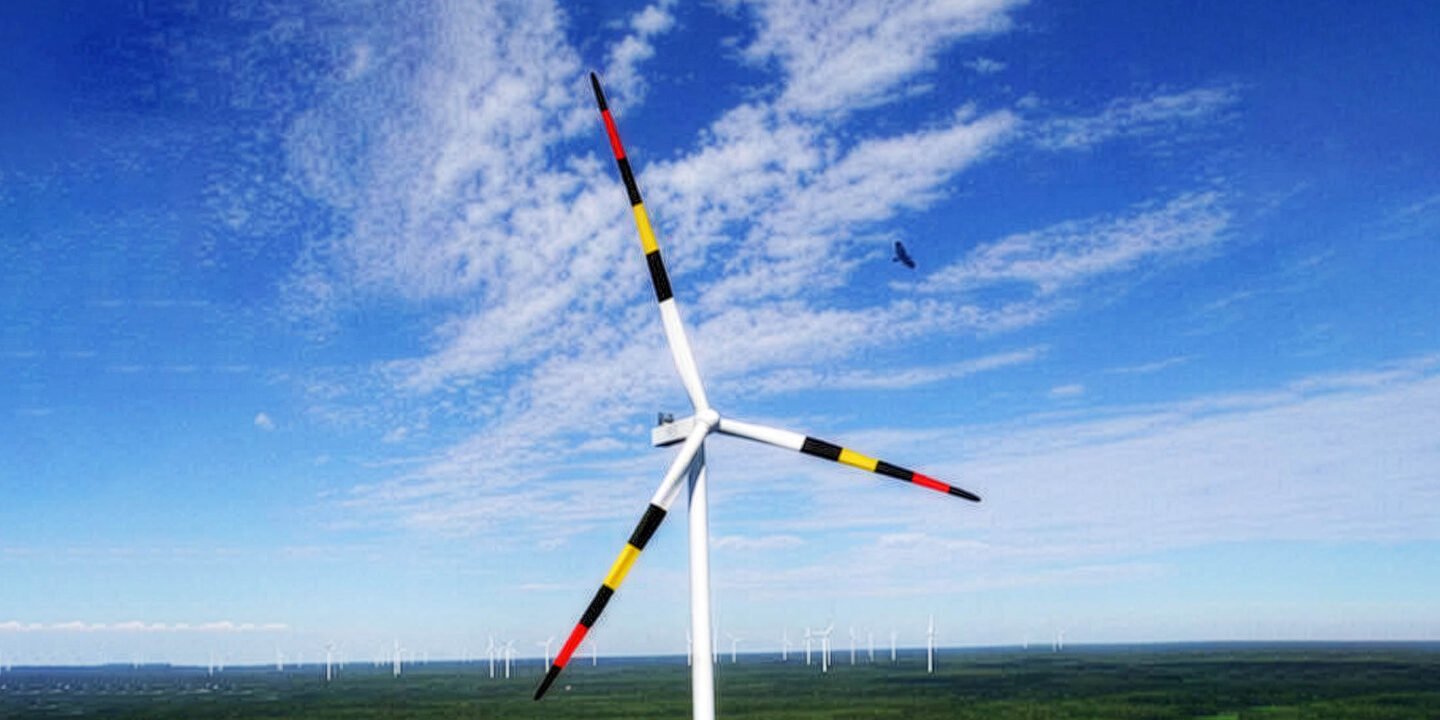
Several countries have already started painting wind turbine blades to make them easier for birds to see. One black blade in Norway. Red stripes in Germany. Both approaches work – at least a little.
What nobody had tested was whether nature already had a more powerful answer waiting. A new study from Finland suggests it does, and the clue was hiding on the wing of a wasp.
Seeing wind turbines like birds

The research comes from the University of Helsinki, where evolutionary biologist Prof. Johanna Mappes has long studied how predators read warning signals in the wild.
Her question was simple. If birds have evolved to avoid certain colors in nature, would they avoid the same colors painted on a turbine?
Working with Dr. George Hancock, now at the University of Exeter, Mappes designed a screen-based experiment using great tits – common European songbirds – to see how the birds reacted when digital turbines appeared in front of them.
Colors birds instinctively fear
In nature, certain color combinations carry a built-in stop sign. Yellow and black on a wasp. Red on a coral snake. Bright bands on a poison dart frog.
Many predators avoid these patterns even without ever having tasted the animal wearing them. That instinctive avoidance is one of evolution’s oldest tricks – selected over millions of years because it works reliably across species and environments.
The Helsinki team’s bet was that the same response would apply outside nature. Turbine blades are not animals, but warning colors that stop birds cold in a meadow might still register as a threat on a 200-foot rotor.
Birds faced digital wind turbines
Researchers caught 22 wild great tits in southern Finland, more than 50 miles (80 kilometers) from any wind farm, so the birds had no prior exposure.
Each bird was trained on a special touchscreen built for small bird species, learning to peck at gray spots in exchange for a food reward.
Once the birds were comfortable, digital turbines in different paint schemes were added alongside the gray spots. The system tracked which designs the birds approached and how long they hesitated before doing so.
Testing four blade patterns
Four designs went into the experiment. Plain white – the global default. A single black blade against two white ones, already used on some Norwegian turbines. Red stripes, used in parts of Germany.
And then there was the new design: red, yellow, and black bands drawn directly from the color language of unpalatable insects.
Birds avoided colorful wind turbines
Birds were less likely to approach patterned blades than plain white ones – and when they did approach, they waited noticeably longer. That pattern held across all three designs.
But the red-yellow-black combination stood out the most. Birds backed off more often and hesitated longer than they did with any other option tested.
A broader analysis of small-bird fatalities at wind farms had already linked unmarked surfaces to higher collision rates. White, it turns out, registers as almost nothing to birds.
“White blades, which are the most frequently used pattern around the world, turned out to be the worst option for birds,” said Mappes.
A built-in warning
What lifts this above a lab curiosity is where the response came from. The great tits had never encountered a wasp-striped turbine. They backed off anyway – suggesting the aversion may be built in rather than learned.
Earlier research on great-tit memory shows the species quickly links warning colors with caution and holds the association for weeks – carrying the reflex well beyond a single encounter.
“We’ve known for a long time that birds change how they respond to objects with warning colours, but to see such a large effect was remarkable,” said Hancock.
Still untested in flight
The bigger question is whether any of this translates to the real world. Real birds at real altitude – flying at speed and in changing light – have not yet been tested.
White-tailed eagles, the species most commonly killed at Finnish offshore wind farms, were not included in the trial.
The study used just one species of small songbird. Whether raptors, waterfowl, or migratory birds would respond the same way remains unknown.
There is also a quieter concern: bright turbines could push birds out of feeding areas even when no immediate collision risk exists. Finnish aviation rules currently require white blades, which could complicate any switch.
Nature-inspired wind turbines
Painting a turbine costs almost nothing compared to radar systems or camera-triggered shutdowns.
New blades could come molded with the stripes built in. Existing blades could be repainted during routine maintenance.
The experiment did something earlier turbine-paint work had not. It tested whether biomimicry – copying a solution nature spent millions of years refining – could work on modern infrastructure. For great tits on a screen, the answer was yes.
Striped blades. Repainted towers. The same logic could also apply to windows and power lines, which together kill far more birds every year than turbines do.
A change in the standard color of a wind turbine sounds incremental. The math changes when that idea is multiplied across the world’s 100,000 turbines.
The study is published in the journal Behavioral Ecology.
—–
Like what you read? Subscribe to our newsletter for engaging articles, exclusive content, and the latest updates.
Check us out on EarthSnap, a free app brought to you by Eric Ralls and Earth.com.
—–
[ad_2]
Source link