[ad_1]

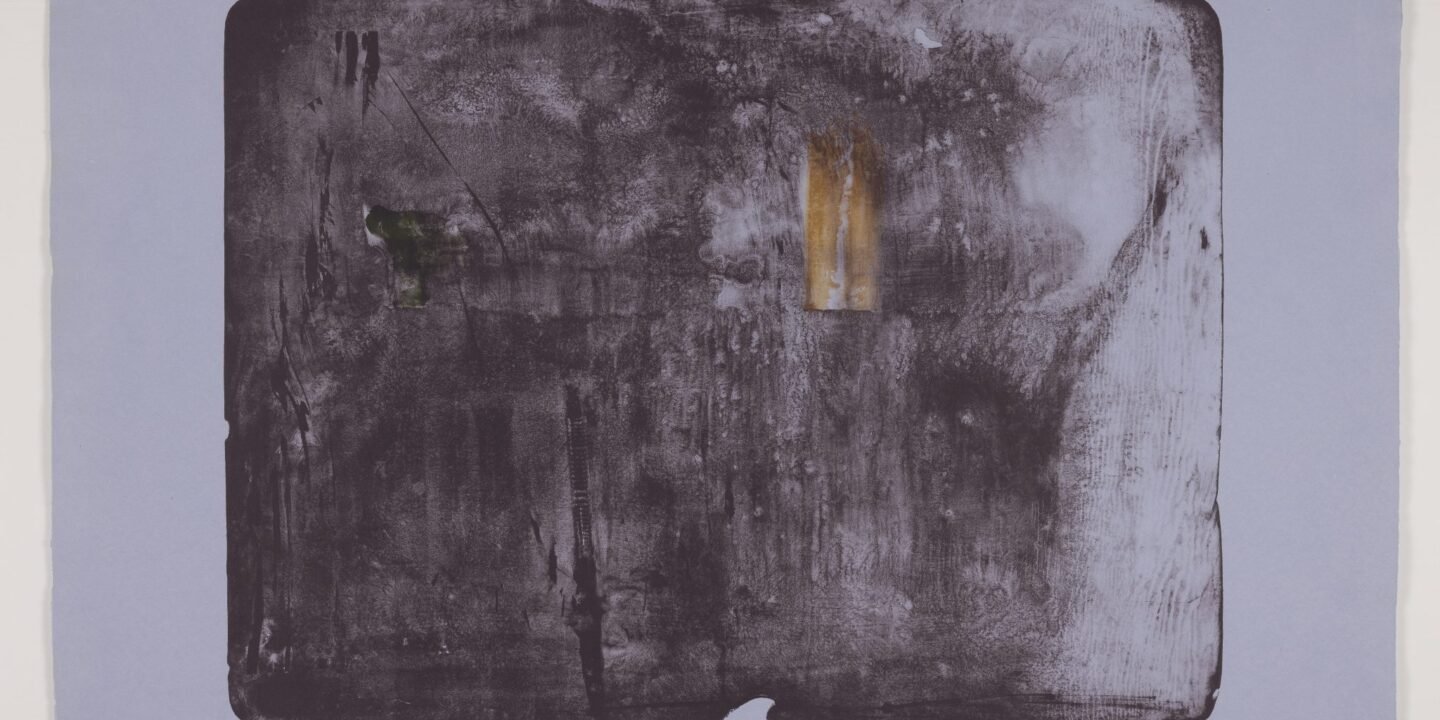
In 2023, the Block Museum, among ten other U.S. university museums, received a number of Helen Frankenthaler’s prints as part of the Frankenthaler Print Initiative. The exhibition “Pouring, Spilling, Bleeding: Helen Frankenthaler and Artists’ Experiments on Paper,” open through December 14, is a wonderful celebration of this gift.
The show is divided into three sections, which perfectly correspond with the evolution of printmaking. The first room focuses on the intertwined creations of contemporary artists (among them Frankenthaler), inspired by the tradition of printmaking in East Asia. Additionally, some of the showcased printmakers are directly influenced by Frankenthaler’s work. I appreciate that many of them are female artists.

Printmaking first came to the Western hemisphere with the merchants of the Silk Roads. Western artists had been looking at Asian prints for centuries. The peak of this fascination probably occurred in the nineteenth century with the Ukiyo-e style prints from the Edo period. In this first room, we encounter a number of works that spring from the same source of inspiration. The two stars of the section are large works from the “Tales of Genji” series by Frankenthaler herself. These prints are absolutely spectacular. The pastel color palette and the composition remind us of her painting. Frankenthaler knew exactly how to use the materiality of printmaking to its full potential by reproducing the texture of the wood in the final print. What is more, when looking at the playful shapes in the composition, one may have an impression of looking at dripping paint, which of course is just a clever illusion.
The second room takes us through Frankenthaler’s close artistic circle. We can enjoy works by other Abstract Expressionists such as David Smith, Joan Mitchell, Grace Hartigan or Robert Motherwell. The curators have selected artworks that present clear stylistic similarities, the main one being the extensive use of black. The prints are paired with a large multi-color work of Sam Gilliam, which resembles a deconstructed canvas. Interestingly, only Frankenthaler’s prints were made on such a large scale.

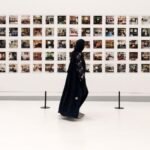
The last space is an ode to abstract printmaking. The room is filled with twenty-three proofs that illustrate the process of creating one specific work. It is really a one-of-a-kind opportunity to see a journey of one artwork. The final image presents hues of pink and red, which was not at all the case in the first attempts. The artist went from ochre, through blue, black and orange to finally arriving at the desired color palette. The proofs are hand-annotated by Frankenthaler, testifying to her close collaboration with the printmaker, which is explained in an accompanying short video. As a matter of fact, many labels in the exhibition indicate the name of the printer and publisher of the work, debunking the myth of an artist working as a gifted but lonely individualist. Here, artistic collaboration is highlighted and celebrated. In the video, Frankenthaler stresses that her prints would have never existed if it were not for her printmaker, and we can all be grateful for this extraordinary partnership!
“Pouring, Spilling, Bleeding: Helen Frankenthaler and Artists’ Experiments on Paper” is on view at the Block Museum, 40 Arts Circle Drive, Evanston, on the campus of Northwestern University, through December 14.
[ad_2]
Source link