[ad_1]
This article is part of a series of pieces celebrating Glasstire’s 25th anniversary. To see other stories from this series, go here. To see pieces from the month of May, around the theme Training Grounds: Studios, Students & Schools, go here.
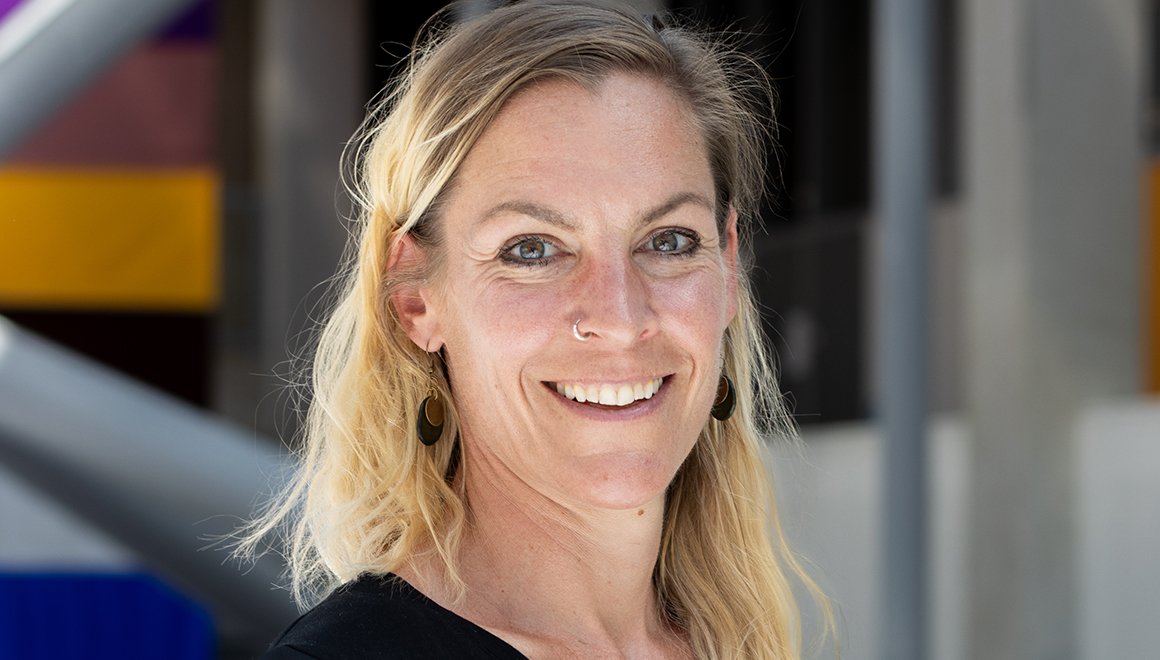
Two years ago I met Anja Foerschner when I enrolled in Ayca Ceylan’s online Eco Performance class at ECC Performance. Since then I have taken many classes and have taught a Fluxus-inspired performance art class for the organization. Foerschner is a researcher and curator with a specialization in performance art, feminist art, and art from the regions of former Yugoslavia. She holds a Master’s degree in Art Pedagogy, Art History, and Philosophy (2008) and a PhD in Art History from Ludwig-Maximilians-University in Munich (2011). She has previously worked at the Haus der Kunst in Munich, the Getty Research Institute in Los Angeles, PerformanceHUB Belgrade, and Node-Center for Curatorial Studies Berlin. In 2019, she founded ECC Performance Art, an online teaching and research platform for performance art and theory. She is also a lecturer at ArtEZ University’s HOME OF PERFORMANCE PRACTICES as well as Associate Curator of Performance Art Video.

Colette Copeland (CC): Tell us about your background and how you became interested in scholarly research about performance art.
Anja Foerschner (AF): I started out studying art pedagogy but soon realized that teaching — in the classic sense — was not for me, so I decided to pursue a PhD in Art History at the then very traditional Munich university. During my studies we dutifully covered the Western art history canon, which I admired (and still admire) but which did not prepare me well for my encounter with Paul McCarthy’s Pirate Project and Western Project at Munich’s Haus der Kunst in 2005. Walking into rooms with walls covered by McCarthy’s performances Pirate Party, Houseboat Party, and Western Party was horrifying and I remember walking out feeling deeply unsettled and thoroughly disgusted. However, it was exactly this intensity of emotions that I had not previously encountered in any other art form that instilled in me a deep-seated fascination with performance art. This, together with the captivating political nature and content of performance art, has been the foundation for my scholarly and curatorial work.

CC: During the COVID-19 pandemic, many online artist communities were formed out of necessity and desire for connection. We can thank the pandemic for Zoom communication. I’m not sure how I ever lived without it. How did ECC Performance come into being, and what inspired its formation?
AF: I started plotting ECC Performance Art, actually, almost a year before the pandemic hit. Working in both Europe and the U.S., I noticed a glaring absence of educational opportunities for performance art (from the fine arts realm), which is something I became interested in tackling. I received the gracious support of the European Cultural Center to put my idea into practice, and ECC Performance Art was born. I have to say that designing ECC Performance Art as an online platform was not a decision that came easy. Early on, I only saw the flaws of online teaching, especially with regards to live art practice. However, one of my guiding principles for an institute was that it had to be as inclusive and accessible (both financially as well as geographically) as possible. The online space allows people from all over the globe to join courses without physical travel, accommodation, and the financial and accessibility issues surrounding that. Also, we are able to keep enrollment fees relatively affordable. We also offer the possibility of remote or asynchronous participation so that we can accommodate participants’ other personal or professional commitments.

CC: Besides the performance art classes for practicing artists, what other initiatives does ECC pursue?
AF: We do have a “research and practice” segment planned (and partially implemented) for which we invite artists to share their work in progress with the ECC Performance Art community. One of our interests is to keep building a community of performance art practitioners and scholars and for everyone to be able to tap into and draw from each other’s expertise and knowledge. I find that too often in scholarship and artistic practice we only share the finished product, but we all encounter roadblocks, questions, and challenges in the process, so why not address those in dialogue with others instead of trying to work things out solitarily?
We are also running a virtual gallery in which we present different exhibitions of participant works, such as the current show of final works from our “Performance-based Filmmaking” workshop with VestAndPage.
And, since 2024, we are part of DigiLabAiR/DigiLiveAiR, a collaborative, Creative-Europe-funded initiative that supports online artist residencies for performance-based filmmaking, which will be shown both at the Venice International Performance Art Week and expand Performance Art Video, an online platform to explore performance art on video.

CC: In the Dallas-Fort Worth (DFW) area, there are a handful of performance artists, but not an active performance art scene — meaning institutions, galleries, and financial support for artists. Contemporary artists in general tend to be marginalized or on the fringes of society, and performance art even more so. To have access to a global online performance community has been transformative in my own practice.
The 4-week classes at ECC inspire new work with the ability to receive constructive feedback from other artists and the instructor. This is invaluable, especially given that I am living in a more rural community now. How have the goals and mission for fostering an online global community shifted over the past few years for ECC?
AF: They haven’t really. But idealism met reality so that is requiring some rethinking. What I mean is that the global aspect has always been of paramount importance to me. Hence the decision to run the courses online and make remote/asynchronous participation possible. However, we are not only committed to allow performers from all over the globe to take part but in fact to comprehend the global scope of performance art itself. As with pretty much all art forms, performance art remains dominated by Western artists, thinkers, and trends. But that denies the existence and importance of performance art from other cultures and regions, such as Southeast Asia, Africa or Indigenous practices.
Courses such as “Identity, Ritual, Resistance: Performing the Body in Southeast Asia” with Natasha Jozi or “The Committed Body: Political Performance from Latin America” with Rodrigo Arenas-Carter were developed with the goal in mind to create a more accurate picture of performance art. Much to my disappointment, however, I had to realize that while there is an awareness in the art and scholarly community by now of exclusionary tendencies, that remains very much on paper, and we were not able to fill those courses.
It seems that the fear of not understanding (hopefully) or an engrained elitism (more likely) prevails. I don’t have the answer yet on how this could be resolved. I guess ongoing dialogue with students and lecturers, understanding where and what kind of barriers exist and finding course formats that tackle global topics and themes instead of reinforcing categories are what we are working with at the moment. And always, always, remaining attentive and listening to our participants and wider audiences.

CC: What have been the major challenges and successes of running a global online community?
One of the major successes for me personally was when my work and the work of a few of my cohorts were included in a London exhibition featuring ECC instructor Rosie Gibbens’ work.
AF: (Laughs) For challenges alone we can allocate a whole interview. Isn’t “performance art” actually synonymous with “challenge”?
I guess the major challenges for sure are accessibility and inclusivity and how to improve those aspects. Always, when I think we have it all covered, we meet another brilliant participant who points to a shortcoming in how we address and execute those concepts practically. Another major challenge remains the program itself and refining our markers for the courses. What course topics could meet the interest of performers? What is timely or important to offer versus what might attract a big crowd?
If you want me to be completely honest, then the workload requirement of running ECC Performance Art for sure is a challenge in itself. Being online and global, operating on ever-changing schedules, requires a lot of flexibility from myself and my team. And if we truly are trying to build a community then that also means awareness for our participants (and of course lecturers), hearing them, adjusting, exchanging, learning, and processing. And that is nothing that can be done in regular work hours.
On the other hand, the benefits gathered are just so huge. I mean, reading through performance art texts, visiting exhibitions, digging through archives, looking at performance works — nothing has taught me more about the field than working with the team and participants of ECC Performance Art, and I am immensely grateful for this. So this to me is success. Of course there are many other success stories, of different natures.
In some cases, affiliation with ECC Performance Art has allowed lecturers to receive funding for initiatives (e.g. our lecturer Rah Eleh received funding from the Canadian Arts Council to organize and run a panel on “Digital Futures” during the Venice Biennial); in others, works that participants created during our classes receive recognition (e.g. Dawn Reeves’ performance-based film Full full / half half selected for the Cannes Art Film Festival). This is always great news. Not because I am immensely proud that this creativity happened during our course, but more because of the seeming value that either course content, mentorship, or the dialogue with other participants has helped an artist shape and execute a creative vision they have.
Something else I consider a “success” is when collaborations or at least connections continue to live and even expand beyond our courses. To that extent, we had several students enroll in in-person programs with some of our lecturers as for example Marta Jovanovic’s Visual Arts Program at Rome University of Fine Arts (which now includes performance art, thanks to Marta).

CC: How has ECC contributed to the legacy and archiving of contemporary performance work on a global scale?
AF: Phew, I am really not one for speaking about these large accomplishments for my own institute. I guess someone else needs to do that for us/me in a couple of years! However, if you throw the word “archive” in, you will surely get a proper lecture from an archive nerd such as myself.
To be honest, running ECC Performance Art completely changed my outlook on archiving performance. I used to be a very traditional archive scholar (i.e. working with physical material of the likes of Carolee Schneemann or Barbara T. Smith). Working with younger artists I always encouraged them to archive and document and to please, pretty please, consider ALL forms of documentation BEYOND the visual, photo, or film capture. They are what we mostly gravitate to but they give such a flattened, one-dimensional representation of a performative event, really. Writings, sketches, conversations, movement exercises produced during the creation of a piece, that to me is the complexity that speaks to the nature of performance art. As you might imagine, I took the opportunity to develop my own course on Archiving and Documentation for ECC Performance Art to preach this approach.
At the same time, however, working in the online spheres of Zoom — with performances being created on Zoom or being created, recorded, and then shared via cloud sharing services and links — has brought to light with much more clarity the ever existing and expanding ephemerality of documentation and archiving.
True, ECC Performance Art in a sense can be considered an archive of performance since we try to keep recordings of all of our courses but the question remains: is that actually possible? As much as we like to believe the opposite, data is in fact the least stable and reliable to archive, and it is frightening and exciting at the same time to be aware of that. What remains when all data is lost? This is again where the idea of the community comes in. Because at the end of the day, our memories, our conversations, our emotions connected to performance are what constitutes its most lively archive.

CC: Looking ahead, what are ECC’s next steps for expanding and sustaining a global online learning community?
AF: We will keep working on expanding our partnerships as a means for connection and mutual learning. So far we are fortunate to collaborate with institutes and organizations from Latvia, Serbia, the Netherlands, but this could be expanded, of course, much more. An issue here is that initiatives dedicated to performance art specifically remain rare. We are small, independent, struggle for funding, and often have to be so focused on keeping afloat that we cannot dedicate enough time to network. The performing arts have much greater resonance and are anchored solidly within the educational system. We cannot say the same for performance art, which shows us the importance of what we are doing.
I would hope in the future to be able to not only keep connecting with other organizations (and, through our courses, people), but also use the knowledge we gather from this dialogue to keep reflecting on the place of performance art in our world, and the needs of performance artists to continue to serve as this uncomfortable, nagging, queering force in our societies. It would certainly be interesting to more directly also open the dialogue with the established educational and representational system to see what place and function performance art could have for our understanding of art “education.” Performance art is historically challenged — which is probably the reason why it does remain excluded from the educational sector, but what if we would take performance art as a means to rethink that system?
[ad_2]
Source link