[ad_1]
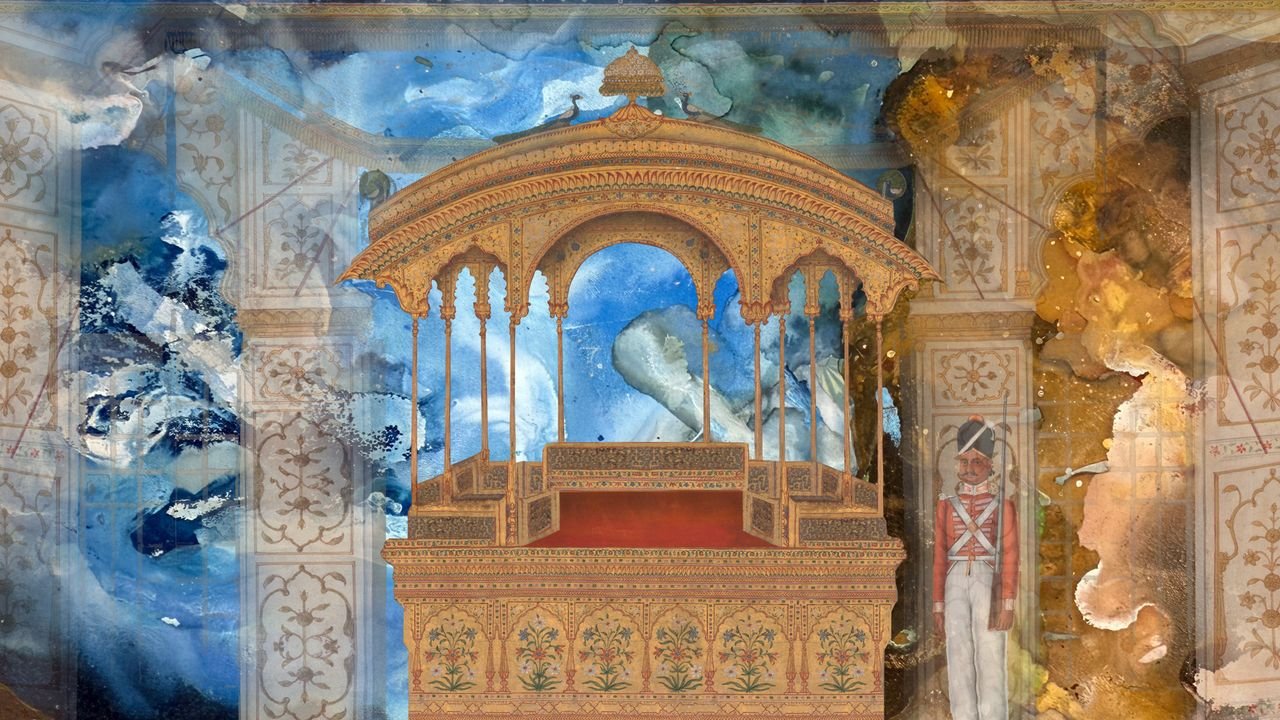
It begins with a transcendental “sunburst” motif associated with divine light, which gradually dissolves into fields of poppies laced with both a sense of beauty and underlying violence, recalling the British coercion that drove Chinese opium trade and registering its darker consequences of pleasure and addiction. Across the shifting sequences of the nine-minute cycles, the poppies then bloom and burst across scenes of ornate Mughal interiors, thrones of empires, cartographic fragments, forested terrains, territorial waters, and portraits of powerful figures such as Queen Victoria and Emperor Akbar II alongside Chinese and British captains and officials.

The sampan, which Sikander recalls is her favourite of the film’s recurring motifs, multiplies into shifting formations as it counters the imposing scale of British naval vessels with a smaller, more adaptive form tied to labour, survival and local economies that operated alongside imperial trade.
It is not incidental that 3 to 12 Nautical Miles sits facing the harbour and is best experienced from a ferry moving across it, with both image and viewer in motion as the pixels disperse and gather like shifting tides. As Sikander notes, “the currents are the same that witnessed all the histories that have taken place on the harbour itself,” and the animation works to fold these histories into the city’s daily rhythms, along the very waters that once facilitated their exchange.
[ad_2]
Source link