[ad_1]
Printmaking has often remained one of the lesser-explored forms within Bangladesh’s art scene – admired within artistic circles, yet less familiar to wider audiences than painting or sculpture. Over the past few weeks, however, Kala Kendra in Lalmatia has turned renewed attention toward the medium through its month-long printmaking festival, drawing visitors into a world of layered textures, memory, and experimentation.
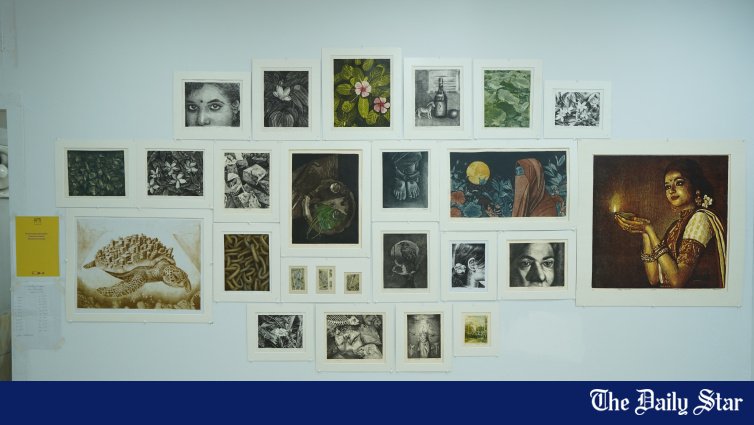
One of the festival’s major highlights, the 14th Kibria Printmaking Fair, concluded on May 9. Held on the third floor of Kala Kendra, the fair brought together printmaking studios and institutions from across the country alongside works by pioneering late artists Safiuddin Ahmed and Mohammad Kibria.

Over the years, the fair has grown into an important platform within Bangladesh’s art scene, helping introduce printmaking to wider audiences while creating opportunities for emerging artists and collectors alike.
The organisers said the fair aims to make printmaking more accessible to the public and encourage greater engagement with the medium beyond conventional gallery spaces. The availability of artworks at comparatively affordable prices has also helped attract younger and middle-class collectors.

The fair is part of a larger month-long printmaking festival that began on May 1 and will continue until May 23 at Kala Kendra’s new premises in Lalmatia D Block. The exhibitions remain open daily from 4:00pm to 8:00pm.

The festival was inaugurated by two pioneering figures of Bangladeshi printmaking, artist Rafiqun Nabi and artist Monirul Islam. Professor Nazrul Islam, artist Abul Barq Alvi, and artist Fareha Zeba also addressed the opening ceremony, while artist Wakilur Rahman hosted the event.

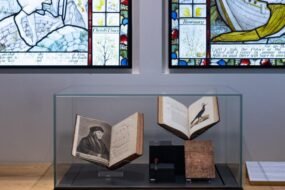
One of the festival’s main attractions is the exhibition titled “Pioneers of Printmaking”, currently being held on the first floor of Kala Kendra. The exhibition showcases early works by Safiuddin Ahmed, Mohammad Kibria, Rafiqun Nabi, and Monirul Islam — artists who played a crucial role in establishing printmaking as a distinct artistic language in Bangladesh.

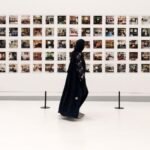
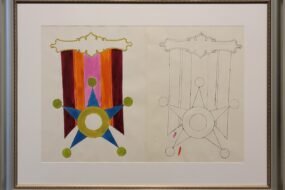
The fair presents a wide range of approaches to printmaking, from deeply personal reflections to works rooted in everyday life and memory. Many of the displayed works belong to the formative years of the artists’ careers, offering viewers a glimpse into the evolution of modern printmaking practices in the country. Rafiqun Nabi’s works, in particular, stand out for their emotionally charged visual language. Some pieces focus on human figures and urban moments through layered textures and muted colours, while others experiment with bold graphic forms and striking contrasts. A blue-toned screen print filled with playful shapes sits alongside architectural compositions and more evocative works. Walking through the exhibition, what stands out most is the way each artist uses printmaking differently — some leaning towards storytelling, others towards abstraction, atmosphere, or social observation.

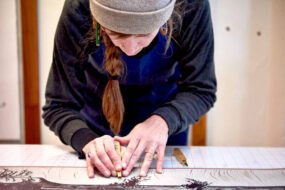
Alongside the exhibitions, the festival is also hosting workshops and artist talks focused on printmaking practices, creating a learning space for aspiring and emerging artists.

The final segment of the festival, “Contemporary Printmaking Exhibition”, will begin on May 12 and continue until May 23. Bringing together works by both emerging and senior artists; the exhibition is expected to highlight the diversity and evolving language of contemporary printmaking in Bangladesh.
[ad_2]
Source link