[ad_1]
The Brooklyn Museum is opening one of the year’s most fashion exhibitions this week with Iris van Herpen: Sculpting the Senses, a large-scale retrospective dedicated to the Dutch designer whose work continues to redefine the boundaries between couture, science, art, and technology. Opening to the public on May 16, the exhibition marks Van Herpen’s first major presentation in New York and the North American debut of the internationally touring show.
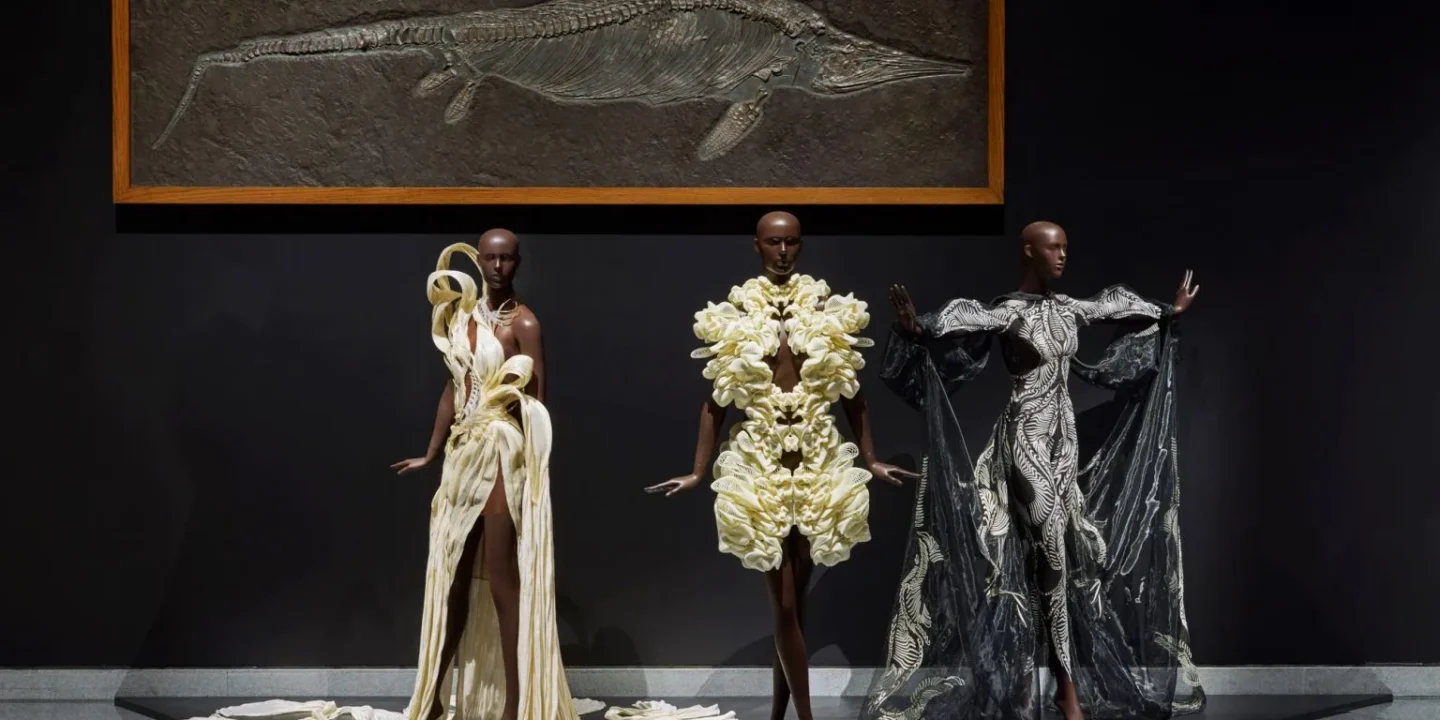
Bringing together more than 140 haute couture garments, the exhibition moves beyond the format of a traditional fashion archive. Instead, it presents Van Herpen’s creations alongside contemporary artworks, scientific specimens, fossils, coral structures, kinetic installations, and immersive sound environments. The result is a multisensory exhibition that explores how fashion can exist as sculpture, movement, biology, and speculative design all at once.
A Designer Who Changed the Language of Couture
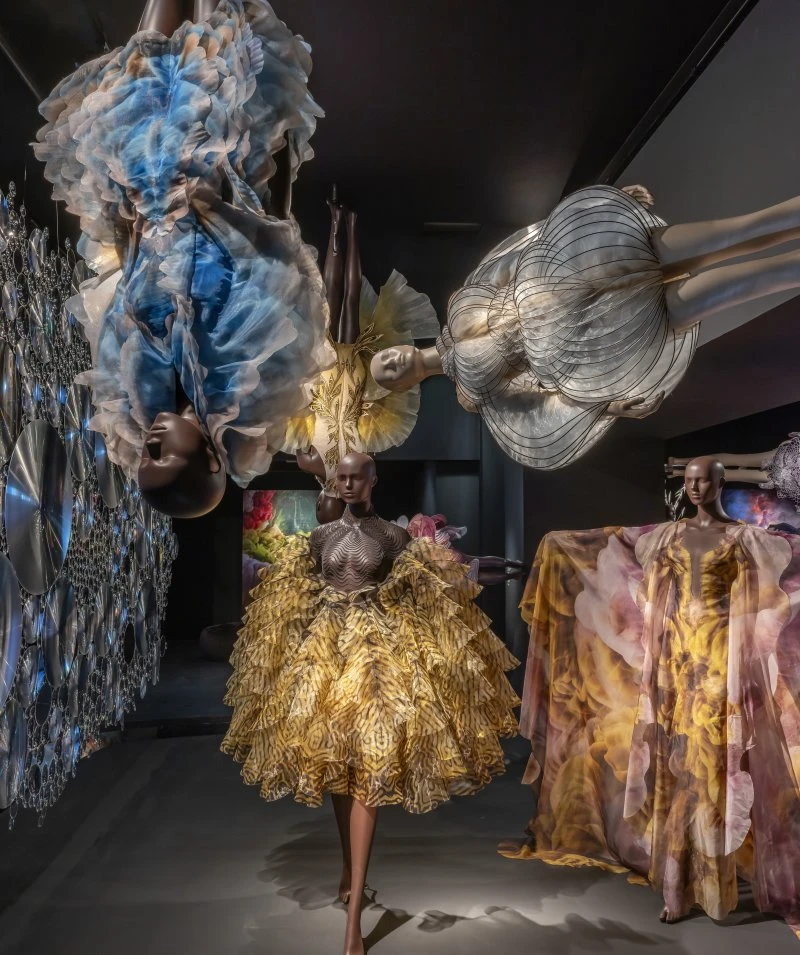
Iris van Herpen has spent nearly two decades building a fashion practice that sits between haute couture craftsmanship and experimental technology. After graduating from ArtEZ University of the Arts in the Netherlands and interning with Alexander McQueen, she launched her label in 2007 and quickly became known for pushing fashion into unfamiliar territory.
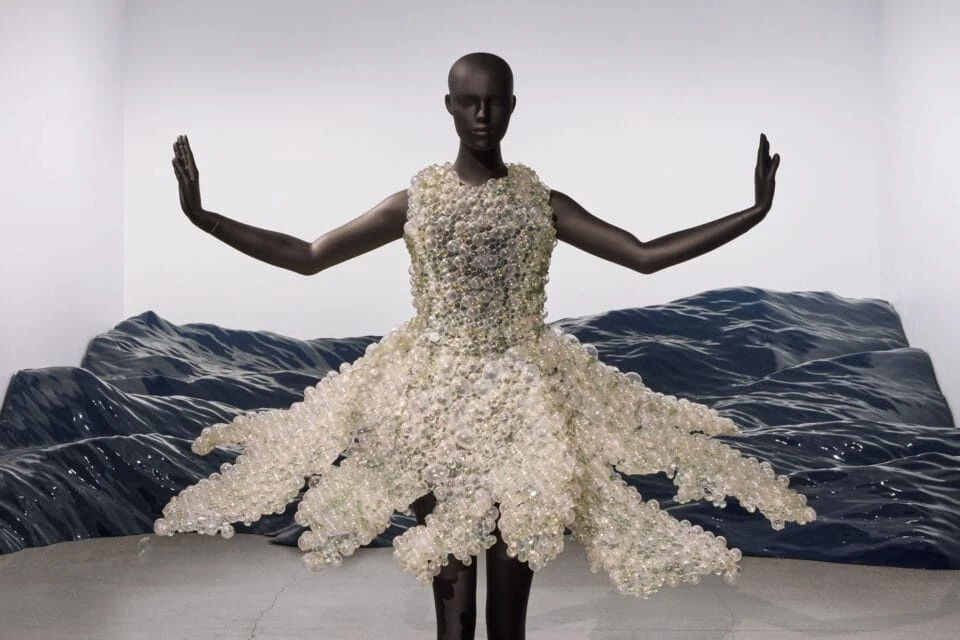
She was among the first designers to integrate 3D printing into couture, but her work extends far beyond technological novelty. Van Herpen combines hand craftsmanship with laser cutting, resin structures, biomaterials, silicone molding, and architectural fabrication techniques. Across her collections, garments often resemble marine organisms, skeletal systems, liquid surfaces, cosmic formations, or microscopic cellular patterns.
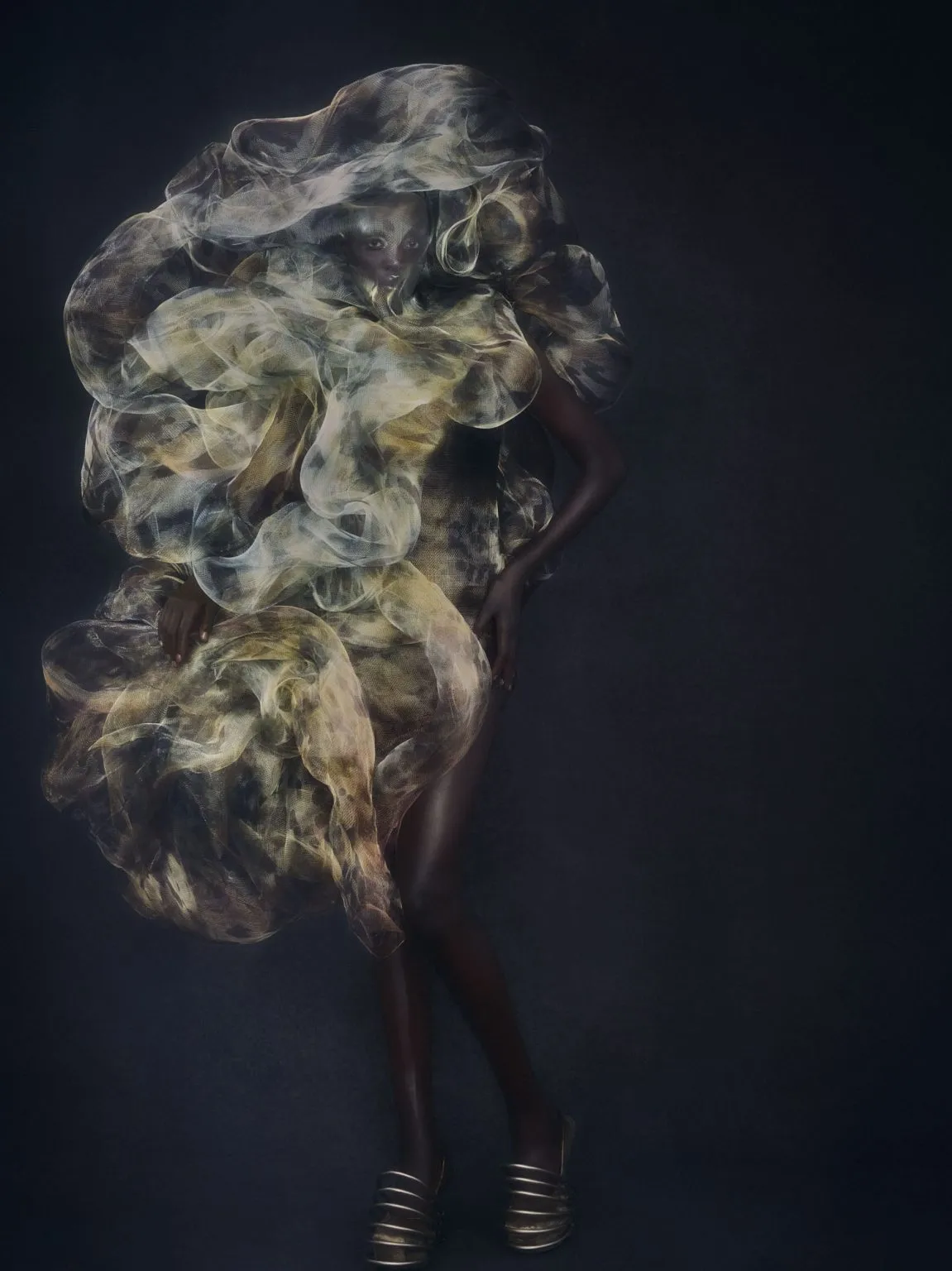
Her designs have been worn by performers and cultural figures, including Björk, Lady Gaga, Cate Blanchett, Beyoncé, Ariana Grande, and Eileen Gu. Yet even with celebrity recognition, her work consistently operates closer to experimental design and conceptual art than mainstream fashion.
The Exhibition Turns Fashion Into an Immersive Environment
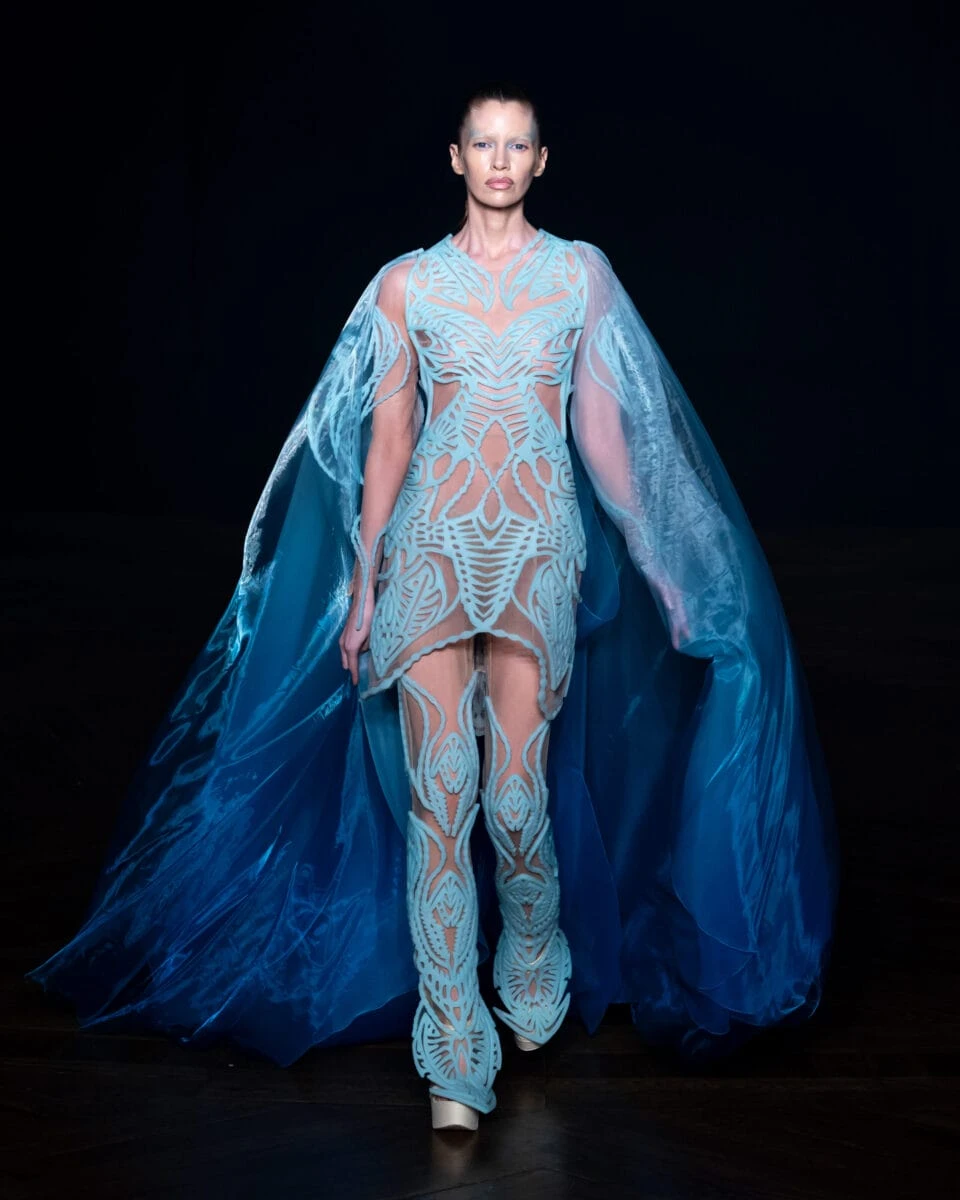
Sculpting the Senses is structured around themes including water, anatomy, movement, sound, biology, and the relationship between the body and its environment. The exhibition travels conceptually from deep ocean ecosystems to outer space, reflecting Van Herpen’s long-standing fascination with natural systems and scientific discovery.
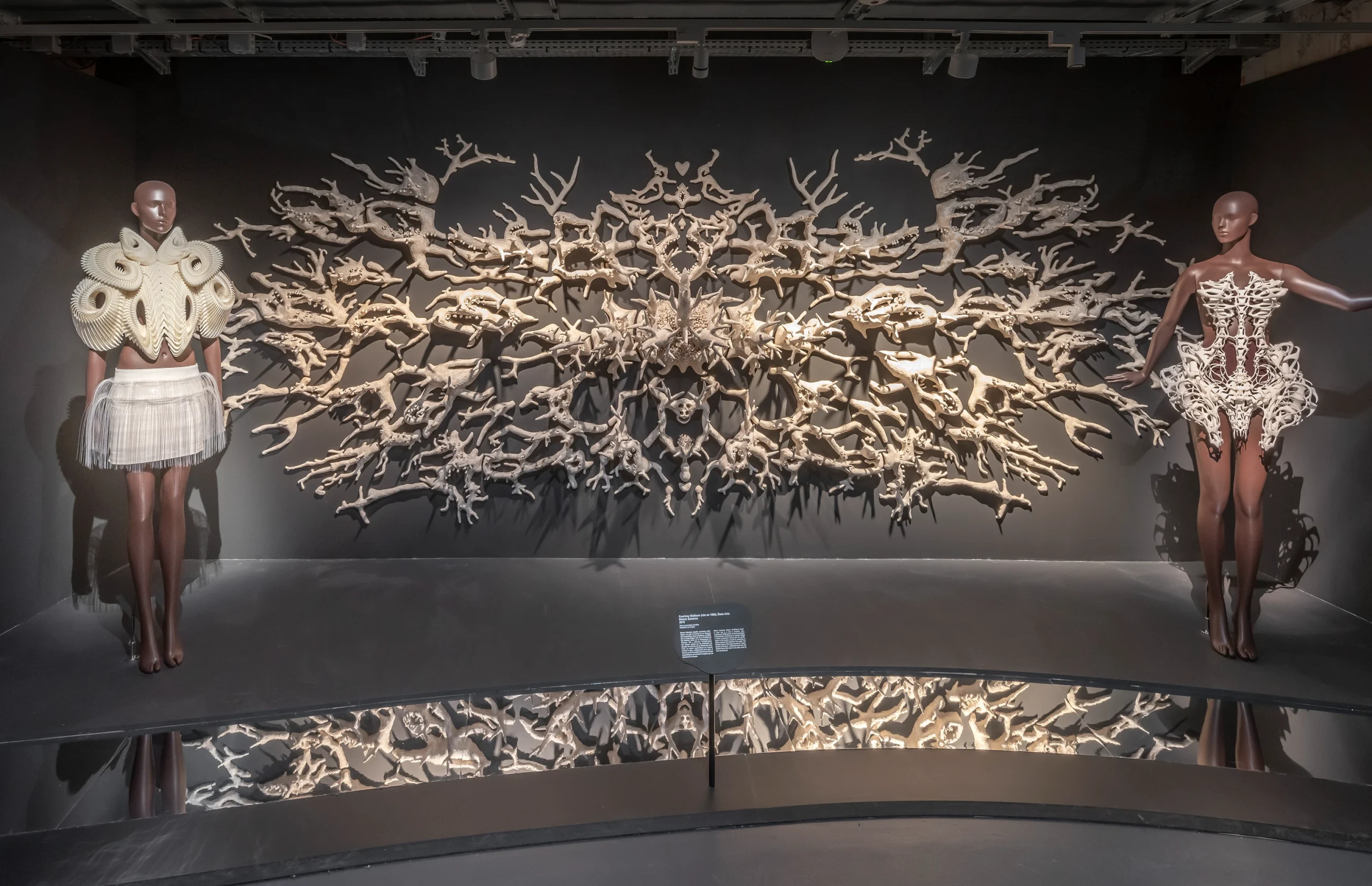
Several installations highlight her collaborations with architects, scientists, and artists. Garments are displayed beside works by architect Philip Beesley, photographer Nick Knight, and other contemporary creators whose practices overlap with Van Herpen’s interest in motion, perception, and organic structure.
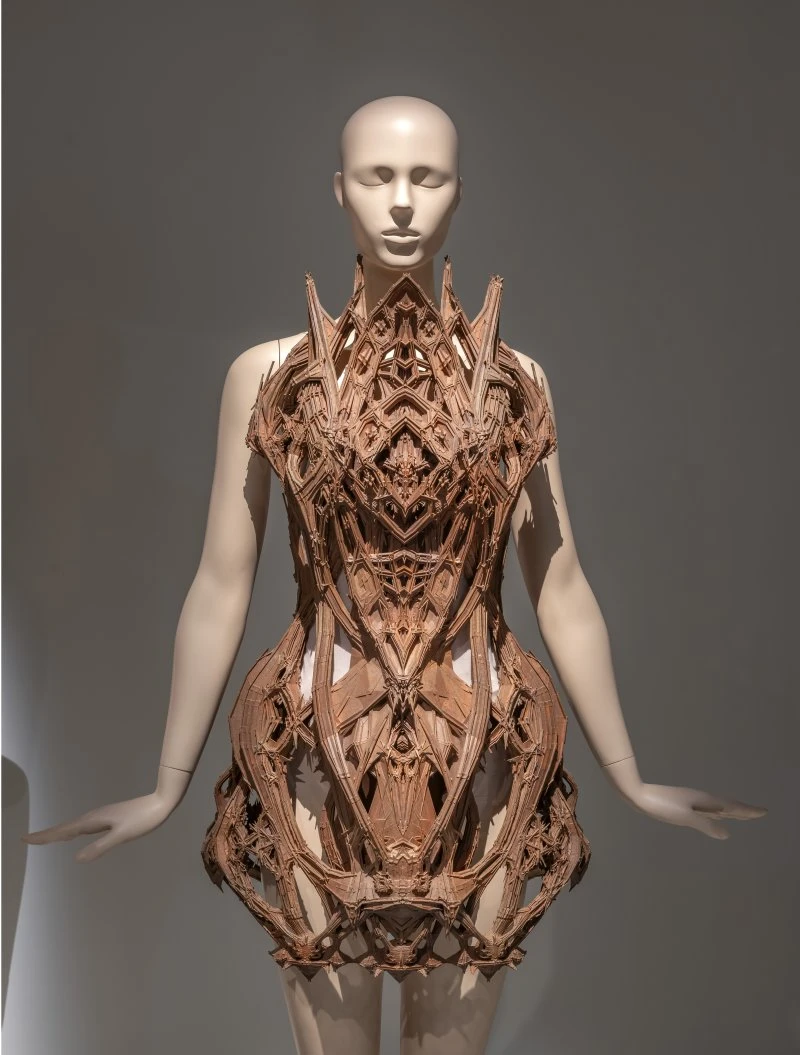
The Brooklyn presentation also includes recreations of her atelier process, allowing visitors to see the intense handcraft involved behind the futuristic silhouettes. While the garments often appear digitally generated, many rely on traditional couture methods layered with advanced fabrication technologies.
Inside the Dreamlike World of Iris van Herpen
One of the strongest aspects of Iris Van Herpen’s work is how consistently she draws from scientific research without reducing it to visual gimmickry. Her collections reference neuroscience, marine biology, astronomy, mycology, fractal geometry, and biomimicry.
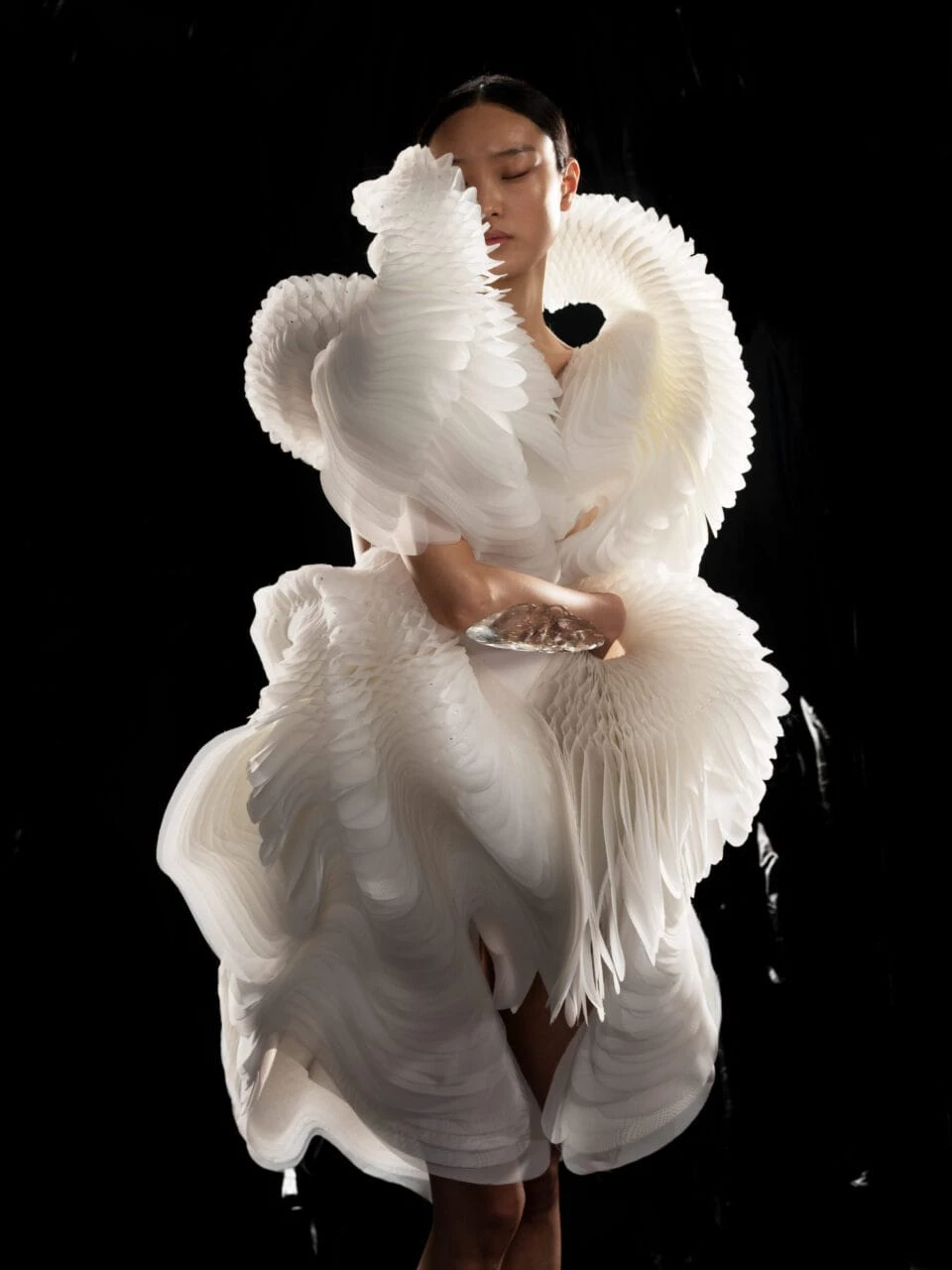
Some of the exhibition’s most discussed pieces include dresses inspired by jellyfish movement, garments constructed with bioluminescent algae, and sculptural forms that mimic coral reefs or wave patterns. Her “Sensory Seas” collection, featured prominently in the exhibition, transforms oceanic motion into floating architectural profiles using laser-cut Plexiglas, transparent mesh, and engineered textiles.

Another widely recognized work is her skeletal 3D-printed dress, which helped establish Van Herpen as a pioneering figure in technologically driven couture. Instead of treating the body as something to simply cover, many of her garments extend outward like evolving organisms, blurring distinctions between skin, clothing, and environment.
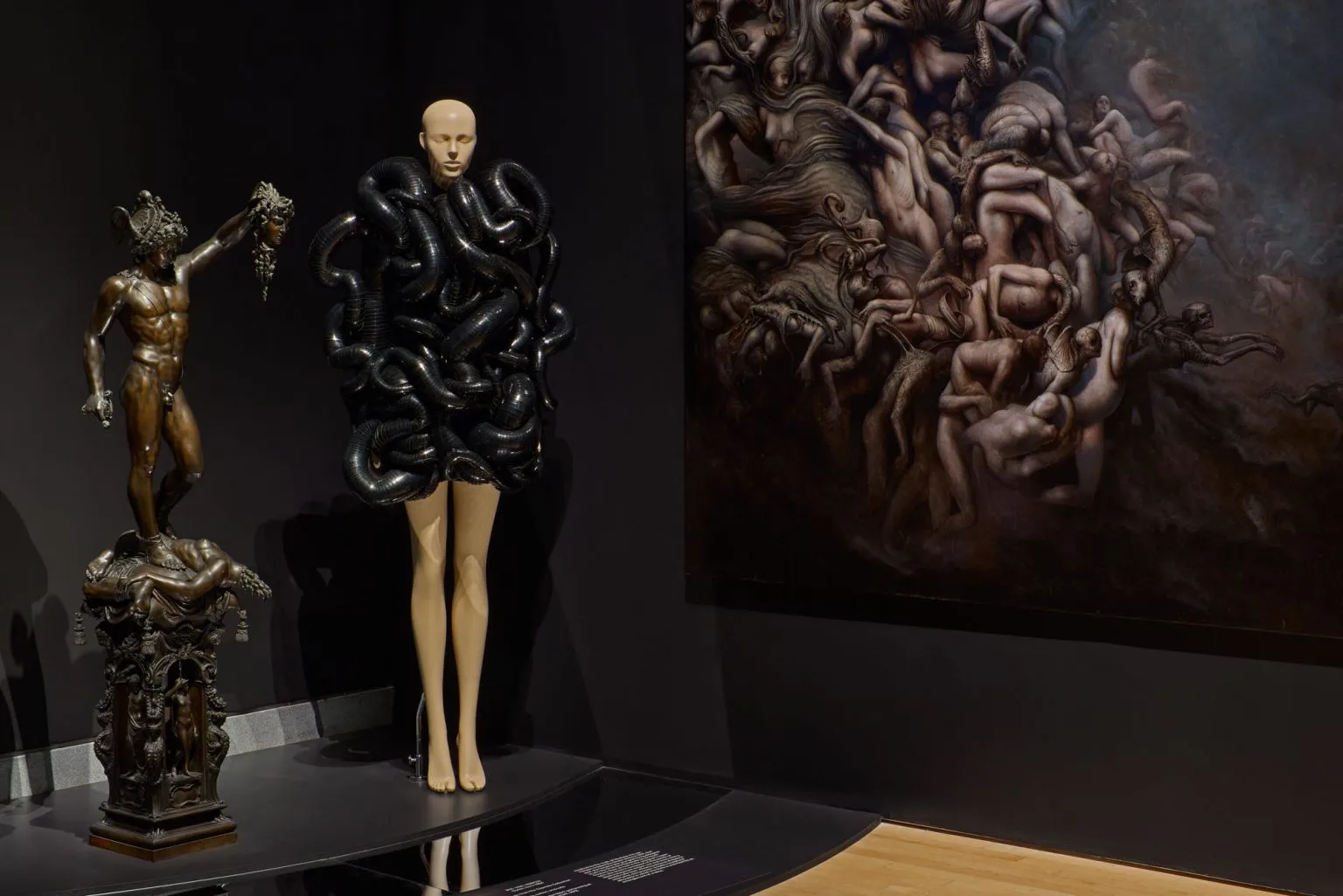
The timing of Sculpting the Senses feels especially relevant as conversations around sustainability, material innovation, and digital experimentation continue to reshape contemporary fashion. Iris van Herpen’s work proposes an alternative future for couture, one where fashion becomes interdisciplinary research.
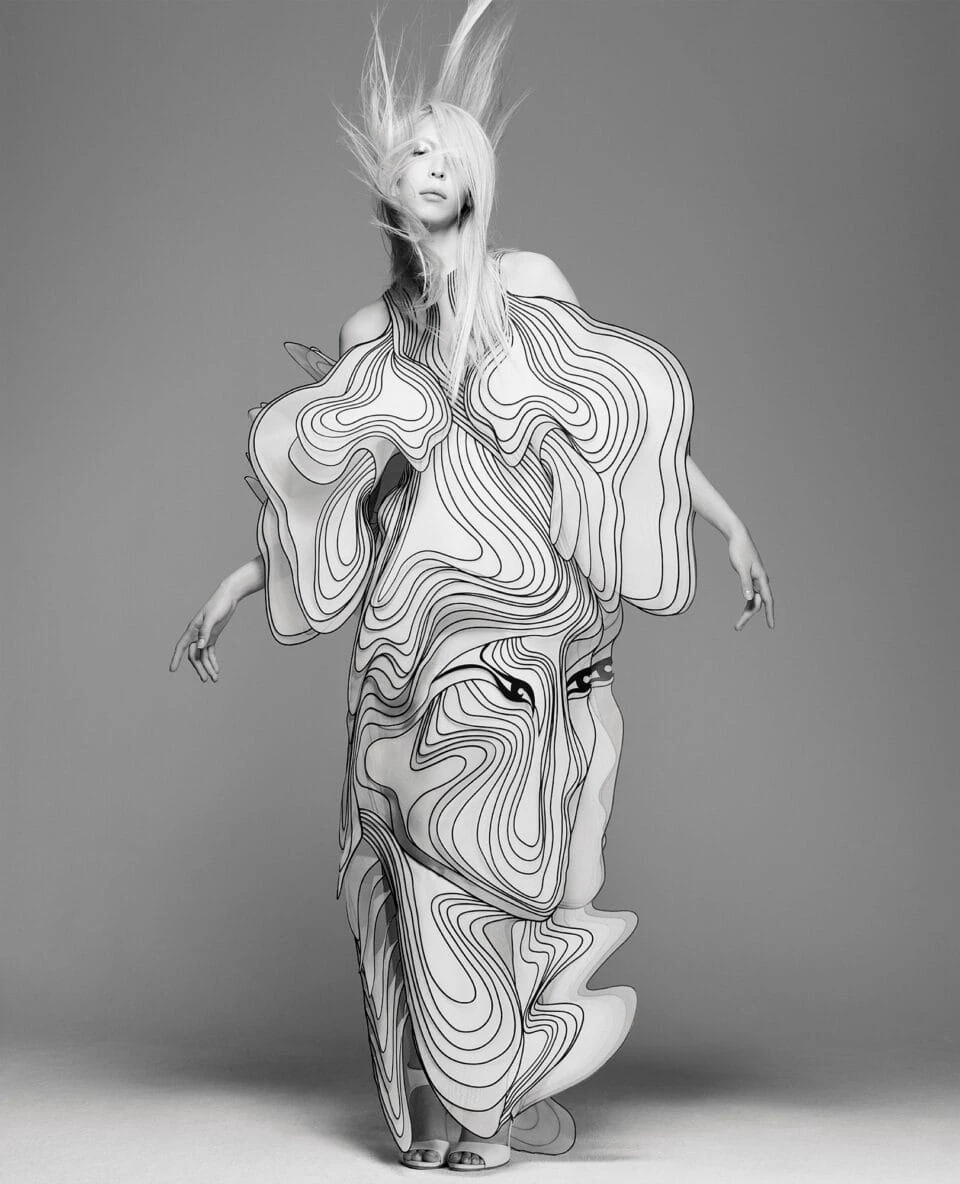
Her designs often function as conceptual investigations into transformation, ecology, and the human relationship with technology. Many pieces are less concerned with wearability in a commercial sense and more focused on provoking sensory and emotional responses.
The exhibition also reinforces the growing position of fashion within museum culture. The Brooklyn Museum, with Van Herpen, moves even further into fashion as experimental contemporary art
Credit: Iris van Herpen
[ad_2]
Source link